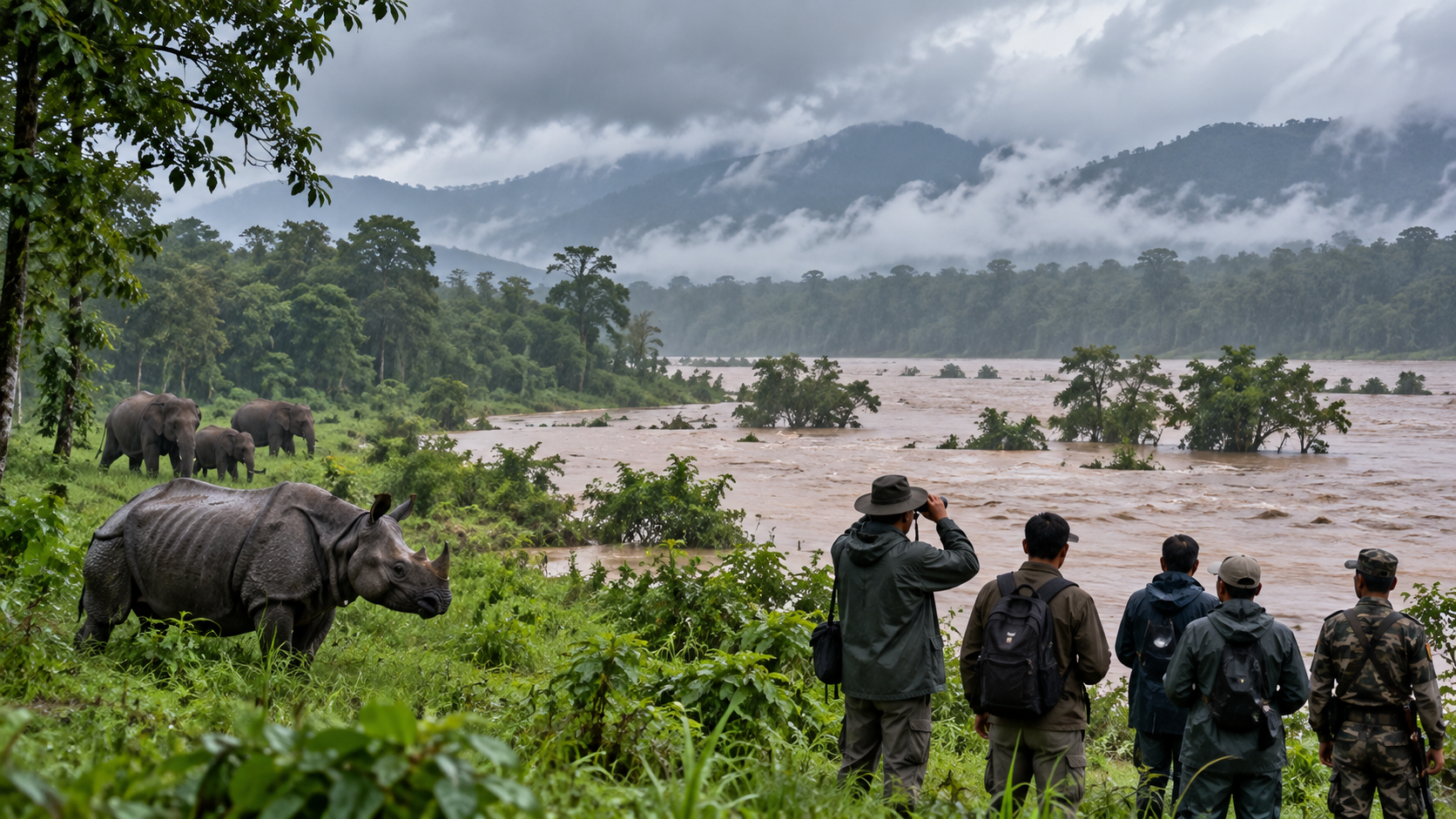
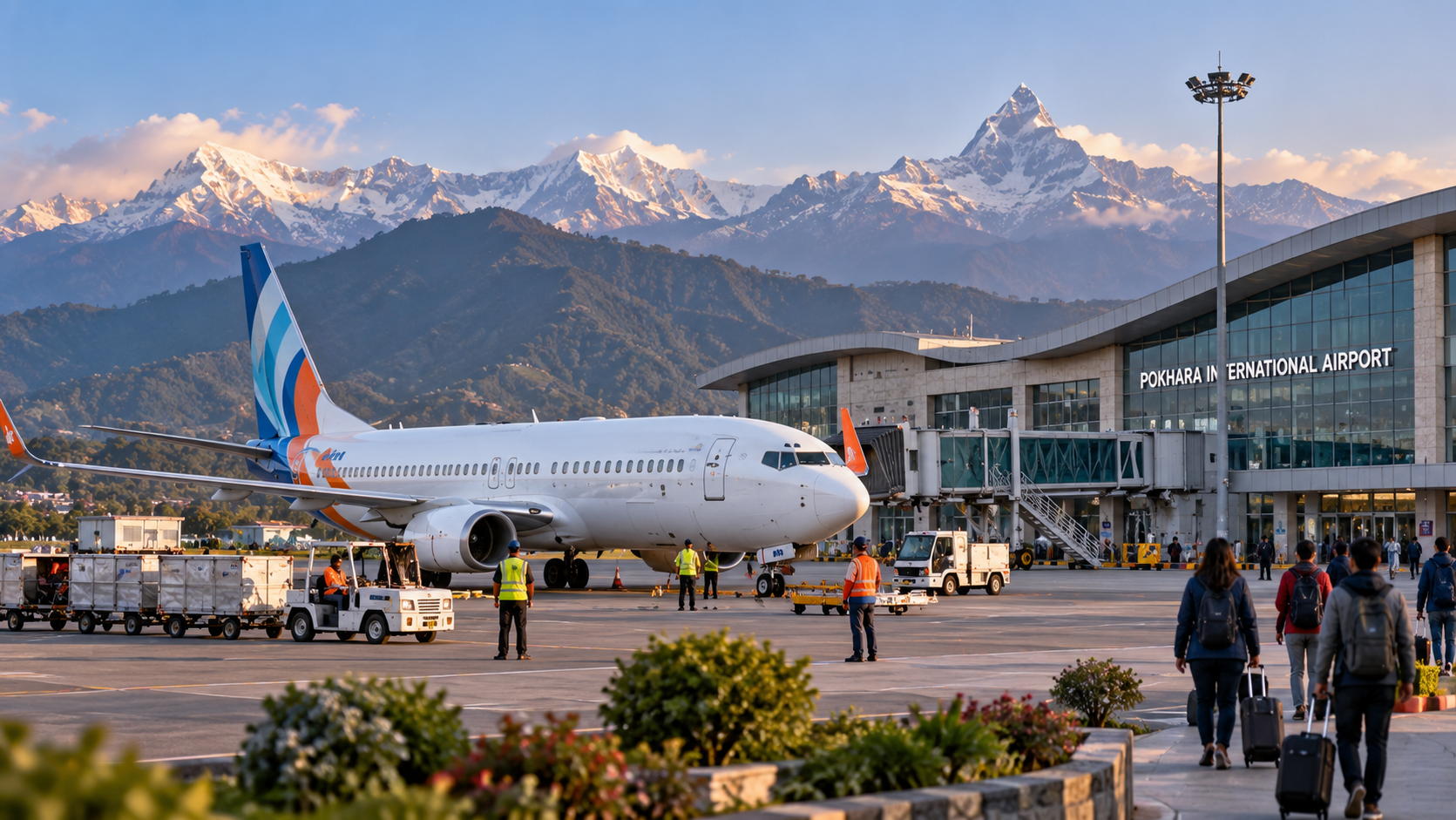
Nepal’s tourism sector has repeatedly recovered from earthquakes, Covid-19, unrest and disasters, but recurring disruptions are exposing vulnerabilities for workers, businesses and destinations.
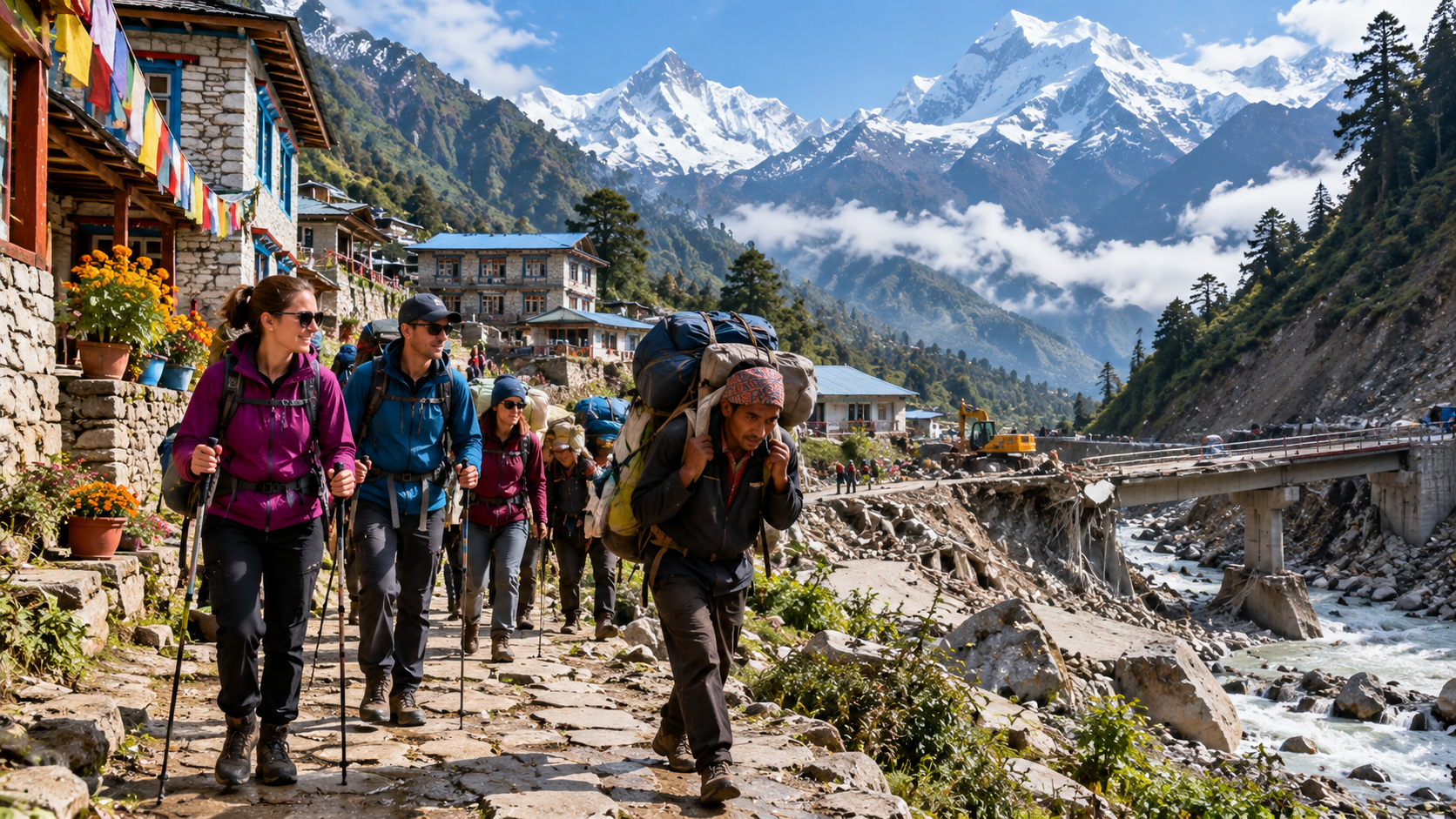
But the latest disruption following the August 26 disaster in Rasuwa has again exposed a difficult reality: recovery in national arrival numbers does not necessarily translate into stable income for tourism workers and businesses.
The Rasuwa disaster occurred just as Nepal was entering its busiest tourism period.
The rock-ice avalanche and subsequent flooding in the upper Bhotekoshi watershed produced extensive damage and images that circulated internationally. Travel cancellations followed, affecting guides and other tourism workers even in areas outside the immediate disaster zone.
For trekking guides, the effect can be particularly direct. Without confirmed bookings, there may be no assignment and therefore no income.
Some businesses have already reported signs of recovery, including renewed bookings for October. However, the experience highlights how quickly uncertainty can affect workers whose livelihoods depend on seasonal tourism.
Nepal’s tourism industry has faced repeated crises over the past decade.
The 2015 earthquake damaged heritage sites, trekking routes and tourism infrastructure. The Covid-19 pandemic then brought international tourism to an almost complete standstill, with arrivals falling from nearly 1.19 million in 2019 to roughly 230,000 in 2020.
Political unrest, floods, landslides, road disruptions, adverse weather and aviation-related concerns have added further interruptions in recent years.
Despite these setbacks, Nepal welcomed around 1.15 million international visitors in 2025, according to figures cited by The Kathmandu Post. The country crossed the one-million-arrival threshold for the third consecutive year.
The figures demonstrate the sector’s recovery capacity, but they do not capture the financial pressure experienced by individual workers and businesses.
Tourism supports a wide network of businesses, including hotels, restaurants, trekking companies, airlines, transport operators, guides, porters and small enterprises in tourist destinations.
The National Statistics Office’s National Hotel and Restaurant Survey found 142,223 accommodation and food-service establishments employing or engaging 387,747 people. The sector generated approximately Rs326 billion in service output and Rs109.27 billion in value added during the survey reference period.
These figures show the size of the hospitality economy and why disruptions to visitor flows can spread beyond hotels and trekking companies.
Tourism also remains highly seasonal. A disruption immediately before or during the autumn trekking season can therefore have a disproportionate effect because businesses rely on a relatively short period of strong demand to support operations during quieter months.
The number of visitors is only one measure of tourism performance.
Government statistics cited in the Kathmandu Post report show average daily spending by international visitors fell to $33.09 in 2025, compared with $54 in 2017.
This means that a rise in visitor numbers does not automatically guarantee stronger earnings throughout the tourism economy.
Businesses may also use discounts to attract visitors after a crisis, helping restore occupancy but potentially putting pressure on profit margins.
Tourism disruptions can affect Nepal beyond the actual geographical area where an incident occurs.
Images of damaged roads, bridges, flooding or other disasters can reach international travellers quickly. People planning trips may not always distinguish between an affected location and destinations operating normally elsewhere in the country.
The result can be uncertainty about whether a planned journey can proceed safely.
Tourism authorities and private-sector operators have responded by promoting destinations that remain accessible and organising familiarisation visits for foreign travel professionals.
The challenge is not necessarily a lack of interest in Nepal. Rather, travellers may want greater confidence that transportation, trekking routes and other parts of their itinerary will operate as planned.
Nepal’s dependence on mountains creates another long-term challenge.
Glacier retreat, rising temperatures and expanding glacial lakes are increasing concern about risks in mountain regions. A major flood or glacial-lake-related event can affect not only communities but also roads, bridges, hydropower facilities and tourism infrastructure.
For Nepal, the geography that attracts trekkers and mountaineers can simultaneously expose tourism businesses to natural hazards.
This makes preparedness increasingly important.
Repeated recovery has demonstrated that Nepal can restore visitor confidence after major shocks. But resilience also requires reducing the economic damage caused by the next disruption.
That includes stronger early-warning systems, reliable communications in mountain areas, resilient transport infrastructure and timely information for international travellers.
Diversifying tourism destinations and encouraging travel outside the traditional peak months could also reduce dependence on a narrow seasonal window.
The workforce is another part of the equation. Repeated periods without assignments can encourage experienced guides, hotel workers and other tourism professionals to seek more predictable employment elsewhere, including abroad.
Once trained workers leave the sector, restoring tourist arrivals alone may not immediately restore the workforce that supported them.
Nepal’s tourism industry has repeatedly shown that it can recover. Hotels reopen, trekking routes become busy again and international visitors return.
The more difficult question is whether each recovery is creating a stronger industry or simply restoring the previous one before the next disruption arrives.
For tourism workers, recovery is ultimately measured less by annual arrival statistics than by whether bookings return, businesses remain viable and employment becomes predictable.
Nepal’s tourism sector has learned how to bounce back from crises. Its next challenge is to make that recovery more durable.
Comments
0 comments
Loading comments...