Trump’s Board of Peace has announced a six-month, $2.45 billion recovery plan for Gaza covering 66 programmes, while major funding and implementation challenges remain.
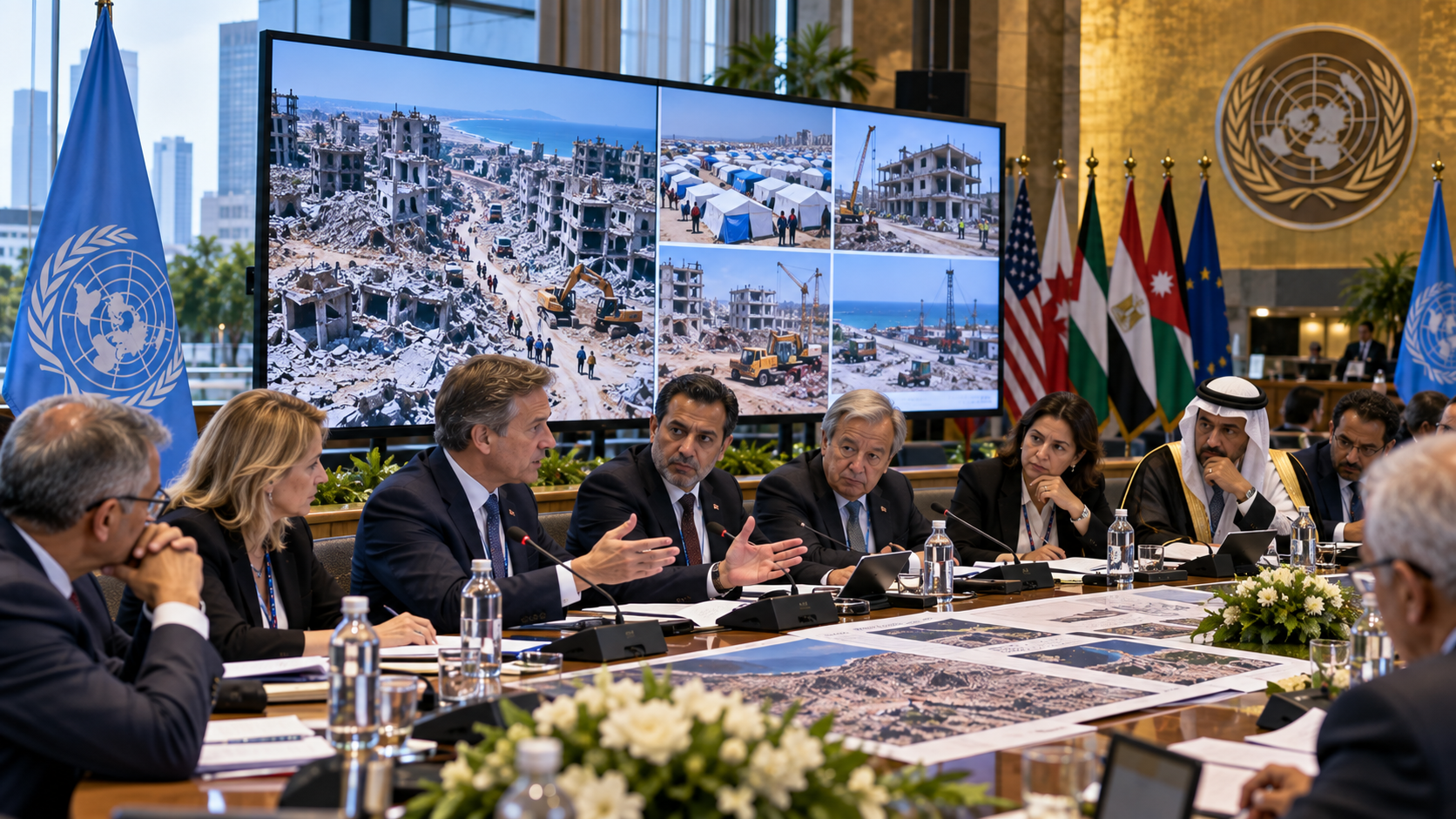
The plan was presented in New York on the sidelines of the United Nations General Assembly, where international leaders and senior officials have gathered for the annual high-level session.
The six-month programme covers areas including housing, electricity generation, waste removal and other basic services. However, the announcement comes with a substantial gap between funds pledged and money actually delivered.
The Board of Peace's programme is designed as an initial recovery phase rather than a complete reconstruction programme.
According to the plan, the 66 projects are intended to address infrastructure, human development, economic activity, digital services, legal recovery and peace and security.
Among the immediate priorities are temporary housing, diesel-powered electricity generation and waste removal. Other reported components include repairs to essential infrastructure and services needed for Gaza's longer-term recovery.
The board has not provided a firm date for when the full reconstruction programme will begin.
The $2.45 billion figure represents only part of the resources estimated to be necessary for Gaza's recovery.
The board said $18 billion has been pledged, but only about $280 million had been transferred at the time of the announcement. It estimates that full recovery and reconstruction could require approximately $71.4 billion over the next decade.
Another assessment cited by multiple reports puts the medium-term cost of rebuilding Gaza's physical infrastructure at around $35.2 billion.
That difference between the initial programme, available funds and estimated long-term requirements means that implementation will depend heavily on additional international financing.
The reconstruction plan is also linked to questions about security and governance.
The Board of Peace was established as part of Trump's broader plan for Gaza and is intended to play a role in the territory's post-war administration and reconstruction.
Reports say the proposed projects include arrangements related to security, governance and the creation of conditions in which humanitarian and reconstruction workers can operate.
Jared Kushner, a member of the board's Gaza executive body, acknowledged that the initiative has experienced delays. US envoy Steve Witkoff said the group had made progress over the previous year.
The recovery programme is being proposed while Gaza continues to face extensive physical damage and humanitarian needs.
The Board of Peace's own estimates underline the scale of the challenge: the initial six-month programme is valued at $2.45 billion, while longer-term recovery is estimated at tens of billions of dollars more.
The proposed work also depends on practical conditions on the ground, including security, access for workers and materials, governance arrangements and coordination among the parties involved.
The Times of Israel reported that the 66 projects include work involving roads, homes, schools, hospitals, ports and crossings, as well as fuel and food deliveries and communications infrastructure.
The announcement places renewed attention on whether international pledges can be converted into actual funding.
Only a fraction of the $18 billion reportedly pledged had been transferred when the programme was announced. The board will therefore need continued financial contributions if the initial projects are to develop into a broader reconstruction effort.
The scale of the funding requirement also means Gaza's recovery is likely to extend well beyond the six-month programme.
For residents, the immediate focus remains basic services and safe living conditions. For international planners, the larger challenge is creating the financial, security and administrative conditions needed for reconstruction to continue over many years.
The $2.45 billion programme therefore represents an initial framework rather than a complete solution to Gaza's reconstruction needs. Its significance will ultimately depend on how much of the promised funding is delivered and whether the political and security conditions allow the proposed projects to move from planning to implementation.
Comments
0 comments
Loading comments...