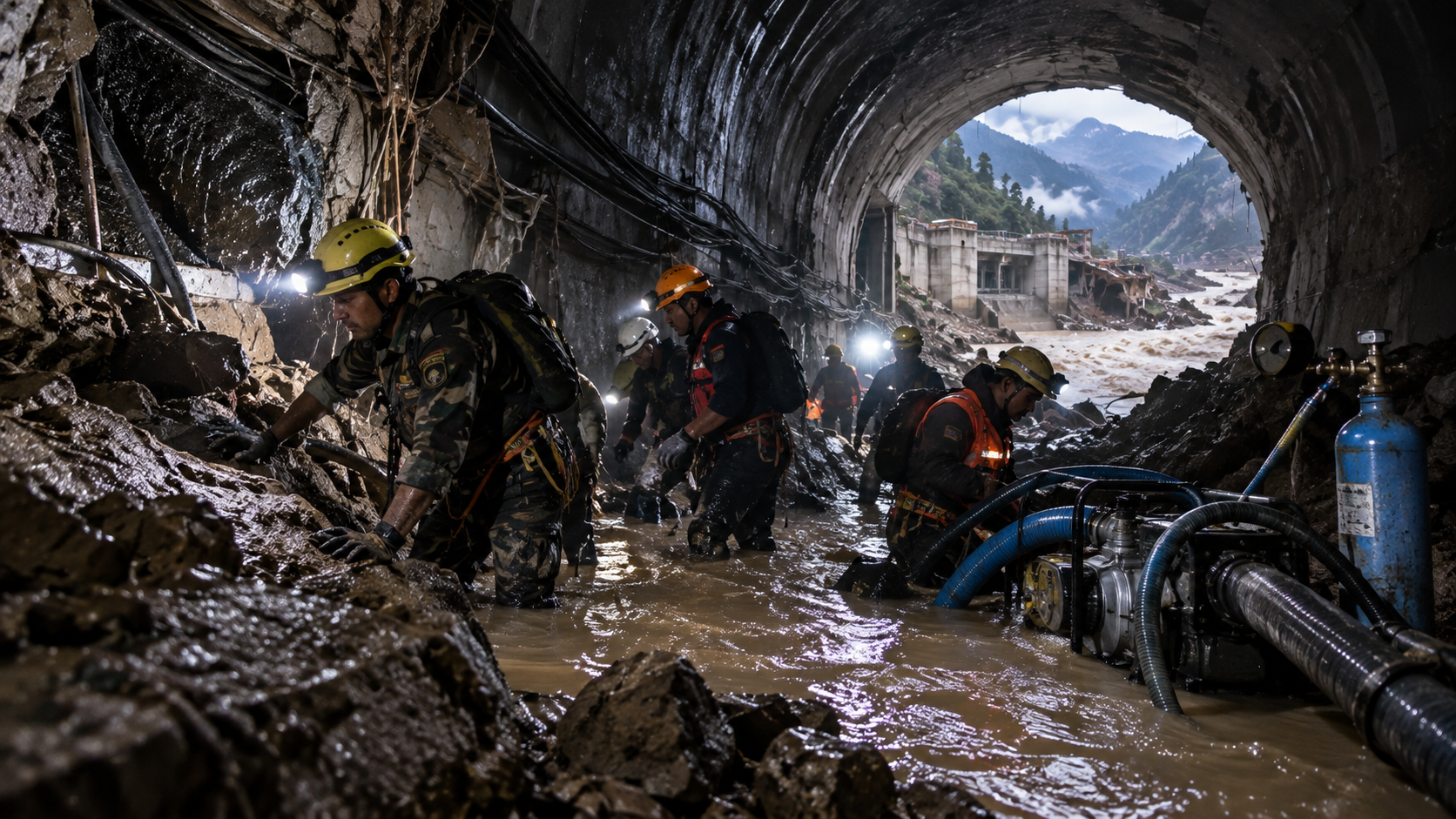
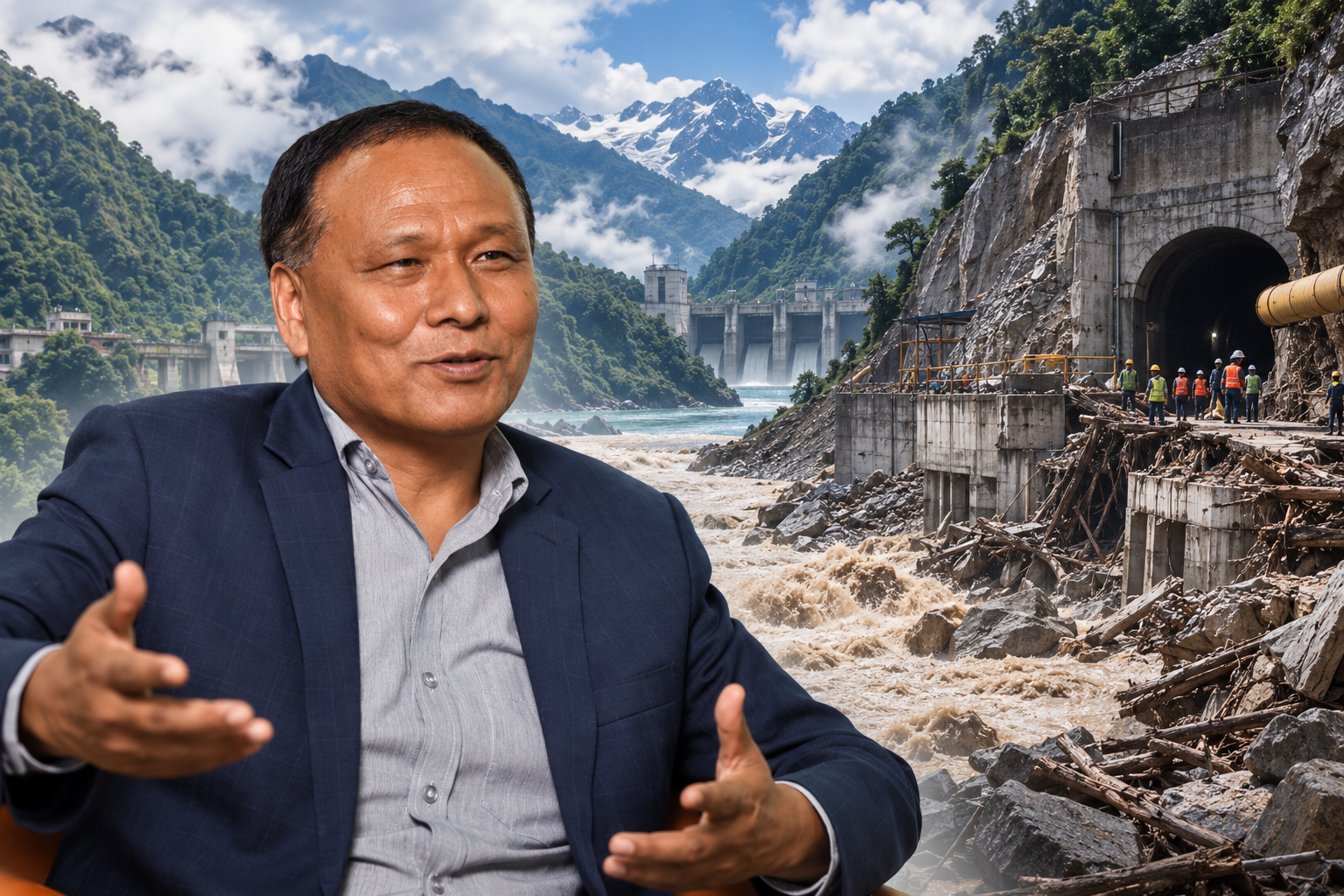
The Bhotekoshi disaster has highlighted the need for Nepal, India and China to cooperate on river data, hazard monitoring, dam safety and emergency preparedness across the Himalayas.
A collapse or landslide high in the Himalayas can trigger a chain of events involving rivers, glaciers, roads, hydropower facilities, settlements and downstream communities. What begins as a local mountain hazard can therefore become a cross-border emergency within a very short period.
For Nepal, this creates a strong case for expanding the meaning of water diplomacy. Hydro-diplomacy should not be limited to negotiating water use or hydropower projects. It should also encompass disaster preparedness, scientific cooperation, real-time information exchange and the safety of communities living along shared river systems.
The Himalayan river network connects countries that share the consequences of events occurring upstream.
Floods, landslides, debris flows and glacier-related hazards can affect infrastructure and communities far beyond where they originate. At the same time, hydropower development is expanding across many of the same valleys.
This creates an important policy question: how can countries develop Himalayan water resources while also accounting for rapidly changing environmental and geological risks?
The answer cannot come from individual projects or isolated national responses alone.
Risk assessments need to consider entire watersheds, including what happens upstream, what infrastructure lies downstream and how one hazard could trigger another.
One of the most practical areas for cooperation is information sharing.
Weather stations, river gauges, satellite observations, seismic instruments and other monitoring systems can produce information that is valuable across borders. But that information becomes most useful when it reaches the institutions and communities that need it before a disaster arrives.
ICIMOD has long advocated regional flood-information systems and transboundary cooperation involving the Hindu Kush Himalaya countries. Its work shows that shared hydrological information and early-warning mechanisms can improve preparedness in downstream communities.
Nepal and its neighbours could build on these experiences by developing clearer protocols for sharing time-sensitive information about sudden changes in river levels, landslides, glacier instability and other hazards.
The objective should not simply be collecting more data. It should be making critical information usable, timely and trusted.
A warning system is effective only when people receive information early enough to act.
That is particularly difficult in steep Himalayan valleys, where a rapidly developing event may travel downstream faster than conventional administrative procedures can respond.
ICIMOD's experience with community-based flood-warning systems along the Nepal-India border demonstrates that cross-border information can be translated into practical action for vulnerable communities.
Future systems should therefore connect scientific monitoring with local response mechanisms.
Communities need to know what a warning means, which areas are at risk, where evacuation routes are located and who has authority to issue an alert.
Hydropower is central to Nepal's economic ambitions, but infrastructure in mountain valleys is exposed to floods, landslides, sediment, rockfall and other hazards.
Recent disasters have shown the importance of evaluating not only the safety of individual dams and powerhouses but also the wider catchment surrounding them.
A project may be engineered to withstand a particular hazard while remaining vulnerable to a cascading event originating higher in the watershed.
That makes independent safety reviews, updated hazard maps, emergency action plans and continuous monitoring increasingly important.
Hydro-diplomacy can help by creating channels through which countries and institutions share information about risks affecting infrastructure and downstream populations.
Governments remain essential to transboundary agreements, but Himalayan risk management also requires scientists, engineers, universities, communities and infrastructure operators.
Joint research can improve understanding of glaciers, permafrost, river behaviour, sediment transport and mountain instability.
Nepal can also draw on its large international community of engineers, scientists and disaster-management professionals. Connecting these experts with domestic institutions could strengthen technical capacity while creating a wider network for knowledge exchange.
The objective should be practical: better observations, stronger risk assessments and faster decisions when conditions change.
Climate change is making Himalayan risk increasingly difficult to assess using historical patterns alone.
Changing temperatures can affect glaciers and frozen ground, while shifts in precipitation can influence floods, landslides and water availability. These processes interact with human infrastructure and settlement patterns.
ICIMOD has recently called for science-based regional platforms that support shared data, joint assessments and cross-border early-warning networks in the Hindu Kush Himalaya.
Such cooperation does not require countries to abandon their individual interests. Instead, it can provide a mechanism for managing risks that none of them can address completely alone.
Nepal can use its position as an important Himalayan source region to place mountain resilience higher on the regional and international agenda.
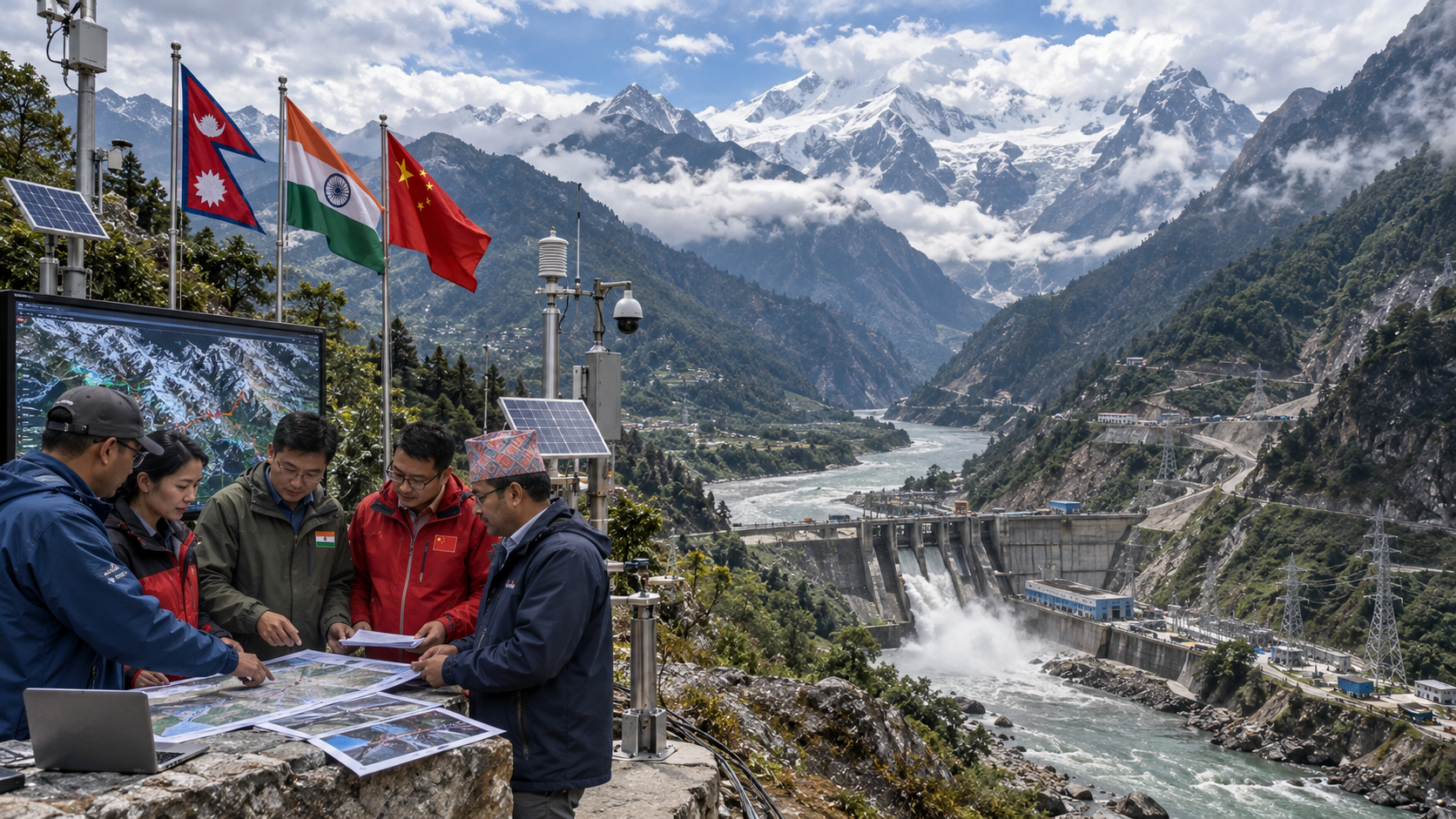
A practical hydro-diplomacy agenda could include four broad priorities: real-time hazard information sharing, joint scientific assessment, coordinated emergency preparedness and stronger safety standards for critical infrastructure.
Cooperation with India and China would be particularly important because the countries share major Himalayan river systems and downstream risks.
Existing cooperation and information-sharing initiatives provide a foundation, but the scale and speed of emerging hazards suggest that these mechanisms need to become more systematic.
The Bhotekoshi disaster should not be viewed only through the lens of emergency response.
It also offers an opportunity to rethink how Himalayan countries manage shared rivers and shared risks.
The goal of hydro-diplomacy should be straightforward: make information move faster, make infrastructure safer, improve preparedness and ensure that communities are not left waiting for warnings after a disaster has already begun.
The Himalayas are divided by national borders, but their rivers, glaciers and mountain processes do not recognise those boundaries.
Building resilience therefore requires cooperation that is as interconnected as the risks themselves.
Comments
0 comments
Loading comments...