Yatri and Sipradi are combining engineering expertise, manufacturing experience and market reach to develop electric two-wheelers in Nepal. Their Yatri P-2 project could offer a model for expanding local vehicle design and manufacturing.
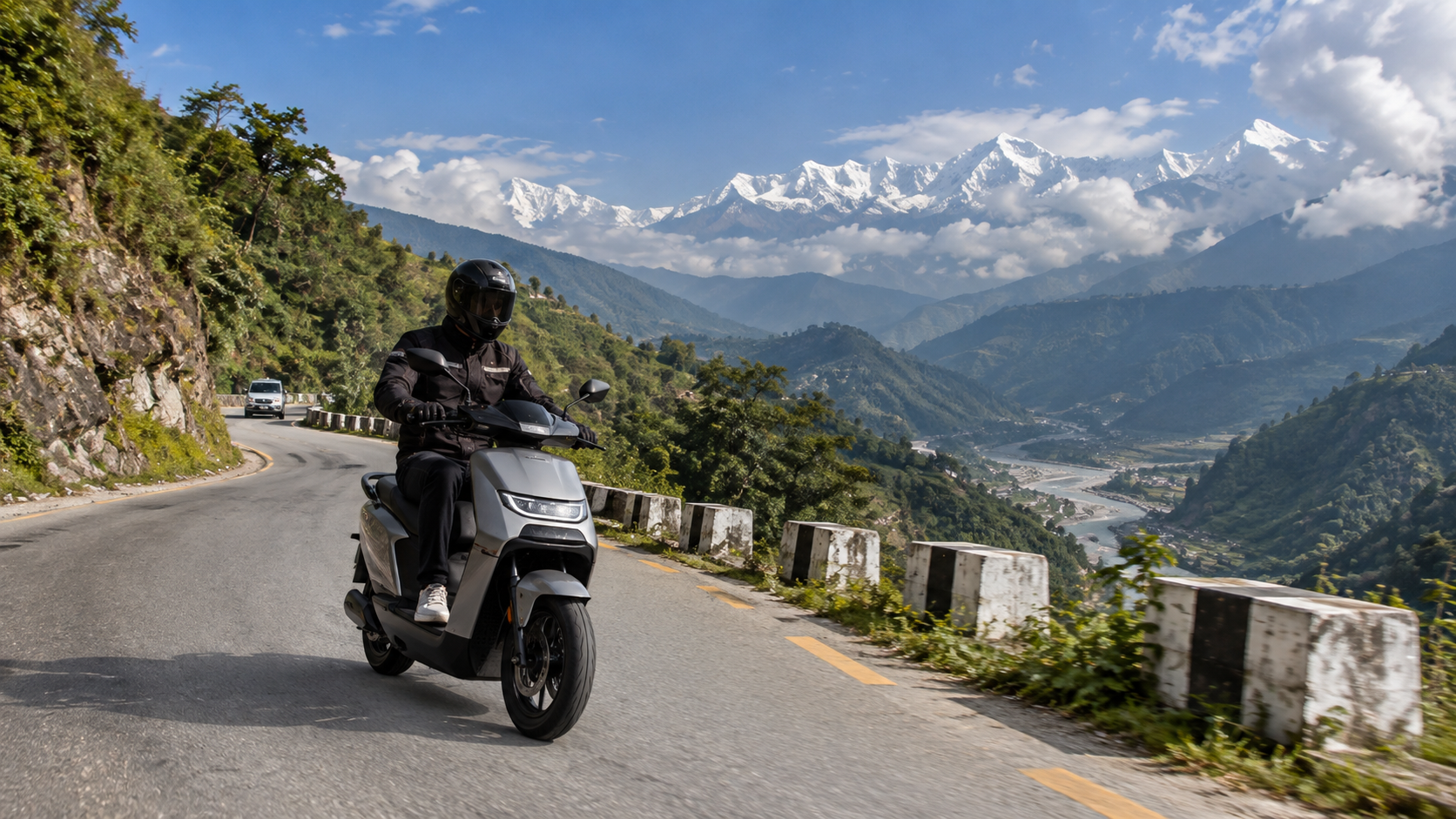
Nepal’s electric vehicle market has largely grown around imported brands, but a partnership between Yatri Motorcycles and Sipradi Trading is attempting to take a different route: developing and manufacturing an electric two-wheeler in Nepal.
The collaboration has resulted in the Yatri P-2 electric scooter, bringing together Yatri’s experience in vehicle engineering and product development with Sipradi’s long-standing presence in Nepal’s automobile market. The project also represents Sipradi’s entry into the two-wheeler segment.
Rather than simply introducing another imported model, the partnership is aimed at developing a vehicle around Nepal’s road conditions and creating greater local capability in design, engineering, testing and manufacturing.
Yatri has built its identity around electric vehicle engineering. Since its establishment, the company has worked on electric motorcycles, battery systems, vehicle software and other components of electric mobility. Its official website describes its broader objective as designing and manufacturing electric vehicles in Nepal.
Sipradi, meanwhile, brings decades of experience in Nepal’s automotive sector, along with distribution, servicing and knowledge of the local market.
The two companies therefore entered the project with complementary capabilities. Yatri contributes product-development and engineering expertise, while Sipradi provides business infrastructure, market knowledge and experience in taking automotive products to customers.
For Sipradi, the move is also significant because the company had not previously operated in the two-wheeler market. According to Onlinekhabar, Sipradi had been considering entering the segment before deciding to explore an electric vehicle developed specifically for Nepal.
The P-2 project is notable because its local contribution extends beyond final assembly.
According to Onlinekhabar, development involved design work, computer simulations, component development, electrical and battery testing, chassis fabrication, assembly and road testing. Yatri engineers also developed the scooter’s electrical architecture and vehicle control unit, with the latter manufactured in China but programmed, tested and validated by the company’s engineers in Nepal.
However, calling the P-2 a completely domestically manufactured vehicle would be misleading.
Some advanced components, including the motor and controller, are sourced from China. The battery packs are assembled in Nepal using imported components. This means the scooter combines Nepal-based design, engineering, software development, testing and parts of manufacturing with an international supply chain.
That distinction is important for understanding the current state of Nepal’s automobile industry.
One of the stated objectives of the partnership is to develop a two-wheeler suited to Nepal’s geographical and road conditions.
The P-2 underwent testing across different parts of Nepal before its launch, with routes covering urban areas, plains and hilly terrain. Onlinekhabar reported that testing included locations such as Jiri, Kathmandu, Mulkot, Katari, Bharatpur and Waling.
Yatri’s current product information similarly describes the P-2 as being engineered for conditions ranging from steep climbs to city traffic.
The scooter is offered with 3 kWh, 3.7 kWh and 5.2 kWh battery configurations. Onlinekhabar reported that the 5.2 kWh version was claimed to provide up to 157 kilometres of range, although actual range can vary according to riding conditions and configuration.
Developing an electric vehicle is only one part of the challenge. Charging and after-sales support are equally important for wider adoption.
Yatri has been developing charging infrastructure alongside its electric vehicles. Onlinekhabar reported that the company had installed more than 20 charging stations and was continuing to expand its network.
The company's current website also promotes a connected charging ecosystem and real-time information about charger availability.
For customers travelling beyond major urban centres, such infrastructure can be particularly important because charging availability remains a practical consideration when choosing an electric two-wheeler.
The significance of the Yatri-Sipradi partnership goes beyond one scooter.
Nepal remains heavily dependent on imported vehicles and components. Local vehicle development therefore faces challenges involving production scale, supply chains, manufacturing costs, technical expertise and regulatory processes.
The P-2 project illustrates some of those limitations. While significant parts of its engineering and production are being carried out in Nepal, several key components still depend on overseas suppliers.
Yatri says its current production capacity is around 8,000 to 10,000 scooters annually and that capacity can be expanded depending on demand. The company is also working toward developing battery-manufacturing infrastructure in Gajuri, Dhading.
Whether those efforts eventually lead to a larger domestic supply chain will depend on demand, investment, component localisation and the ability of Nepali manufacturers to compete with established international producers.
The Yatri-Sipradi partnership does not mean Nepal has suddenly developed a fully independent automobile manufacturing industry.
The country continues to rely on foreign suppliers for important components, and scaling local production remains difficult. But the P-2 demonstrates that Nepalese companies can participate in vehicle design, engineering, software, testing and manufacturing rather than limiting their role to importing and distributing finished vehicles.
For Yatri, the project represents another stage in its effort to develop electric vehicles in Nepal. For Sipradi, it opens a new two-wheeler business while providing an opportunity to support a locally developed product.
The longer-term question is whether this model can grow beyond one electric scooter.
If production expands, more components are manufactured locally and a stronger supplier network develops around the industry, the impact could reach well beyond the P-2. It could contribute to a gradual shift in Nepal’s automobile sector—from primarily importing vehicles toward developing some of the technology and manufacturing capabilities behind them.
Comments
0 comments
Loading comments...