As Nepal faces the aftermath of the Bhotekoshi disaster, former UN official Gyan Chandra Acharya argues that its UNGA diplomacy should focus on climate justice, reconstruction support, mountain risks and stronger international coalitions.
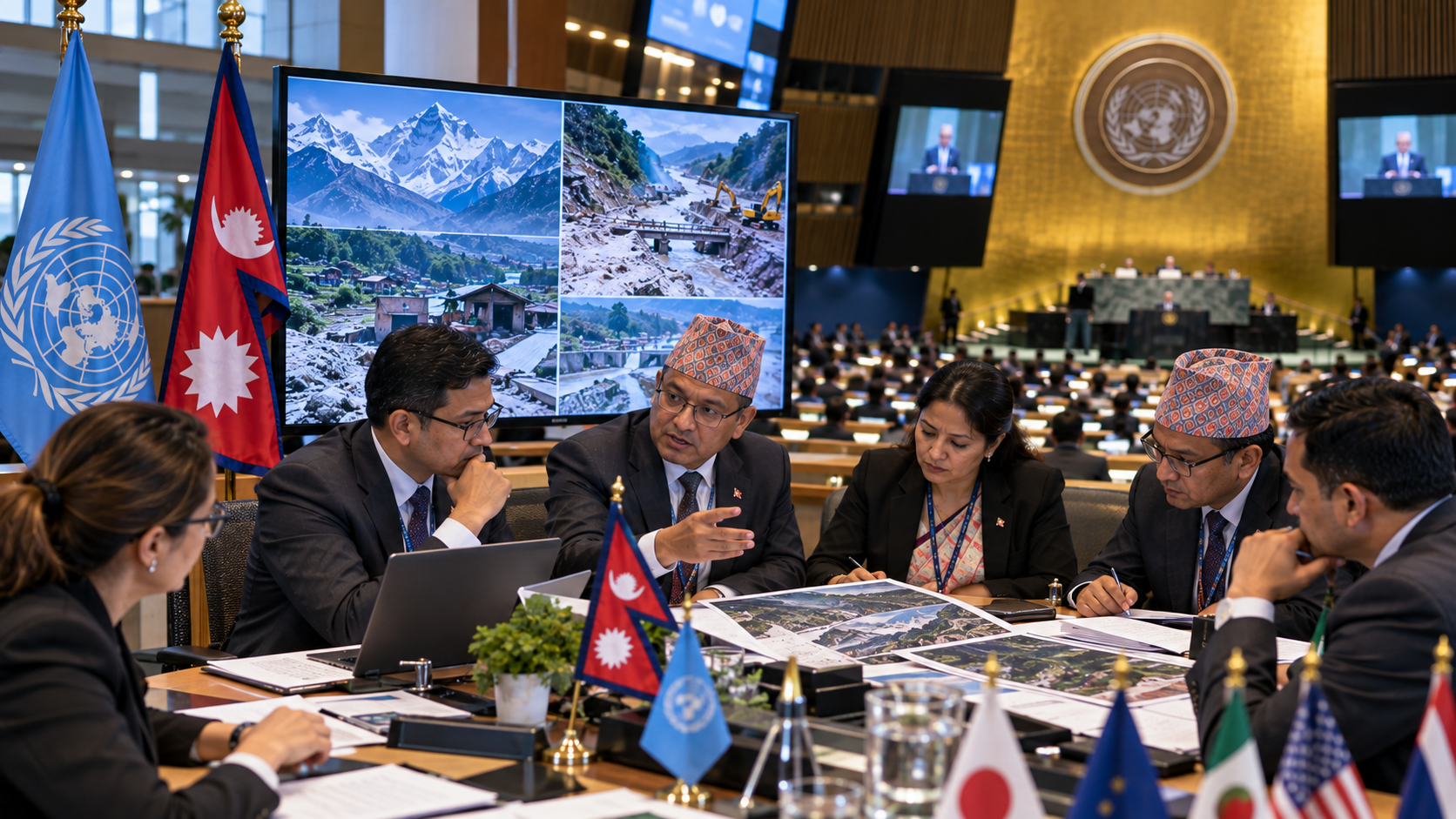
Nepal’s participation in the 81st United Nations General Assembly comes at an unusually consequential moment.
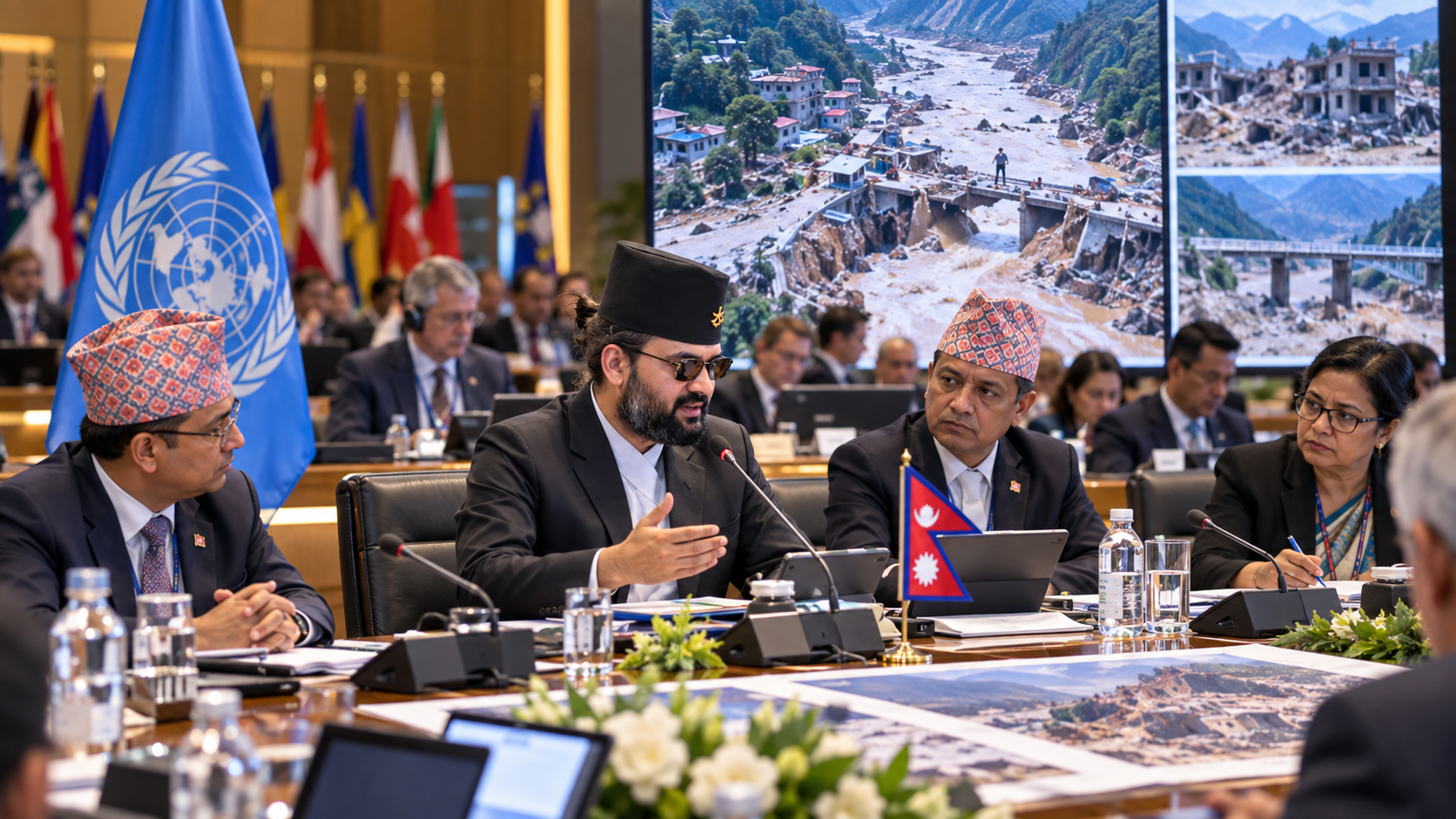
The country is seeking international attention after the devastating August 26 rock-and-ice avalanche and flood disaster in the Rasuwa region, while the UN high-level week brings together governments, international institutions, development partners and other influential actors in New York.
In a September 24 column for The Kathmandu Post, former UN Under-Secretary-General Gyan Chandra Acharya argues that Nepal should use this diplomatic opportunity not simply to describe the disaster, but to build international support around climate justice, reconstruction, mountain risks and long-term resilience.
The argument comes as the UN General Assembly's 81st session places climate action and global cooperation prominently on its agenda. The UN's General Debate is running from September 22 to 26 and September 28, while a high-level meeting on climate action and a just transition was held on September 23.
Acharya argues that the Bhotekoshi disaster gives Nepal a particularly important case for presenting the consequences of climate and mountain hazards to the international community.
The August disaster began with the collapse of rock and ice from Langtang Lirung and developed into a destructive debris flood. World Weather Attribution's subsequent analysis found that warming, permafrost degradation, glacier retreat and changing precipitation patterns likely contributed to conditions that increased the instability of the mountain environment.
The researchers also stressed that climate change should not be treated as the sole cause of the specific collapse. Geological conditions and the possible long-term effects of the 2015 earthquake were among the other factors considered.
Acharya's argument is therefore broader than attributing a single disaster to climate change. He presents the event as evidence of the growing complexity of hazards in high mountain regions and as a reason for stronger international cooperation.
A central theme of the column is climate justice.
Nepal contributes only a small share of global greenhouse-gas emissions but faces substantial exposure to climate-related risks because of its mountainous geography, fragile ecosystems and limited capacity to absorb repeated disasters.
Acharya argues that Nepal's international message should connect these vulnerabilities with its own efforts to reduce emissions and expand renewable energy and forest conservation.
The purpose, in his view, is to strengthen the case for international climate finance, technology cooperation and support for adaptation and recovery.
The broader UN agenda provides an opening for such discussions. The 81st General Assembly is explicitly focused on restoring trust, managing transformation and strengthening collective action, while its high-level climate programme includes cooperation among developed, developing and vulnerable countries.
The column also places reconstruction alongside climate diplomacy.
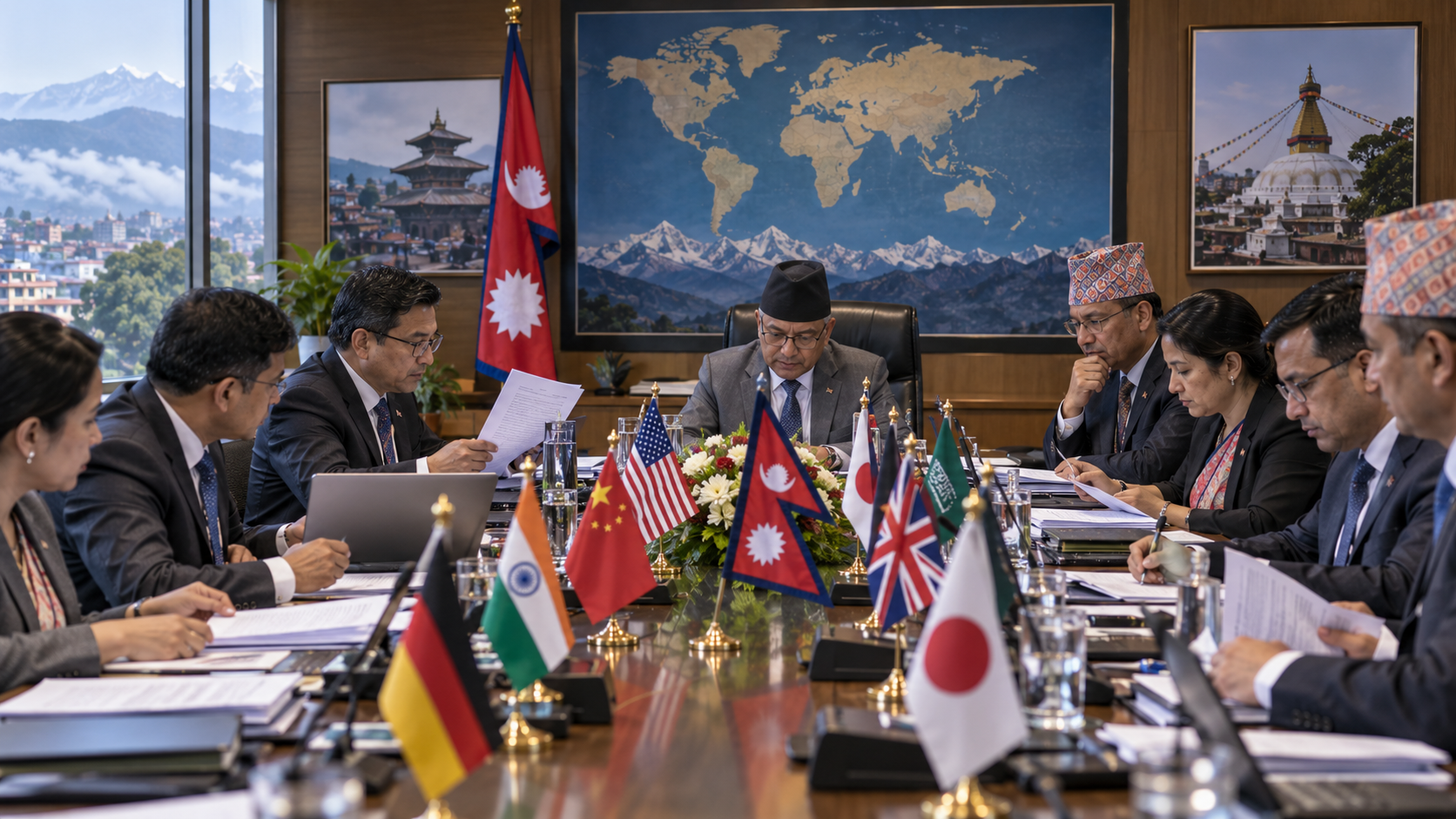
Acharya argues that Nepal's meetings with foreign governments and international financial institutions should be used to seek practical support for rebuilding damaged infrastructure and communities.
The UN General Assembly itself is not normally the venue where individual reconstruction funding packages are finalised. Instead, the value of the gathering lies in bringing together heads of government, development institutions, financial organisations and other decision-makers who can influence later negotiations.
That distinction is important. Diplomatic visibility does not automatically translate into financial commitments; sustained follow-up is required after the high-level meetings.
Another recommendation is greater coordination with countries facing similar climate and geographic vulnerabilities.
Acharya points to mountain countries, small island developing states, least developed countries and landlocked developing countries as potential partners for collective advocacy.
Such coalitions could allow countries with different geographic circumstances but overlapping climate and development concerns to present common positions on adaptation, finance, technology and resilience.
The approach also fits with the wider multilateral emphasis of the current UN session. The president of the 81st General Assembly has highlighted climate action, the needs of least developed and landlocked developing countries, and international cooperation as areas of focus.
The disaster also highlights the importance of scientific monitoring.
The 2020 ICIMOD-UNDP inventory identified 47 potentially dangerous glacial lakes across the Koshi, Gandaki and Karnali basins in Nepal, China and India, including 21 in Nepal. The assessment recommended continued monitoring, risk reduction measures and early-warning systems.
More recent scientific work on the Rasuwa disaster has similarly called for stronger high-Himalaya earth observation, hazard monitoring, risk communication and transboundary data sharing.
For Nepal's diplomacy, these findings provide a concrete basis for seeking cooperation on satellite observation, mountain science, hydrological monitoring and regional early-warning networks.
Acharya also argues that Nepal can use its diplomatic position to promote mountains as a more prominent issue in global climate discussions.
Mountain ecosystems are closely connected to downstream water supplies, agriculture, biodiversity, hydropower and human settlements. Risks in the high Himalaya therefore have consequences extending far beyond the communities closest to glaciers and high-altitude slopes.
The column suggests that Nepal's engagement should seek to carry mountain concerns into wider UN climate and development processes rather than treating them as a narrowly national issue.
Nepal is also hosting a high-level side event titled “Sagarmatha to the Sea: A Call to Action for a Climate-Resilient Future” on September 25.
Acharya argues that such an event can be used to bring together governments, development partners, international institutions, civil society and other stakeholders around a practical programme of action.
The emphasis on follow-up is significant. International conferences can generate political attention, but long-term results depend on institutions translating commitments into financing, technical cooperation, monitoring and implementation.
The broader message of the column is that Nepal's UN engagement should not end when its delegation leaves New York.
Climate justice, reconstruction financing, mountain resilience and disaster preparedness require continued diplomatic work across UN agencies, development banks, climate funds, bilateral partners and regional organisations.
Nepal already has an established international profile through its long-running UN peacekeeping contribution and participation in development and climate discussions. The current crisis provides another opportunity to place mountain vulnerability more prominently on the international agenda.
For Nepal, the immediate diplomatic challenge is therefore twofold: communicate the scale of the disaster and translate that attention into sustained cooperation on reconstruction, climate adaptation and mountain resilience.
The effectiveness of that effort will ultimately depend less on the visibility of a single UN address than on the institutional follow-up that comes afterward.
Comments
0 comments
Loading comments...