Nepal’s devastating Bhotekoshi flood has entered its 11th day, but the search for people still missing continues with no sign of slowing down. Even as the scale of the disaster becomes clearer, rescue teams are still finding survivors in places where families had almost lost hope.
According to the latest figures reported by the National Disaster Risk Reduction and Management Authority (NDRRMA), 1,344 bodies have been recovered, around 5,000 people remain unaccounted for, and 13,098 people have been rescued. A total of 5,663 injured people have received treatment, while more than 21,000 security personnel have been mobilised for search, rescue and relief operations.
The preliminary estimate of property and infrastructure damage has reached approximately Rs 387.54 billion, highlighting the enormous economic impact of the disaster.
Despite the enormous death toll, the rescue operation has produced extraordinary moments of hope.
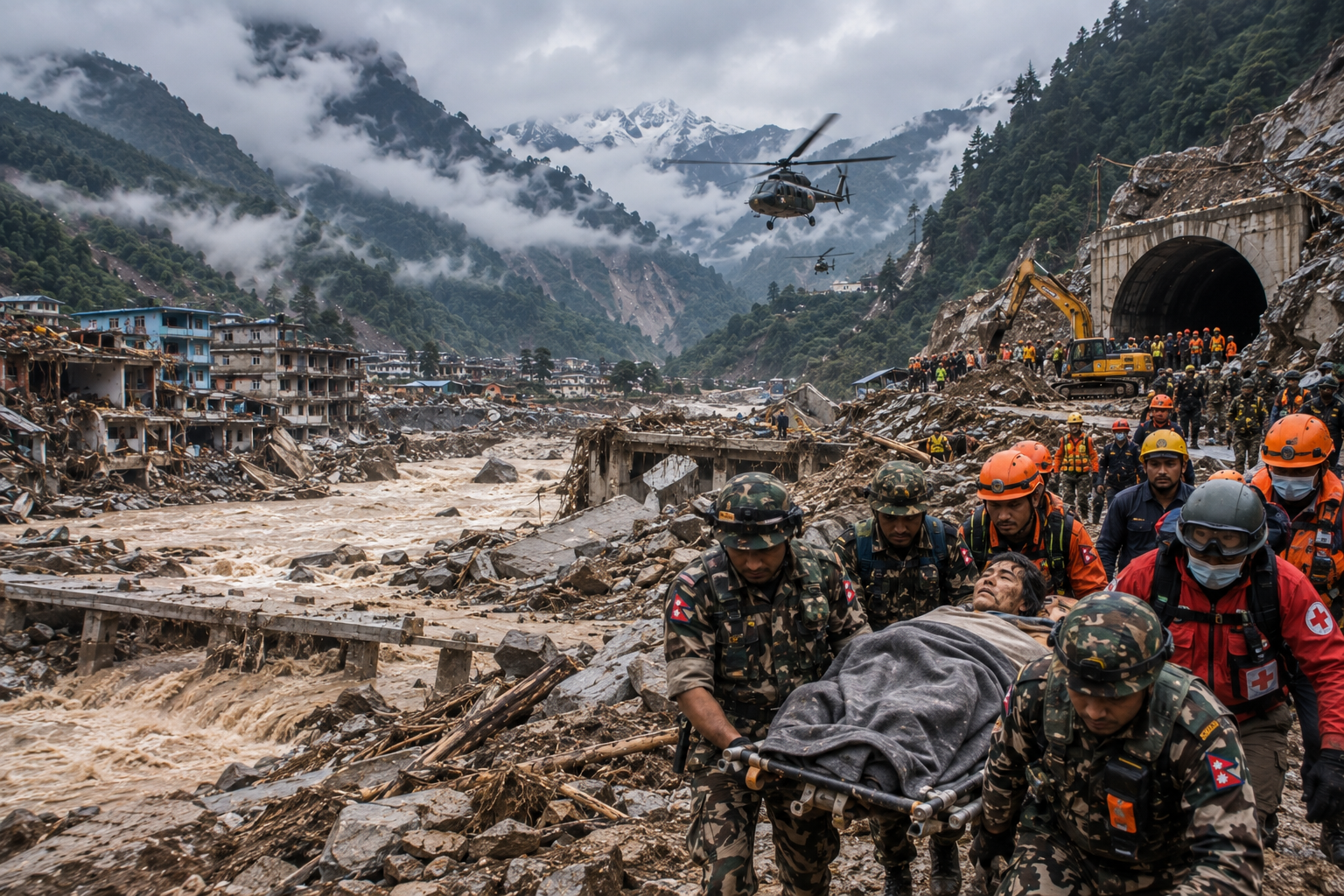
On Saturday, a Chinese national was rescued alive from the Upper Trishuli-1 hydropower tunnel, 11 days after the devastating flood. A joint team of the Nepali Army and South Korean disaster-response specialists located and rescued him from the tunnel and took him toward the Trishuli area for medical care.
Another remarkable rescue took place in Betravati, Nuwakot, where a 64-year-old woman, Chandika Shrestha, was found alive inside a house and rescued by a joint team of Nepal Police and the Armed Police Force. She was subsequently transported by helicopter to Kathmandu for treatment.
These rescues have renewed hope among families whose relatives remain missing, particularly those believed to have been working inside hydropower tunnels when the flood struck.
While rescue teams were able to save one person from Upper Trishuli-1, they also discovered two bodies inside the same tunnel.
The Nepali Army and a South Korean disaster-response team located the bodies during their search. One body had already been brought out of the tunnel, while rescuers were working to recover the second.
The development illustrates the difficult balance facing rescue workers: continuing to search for possible survivors while recovering those who did not make it.
Hydropower projects have become some of the most challenging locations in the ongoing search.
At the Chilime Hydropower Project, the Nepali Army deployed an excavator by helicopter to help remove mud and debris blocking access to the tunnel. The tunnel has been identified as one of the possible final locations requiring further investigation because rescuers have not yet been able to determine whether anyone remains inside.
Rescue teams are also continuing operations at other damaged hydropower projects across Rasuwa and Nuwakot.
The use of heavy machinery, helicopters and specialised international rescue teams reflects the extraordinary difficulty of clearing tunnels filled with mud, rocks and flood debris.
The government has deployed 21,402 security personnel from the Nepal Police, Nepali Army and Armed Police Force for search, rescue and relief operations.
The operation extends well beyond the original flood-hit areas. Rescue teams have been searching rivers and debris fields downstream in districts including Nuwakot, Dhading, Chitwan and Nawalparasi.
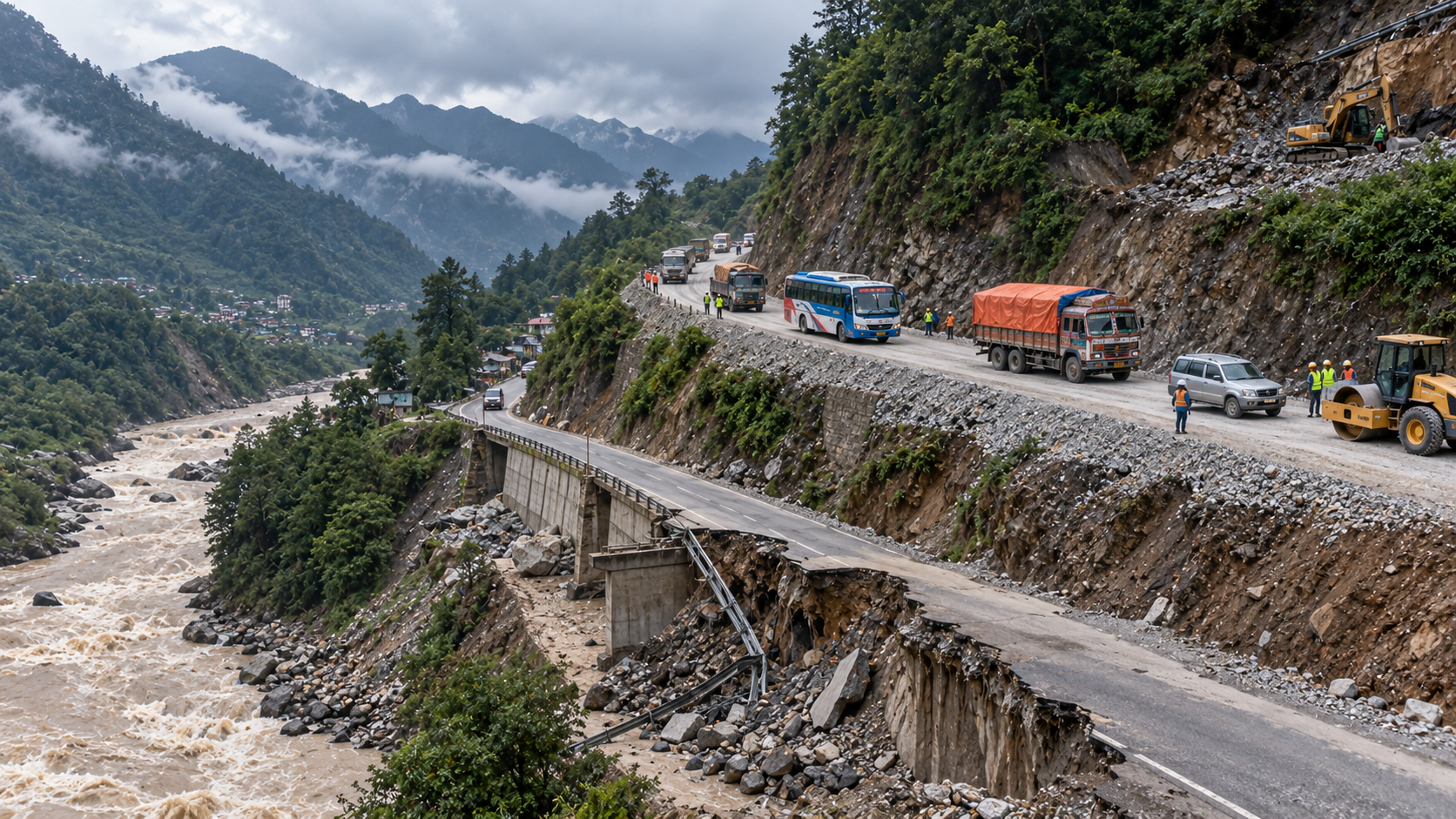
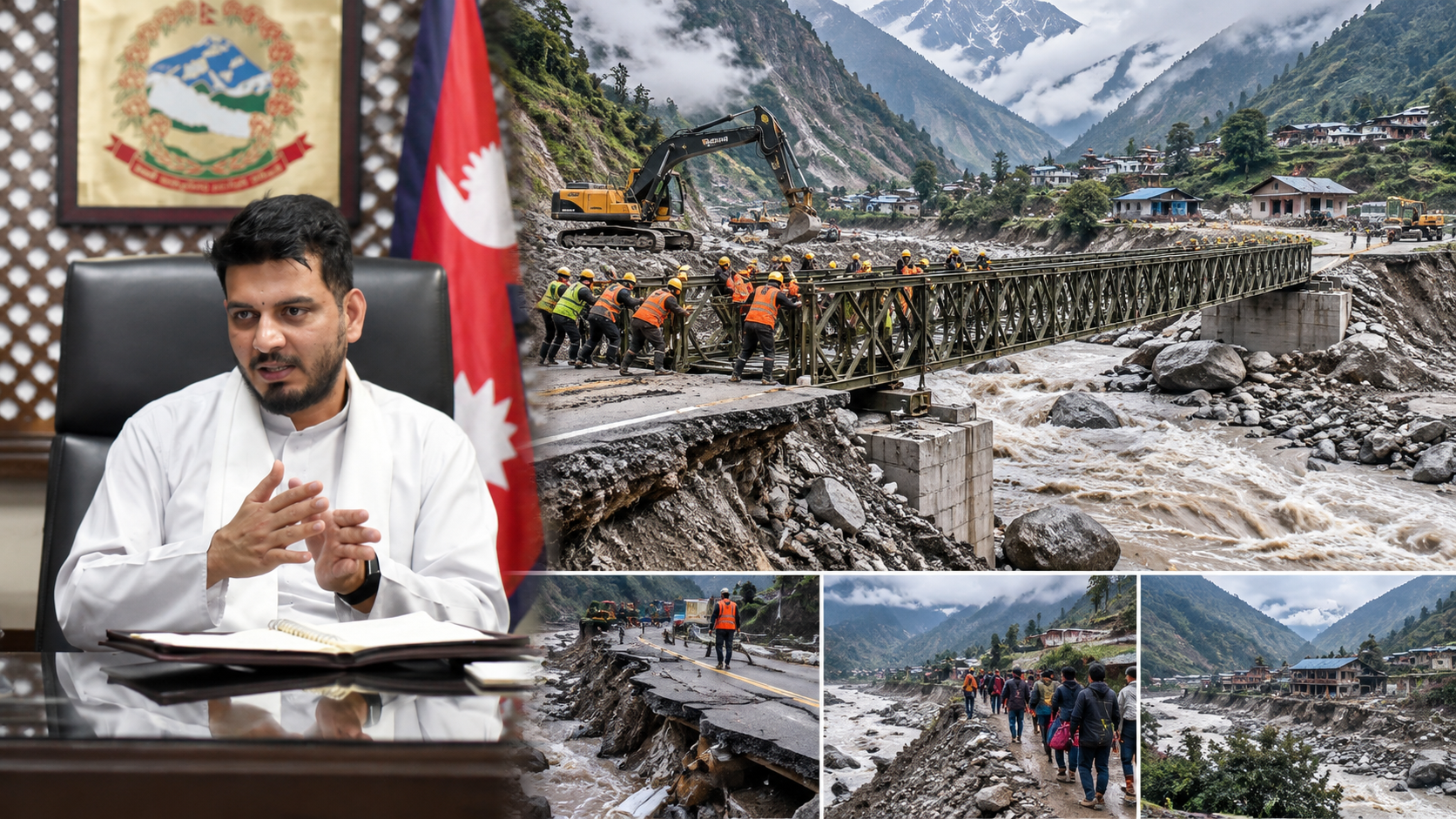
Helicopters, excavators and other heavy equipment are being used where roads and bridges have been destroyed.
Alongside the search operation, the government has continued distributing relief to affected communities.
According to the latest figures, 4,627 people are staying in holding centres, while authorities work to provide shelter and other assistance.
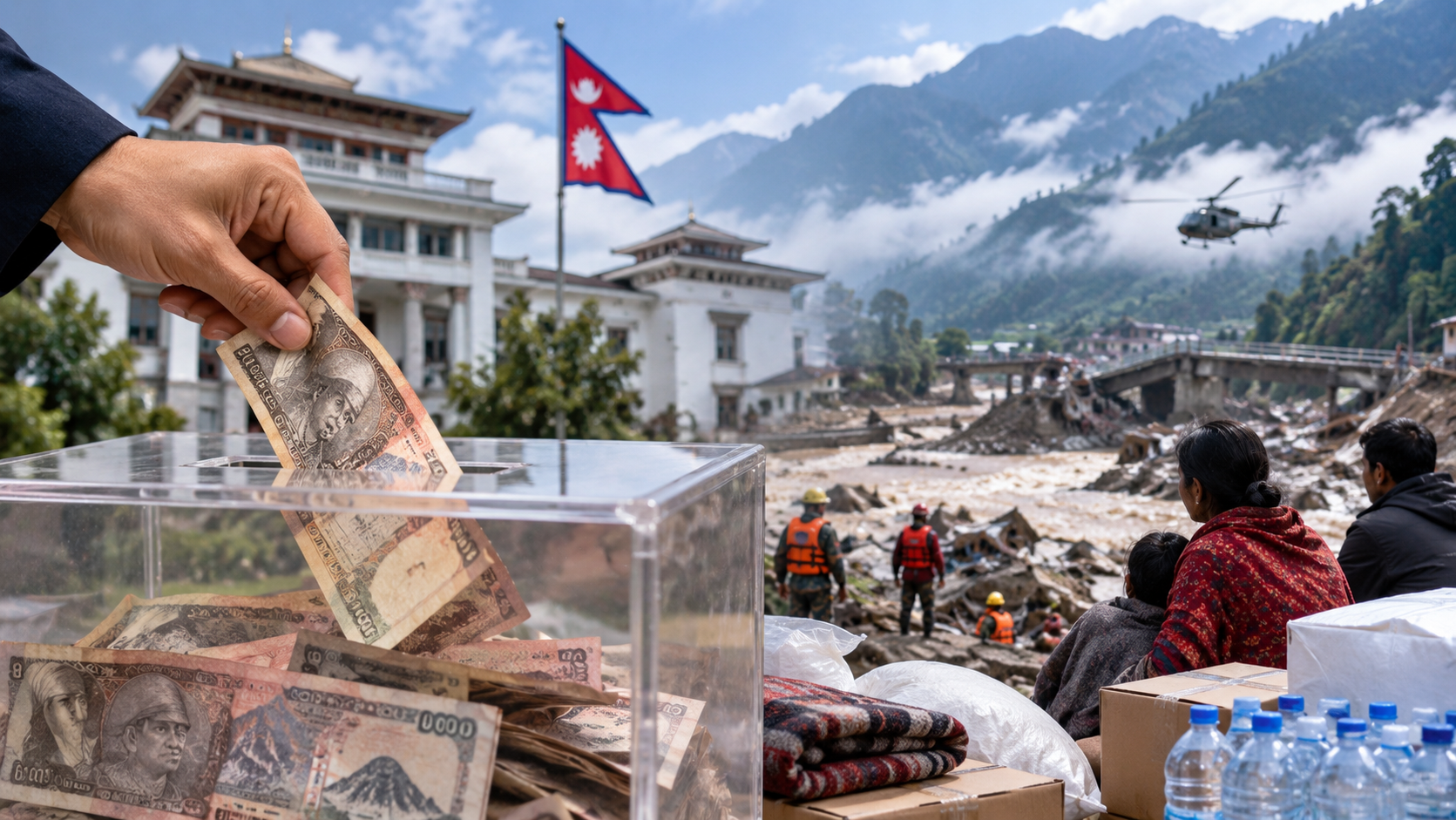
The government has also established a centralised system for receiving financial assistance through the Prime Minister's Disaster Relief Fund and other designated channels.
The fund had accumulated more than Rs 11 billion, according to the Prime Minister's Office.
For thousands of families, however, the biggest question remains unanswered: Where are their loved ones?
Only 96 of the recovered bodies had been formally identified and handed over to families according to the latest NDRRMA figures reported by eKantipur. The recovery of partial remains has further complicated the identification process.
Some families have already begun holding symbolic funerals for relatives who have remained missing for days, while others continue to wait for any information.
The discovery of survivors on the 10th and 11th days has given those families another reason not to give up.
The Bhotekoshi disaster has already become one of Nepal's most devastating recent natural disasters. But the final human and economic cost is still unknown.
Every newly accessible tunnel, riverbank and collapsed structure could provide either another heartbreaking discovery or another extraordinary rescue.
For the thousands still waiting, the rescue operation is not simply a national disaster response—it is a race against time to bring their loved ones home.
HamroBichar will continue to follow the Bhotekoshi disaster, rescue operations and rehabilitation efforts and publish verified updates as they become available.
Tags: Bhotekoshi Flood, Rasuwa Flood, Nepal Flood, Hydropower Rescue, Upper Trishuli, Nepal Disaster 2026, Flood Rescue, HamroBichar
Comments
0 comments
Loading comments...