Nepal brought mountain and island nations together at the UN to push for stronger climate finance, early-warning systems, technology access and international cooperation.
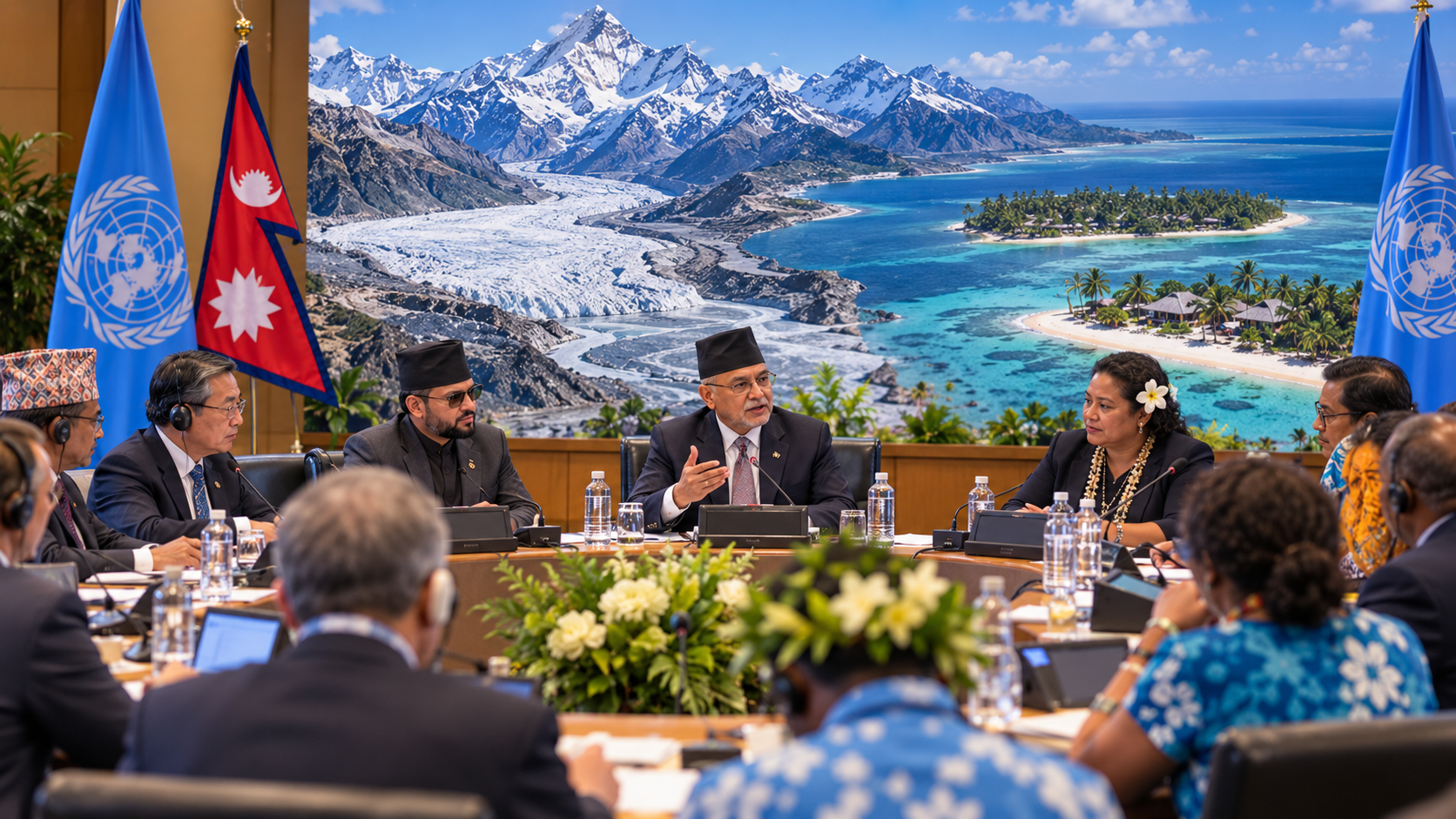
Nepal has brought mountain and island nations together at the United Nations to call for a more coordinated international response to climate change, linking the risks facing the Himalayas with those confronting low-lying island states.
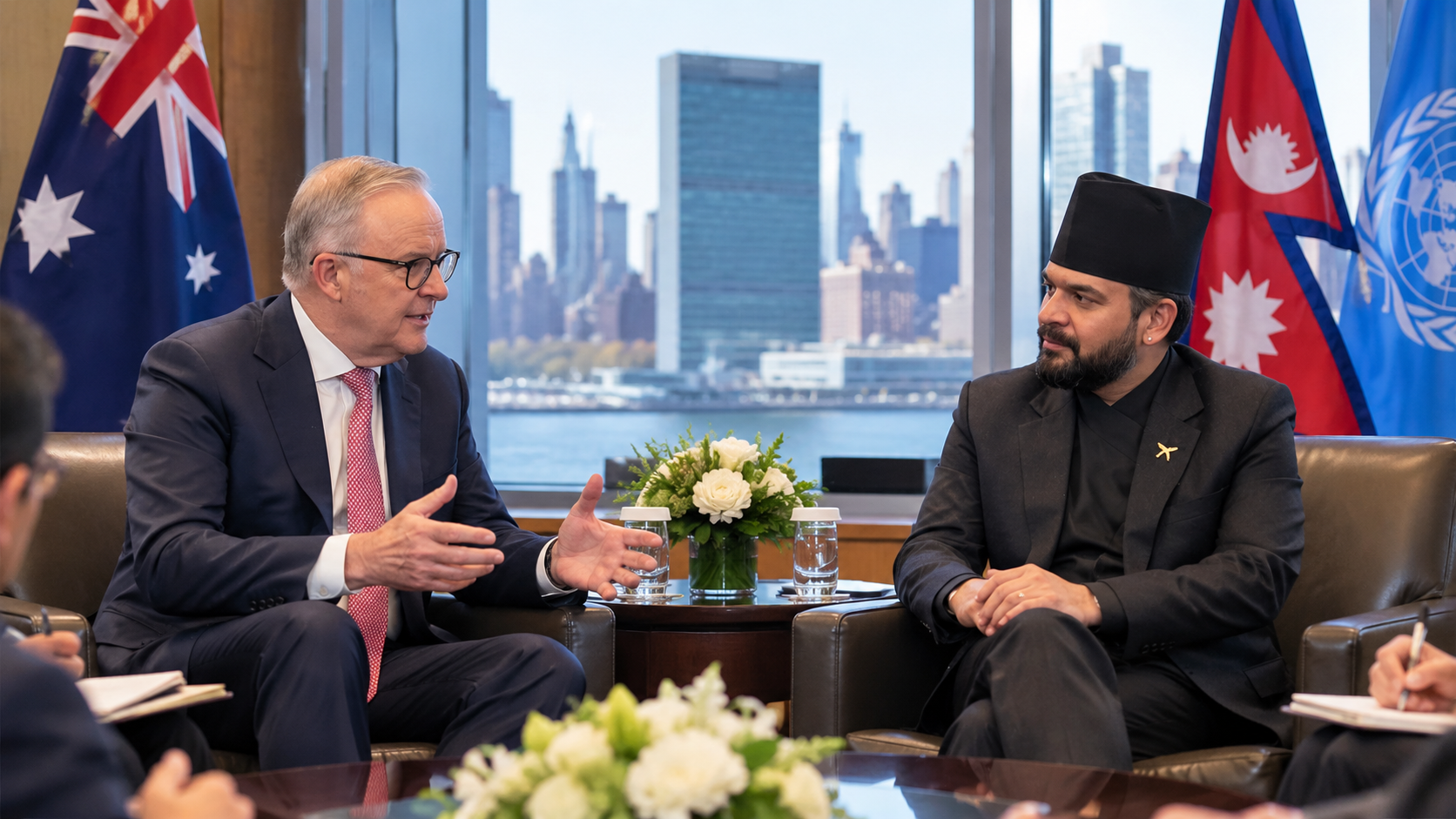
Foreign Minister Shisir Khanal convened the high-level event “Sagarmatha to the Sea: A Call to Action for a Climate-Resilient Future” on the sidelines of the 81st UN General Assembly. Representatives from Bhutan, the Maldives, New Zealand, Samoa, Tajikistan and other countries, along with senior UN officials, participated in the discussion.
The initiative came exactly one month after the August 26 Bhotekoshi disaster, when a rock and glacier collapse along the Nepal-China border triggered destructive flooding and caused extensive loss of life and infrastructure damage.
Nepal used the event to argue that climate impacts should not be treated as isolated regional problems.
Khanal said climate systems do not follow political boundaries and connected the melting of Himalayan glaciers and changing river systems with risks eventually reaching coastal and island communities.
The event brought together countries with very different geographic circumstances but similar concerns about climate vulnerability. Mountain states highlighted glacier retreat and flood risks, while island nations discussed sea-level rise, coastal erosion, saltwater intrusion and threats to infrastructure and livelihoods.
A major theme was the unequal ability of countries to identify and respond to climate-related hazards before they become disasters.
Bhutan’s representative cited the contrast between the 2025 glacier disaster near Blatten in Switzerland, where monitoring and evacuation measures helped limit casualties, and the recent Himalayan disaster in which communities were hit by rapidly developing floods and ice-rock flows.
The discussion highlighted satellite monitoring, sensors, climate modelling and other technologies as tools that can improve early-warning systems. Speakers also stressed that access to such technologies remains uneven among countries.
Nepal called for stronger early-warning networks, climate-resilient infrastructure, scientific cooperation and greater access to climate finance and technology for developing countries.
Khanal also called for greater international attention to vulnerable mountain regions in global climate negotiations.
He urged countries to ensure that the Fund for Responding to Loss and Damage receives adequate resources and becomes accessible to countries facing severe climate impacts.
Nepal has separately requested support from the fund, whose board is considering the country's request, according to the Kathmandu Post report.
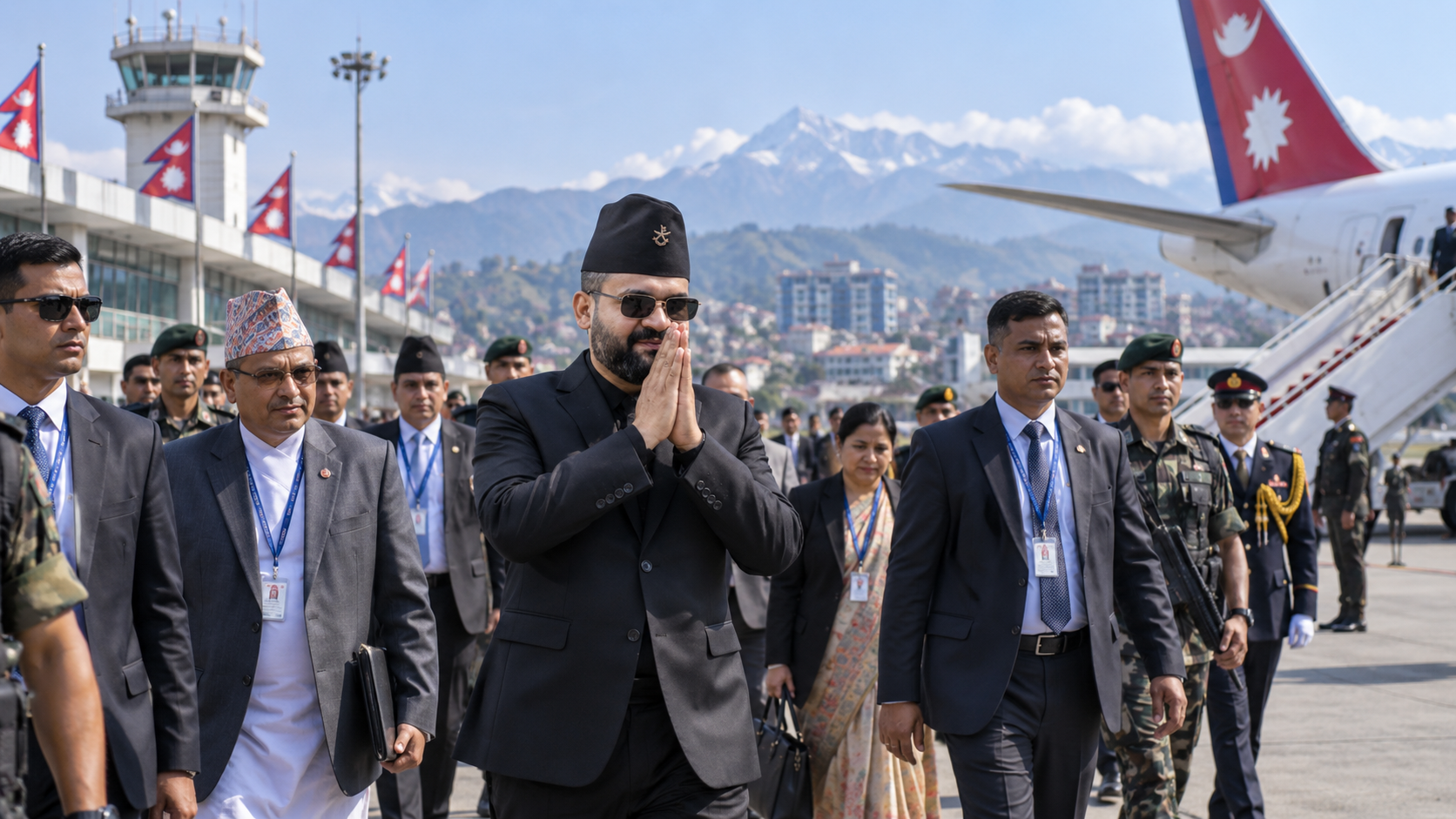
The issue also formed part of Prime Minister Balendra Shah’s UN General Assembly address two days earlier, when he called for stronger climate finance, early-warning systems and international cooperation for vulnerable countries. Nepal’s official transcript records his call for joint monitoring of dangerous glacial lakes and stronger cross-border early-warning systems.
The meeting also highlighted the wider significance of changes occurring in mountain environments.
According to figures cited at the event, mountains provide around 55–60 percent of the world’s annual freshwater flows, while roughly two billion people depend on mountain water for their livelihoods and daily needs.
The Kathmandu Post reported that Nepal has lost close to one-third of its ice in recent decades, while the broader Himalayan region contains more than 63,000 glaciers.
The implications extend beyond Nepal because Himalayan rivers feed major river systems across South Asia.
A UNEP representative said the Hindu Kush Himalayan region feeds 10 major river systems supporting as many as two billion people, underscoring the downstream consequences of changes in glaciers and watersheds.
Several countries also highlighted assistance following the August disaster.
New Zealand announced a contribution of $3.5 million to humanitarian organisations supporting Nepal’s response. Norway has provided 10 million Norwegian kroner for humanitarian assistance, including shelter, clean water and health services.
China, which was also affected by the cross-border disaster, said it had sent rescue experts and shared satellite imagery and hydrological data with Nepal.
The assistance comes as Nepal continues moving from emergency response toward longer-term recovery and reconstruction in areas affected by the floods.
The UN event is not intended as a standalone initiative. The UN Economic and Social Commission for Asia and the Pacific and Nepal are scheduled to convene another regional meeting in Bangkok next month to discuss early-warning systems, data sharing and coordinated climate adaptation.
Khanal also indicated that Nepal intends to continue using the Sagarmatha to the Sea platform to connect governments, scientists, financial institutions and vulnerable communities.
Nepal hosted its first Sagarmatha Sambaad in 2025 around climate change, mountains and humanity and plans to hold another edition next year.
By bringing mountain and island countries into the same discussion, Nepal sought to frame climate vulnerability as a connected global issue rather than a collection of separate regional problems.
The message from the New York gathering was that glacier loss, changing rivers, rising seas and coastal risks are interconnected, while effective adaptation depends on access to information, technology, financing and cooperation.
For Nepal, the initiative adds another dimension to its climate diplomacy following Shah’s UN address and the government’s efforts to draw international attention to the consequences of the August disaster.
Comments
0 comments
Loading comments...