China has objected to expanded US sanctions on Iranian airlines, saying unilateral measures without international legal or UN Security Council backing should be opposed.
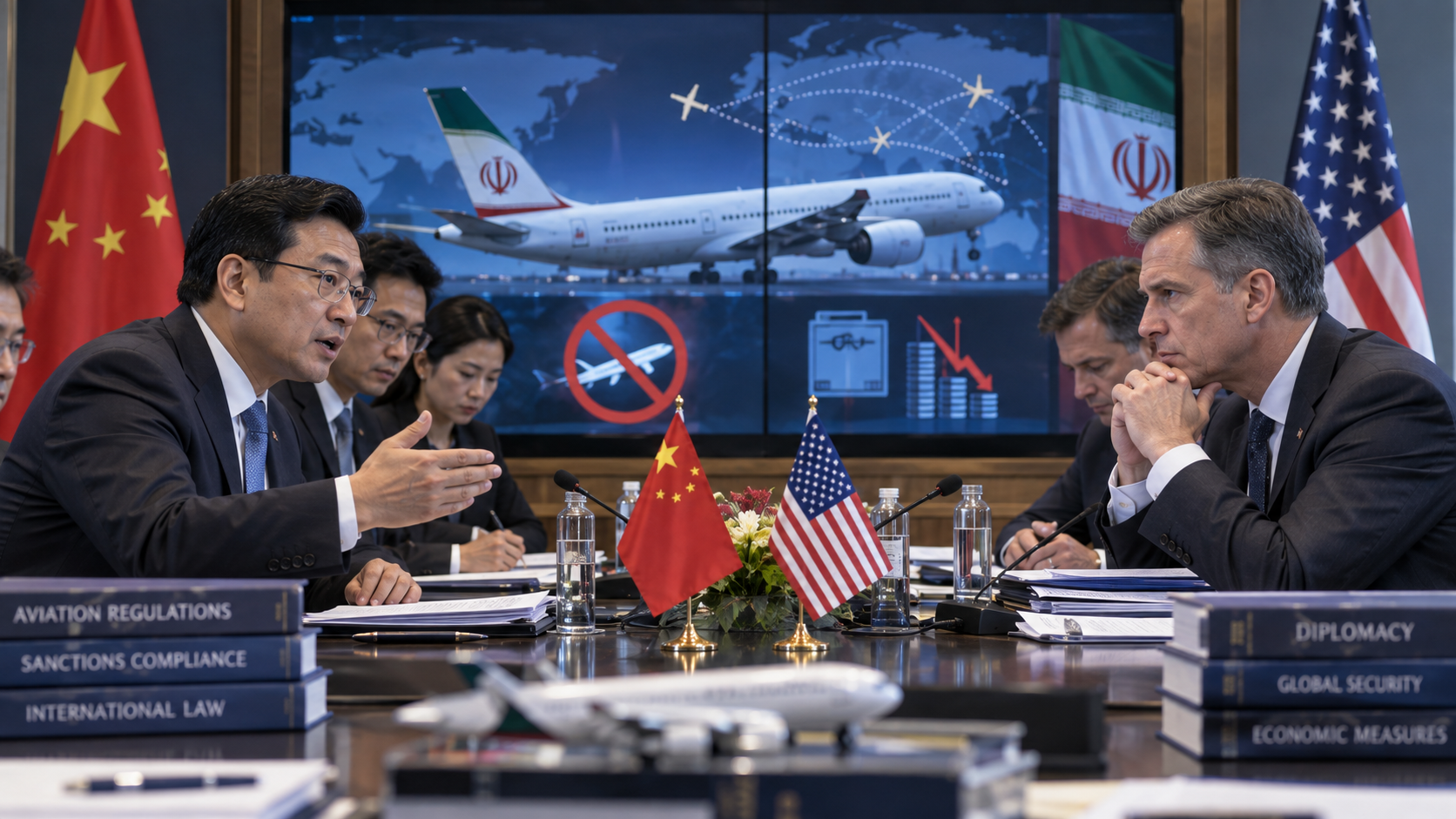
China has objected to expanded US sanctions targeting Iranian airlines, arguing that unilateral restrictions without a basis in international law or authorisation from the United Nations Security Council should not be imposed.
Chinese Foreign Ministry spokesperson Guo Jiakun made the remarks in Beijing on September 22, a day after US Treasury Secretary Scott Bessent warned that Iranian airlines could face severe difficulties operating internationally under Washington's sanctions policy.
According to China's Foreign Ministry, Beijing's position is that it consistently opposes unilateral sanctions that lack international legal backing or approval from the UN Security Council.
The statement came as Washington prepares to increase pressure on Iran's aviation sector and companies that provide services to Iranian carriers.
The issue also comes ahead of a planned meeting between US President Donald Trump and Chinese President Xi Jinping, adding the sanctions dispute to a broader period of engagement between Washington and Beijing.
The US Treasury Department announced on September 8 that it had sanctioned 36 targets connected with Iran's aviation sector. The action included 27 Iranian airlines and other companies and intermediaries accused by Washington of supporting Iran's aviation activities.
The Treasury said the measures were intended to restrict networks involved in aircraft procurement, logistics and other services connected to Iran's aviation sector.
Washington also warned companies outside Iran that provide certain services to sanctioned Iranian airlines that they could face consequences under US sanctions.
Bessent subsequently said companies providing fuel, landing services or ticket sales to Iranian aircraft could risk losing access to the US dollar financial system.
Iranian airlines have faced extensive restrictions for years, affecting their access to aircraft, spare parts, maintenance equipment and international aviation services.
The latest US measures broaden the potential reach of those restrictions by targeting companies and intermediaries outside Iran that are considered to be supporting the country's aviation sector.
The practical effect will depend partly on how foreign aviation companies, airports, financial institutions and service providers respond to the threat of secondary sanctions.
China remains an important economic partner for Iran, while Beijing has repeatedly criticised unilateral sanctions imposed by individual countries.
The latest dispute illustrates the wider differences between China and the United States over how economic restrictions should be used in dealing with Iran.
China's objection does not itself cancel or alter US sanctions. The measures announced by Washington remain part of US law and policy, while their effect on international businesses depends on compliance decisions and enforcement by US authorities.
The dispute also comes at a sensitive moment in US-China relations, with economic discussions between senior officials taking place before the two countries' leaders are due to meet.
For Iran's aviation industry, the central question will be whether international service providers continue supporting Iranian carriers despite the potential financial and sanctions-related risks.
Comments
0 comments
Loading comments...