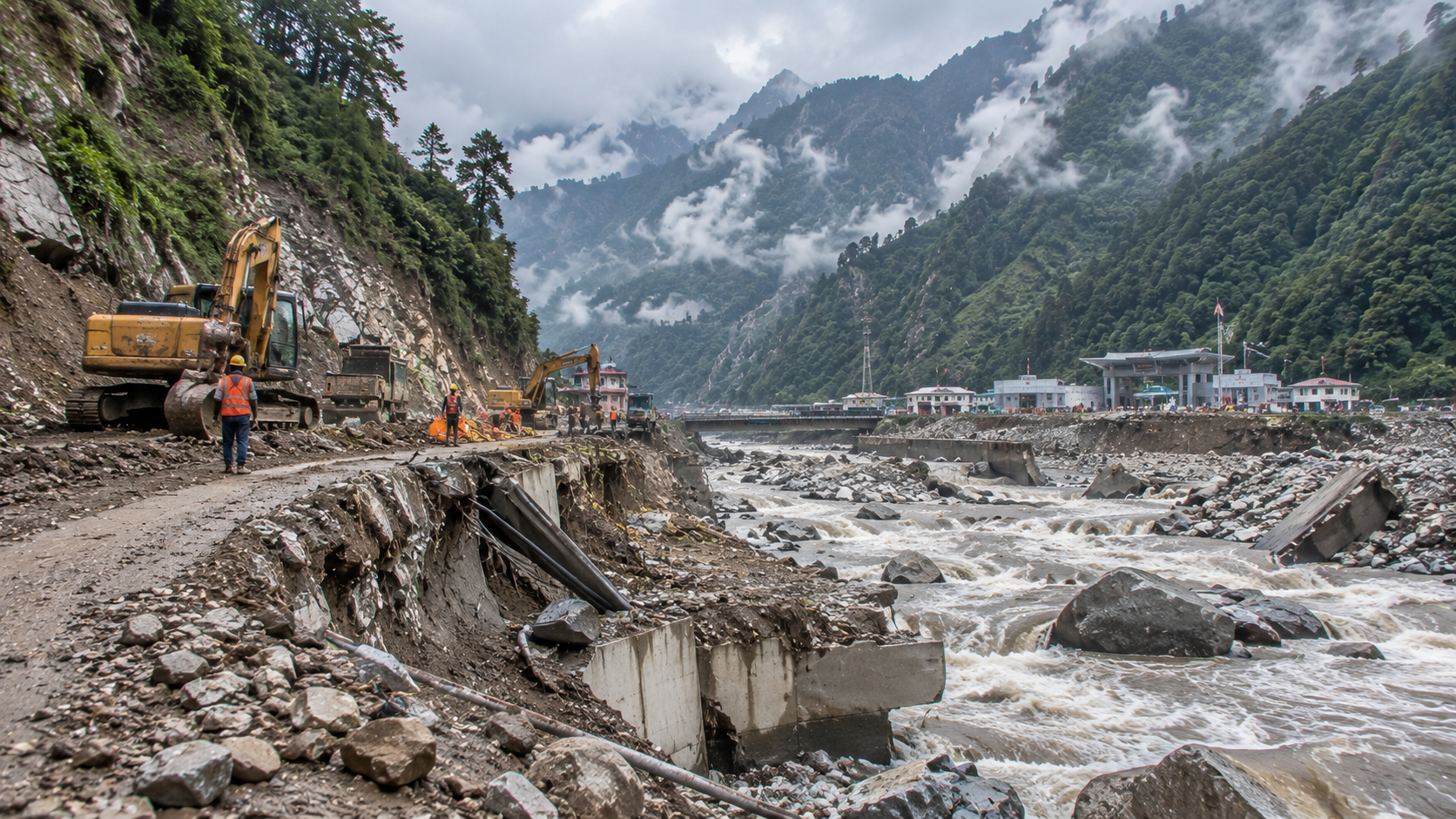
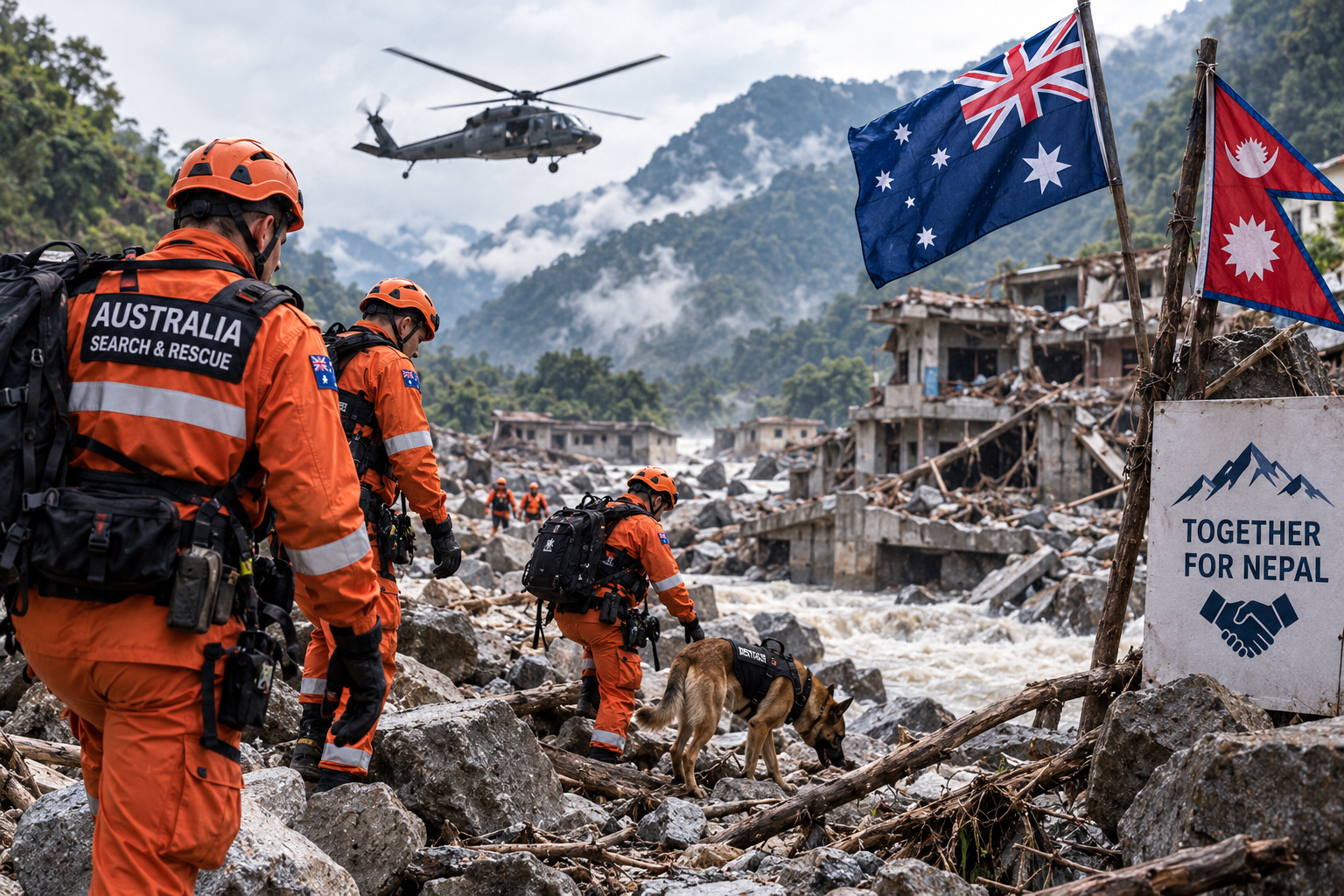
Prime Minister Balendra Shah’s first UN General Assembly address offers Nepal an opportunity to move beyond describing disaster losses and make a concrete case for climate finance, Himalayan cooperation and resilient reconstruction.
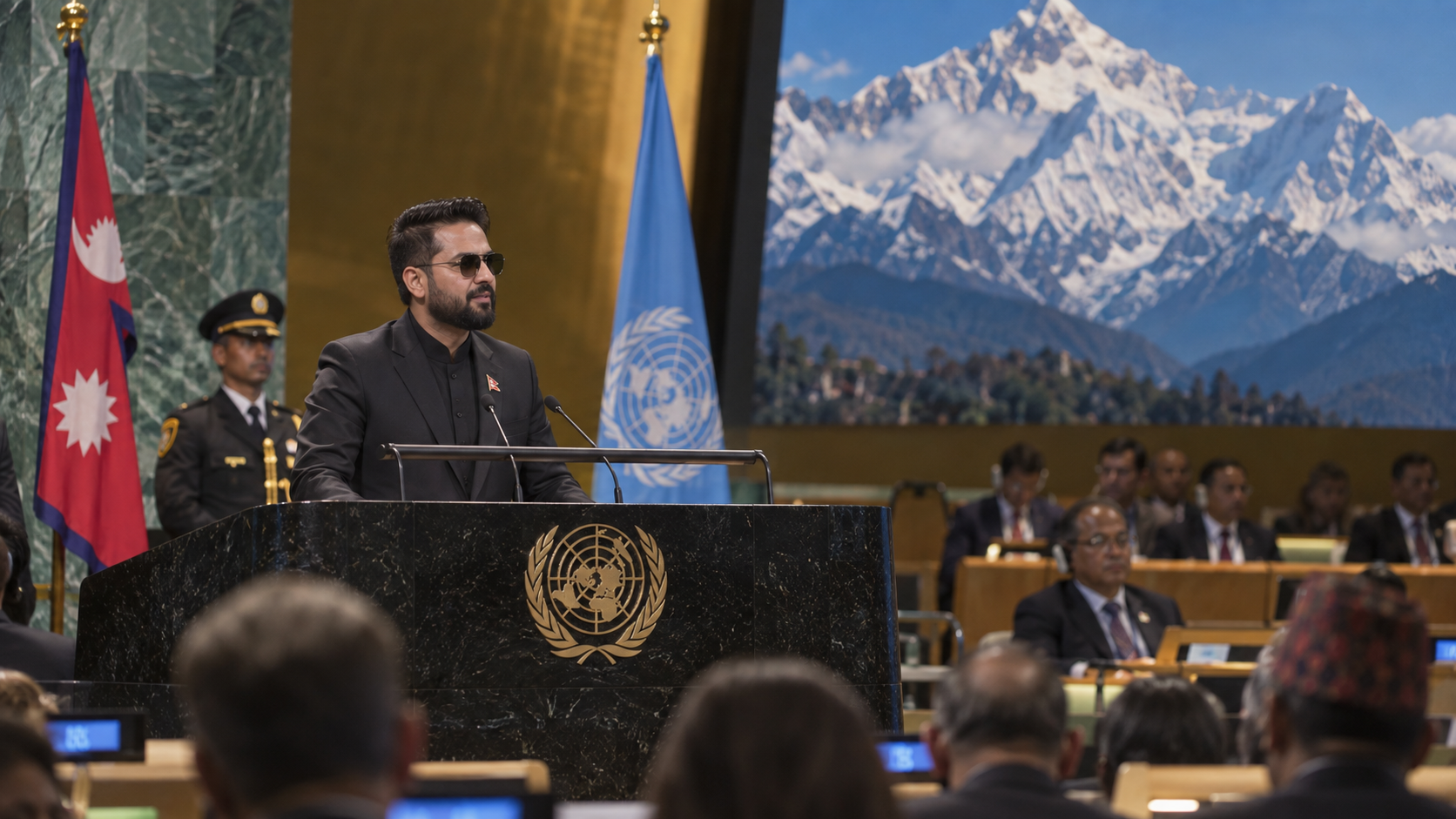
Prime Minister Balendra Shah is preparing to address the United Nations General Assembly in New York on September 24, his first major appearance on the international diplomatic stage since taking office. The timing could hardly be more consequential for Nepal.
The August 26 Bhotekoshi disaster has transformed what might otherwise have been a routine diplomatic appearance into an opportunity to explain Nepal’s growing exposure to climate and mountain hazards—and to seek practical international support for recovery and resilience. Shah is scheduled to travel to New York on September 22 and return on September 26.
But the strongest speech would not simply ask the world to sympathise with Nepal.
It would ask the international community to help build systems that can prevent the next disaster from becoming another national tragedy.
The Bhotekoshi disaster provides a powerful human story, but Nepal’s message should not stop at the number of people killed, missing or displaced.
As of September 11, authorities had recovered 1,385 bodies while 5,130 people remained missing, according to figures reported by The Kathmandu Post. The government has estimated that rebuilding flood-damaged infrastructure will require about Rs723.31 billion.
These figures demonstrate the scale of the emergency. They should also become the starting point for a larger argument: Nepal needs international cooperation to understand, prepare for and withstand increasingly dangerous hazards in the Himalayan region.
The question Shah should put before world leaders is therefore not simply, “Who will help Nepal recover?”
It should also be, “How can the world help Nepal become safer before the next disaster arrives?”
Nepal has long argued that its contribution to global greenhouse-gas emissions is very small compared with the risks it faces.
That argument has a legitimate place in international climate diplomacy. Nepal has repeatedly called for accessible climate finance, technology transfer and support for vulnerable mountain communities. In its recent climate diplomacy, Nepal has also stressed the importance of making the Loss and Damage Fund accessible to vulnerable developing countries.
But climate justice becomes more persuasive when it is connected to specific requests.
Shah should seek faster and more predictable access to climate and disaster financing, particularly for recovery and resilient infrastructure. He should also make clear what Nepal itself is prepared to do: improve land-use planning, strengthen building standards, expand early-warning systems, improve scientific monitoring and make disaster spending more transparent.
International support and domestic responsibility should be presented as complementary, not competing, ideas.
One of the clearest lessons from the Bhotekoshi disaster is that mountain hazards do not respect national borders.
The source article brings together calls for Nepal, India and China to cooperate more closely on high-altitude monitoring, scientific information and early warnings.
This idea deserves serious consideration.
A regional Himalayan mechanism could facilitate the sharing of information about glacial lakes, river levels, extreme weather and other hazards. It could also establish clearer procedures for communicating warnings rapidly to authorities and communities downstream.
Such cooperation would not require Nepal to compromise its sovereignty. On the contrary, better information would strengthen Nepal’s ability to protect its citizens.
The mountains are shared geography. Disaster preparedness should reflect that reality.
Financial assistance will be essential for rebuilding roads, bridges, hydropower infrastructure and communities damaged by the floods. But money alone will not solve Nepal’s mountain-risk problem.
Shah should make technology and scientific cooperation central to his message.
Nepal needs stronger systems for monitoring glaciers and high-altitude lakes, mapping hazards, forecasting floods, communicating warnings and designing infrastructure capable of surviving extreme events.
The country also needs access to satellite information, improved hydrological data and technical expertise.
The goal should be to move from a model in which Nepal repeatedly seeks assistance after disasters to one in which international cooperation helps reduce losses before disasters occur.
The international Loss and Damage framework was created to help particularly vulnerable developing countries address economic and non-economic losses associated with climate change.
For Nepal, the challenge is turning that international architecture into accessible support.
The government-led assessment of the Bhotekoshi flood has put recovery and reconstruction needs at approximately $4.7 billion, including the costs of rebuilding damaged infrastructure and restoring affected communities.
That is an enormous burden for a country with limited fiscal space.
Nepal should therefore argue for financing that is timely, accessible and suited to long-term resilience. Where possible, grants and highly concessional support should be prioritised for disaster recovery rather than leaving already vulnerable communities with additional debt.
But Nepal should also arrive at the negotiating table with credible assessments, transparent plans and clear priorities. Strong evidence will make the diplomatic case stronger.
There is another important dimension to the speech.
Nepal sits between India and China, while its international development and security relationships extend far beyond South Asia. Climate diplomacy should not become another arena in which Nepal is pressured to choose sides.
A stronger position would be to cooperate with everyone where Nepal's interests require it.
That means seeking scientific cooperation with China and India, working with international climate institutions, engaging other mountain countries and building partnerships with vulnerable developing states.
Strategic autonomy should not mean diplomatic isolation. It should mean the freedom to cooperate according to Nepal's national interests.
A UN speech lasts only minutes. The diplomacy surrounding it can last much longer.
The Kathmandu Post has reported that Shah's New York programme is relatively limited, with Foreign Minister Shisir Khanal expected to handle a number of ministerial-level engagements. Officials have also said that Shah's visit is intended to draw international attention to Nepal's climate vulnerability and reconstruction needs.
That makes the meetings around the General Assembly particularly important.
Nepal should use them to build a coalition around Himalayan climate resilience rather than simply seeking one-off assistance.
Mountain countries, least-developed countries and other climate-vulnerable states share many of Nepal's concerns. A coordinated diplomatic platform could give those concerns greater weight.
There is a risk in presenting Nepal exclusively as a victim of climate change.
Nepal should acknowledge its vulnerabilities while also demonstrating its own efforts.
Forest conservation, renewable energy, electric mobility, disaster preparedness and community-level adaptation can all strengthen the country's credibility when it asks others to do more.
The message should be straightforward: Nepal accepts responsibility for reducing its own risks, but it cannot manage a global climate problem alone.
That is a more credible argument than either blaming wealthy countries for everything or pretending international support is unnecessary.
Balendra Shah's UN address will attract attention because of its timing, his political profile and the scale of the disaster that has pushed him onto the international stage.
But the success of the visit should not be measured by applause or headlines.
It should be measured by what happens afterwards.
Does Nepal secure stronger scientific partnerships? Does it gain better access to climate finance? Can it establish more effective regional early-warning cooperation? Can international commitments translate into safer roads, settlements and hydropower projects?
Those are the questions that matter.
Shah has an opportunity to tell the world that Nepal is not simply asking for sympathy after another Himalayan disaster. It is asking for a fairer and more practical system of international cooperation—one that combines climate finance, science, technology, regional coordination and domestic accountability.
The Bhotekoshi disaster has already demonstrated the cost of being unprepared.
Nepal's message in New York should be that the next chapter must be about preparation, resilience and action.
Comments
0 comments
Loading comments...