Nepal and China are working on plans to restore the Rasuwagadhi border crossing after the Bhote Koshi flood destroyed key infrastructure. Nepal is considering a temporary track followed by a safer long-term road.
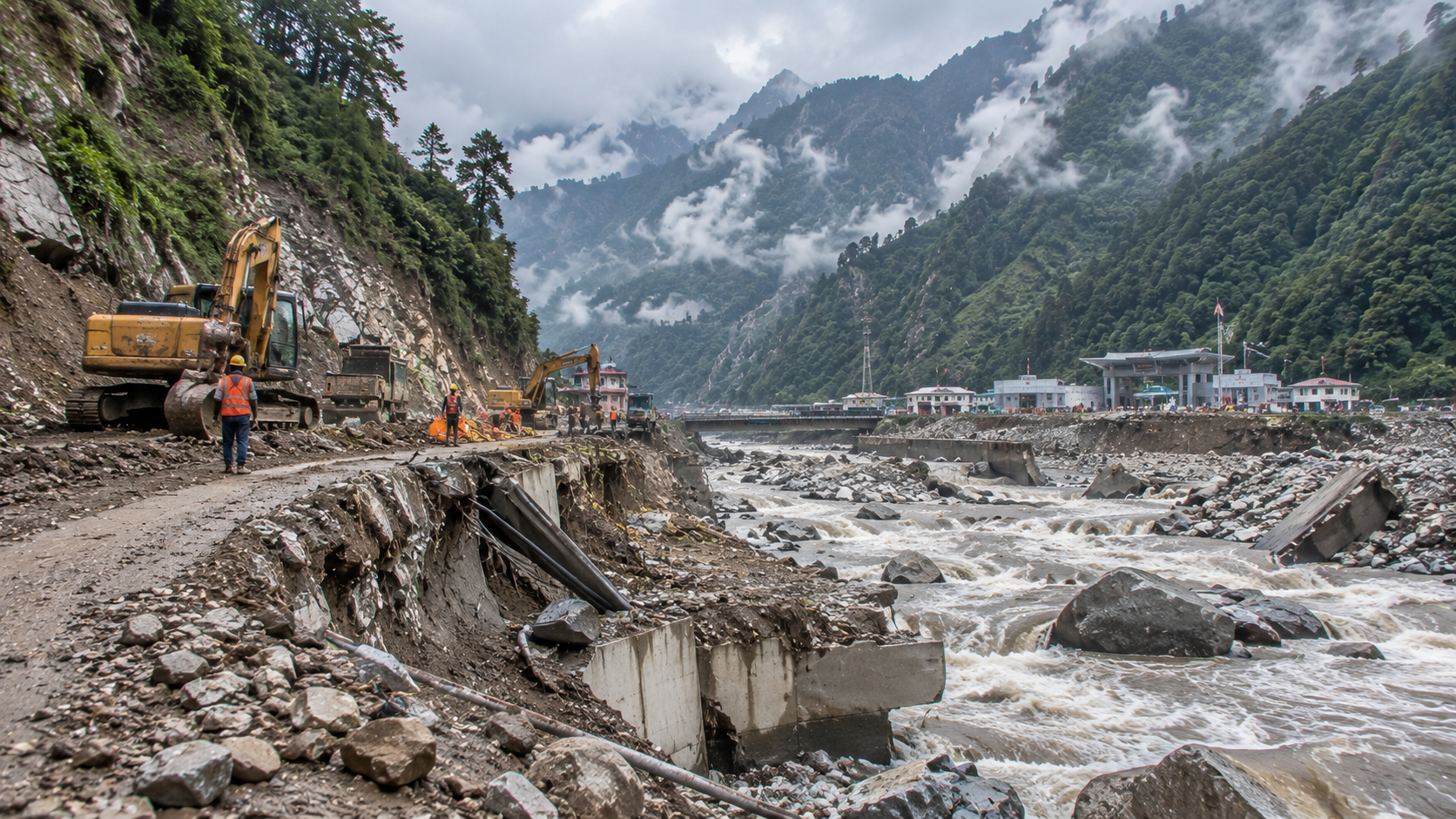
Nepal and China are working on plans to restore the Rasuwagadhi border crossing as a major trade route after the August 26 Bhote Koshi flood severely damaged the road and infrastructure connecting Nepal with China.
Nepal has proposed that China support the reconstruction of the road between Rasuwagadhi and Syabrubesi, with the two sides holding discussions on how to restore the route. Infrastructure Development Minister Sunil Lamsal said China has given a verbal indication that it is willing to provide assistance, although no formal written agreement has yet been signed.
The government is considering a temporary track for immediate access while working toward a safer and more permanent road in the longer term.
The August 26 flood severely damaged the Rasuwagadhi area and sections of the road corridor leading toward Syabrubesi. The disaster also disrupted a key overland connection between Nepal and China.
Minister Lamsal said the government is examining safer locations around the existing road alignment to restore access. In the immediate phase, authorities plan to use a temporary track to maintain connectivity toward Rasuwagadhi while longer-term reconstruction is prepared.
Nepal's Foreign Ministry has described the August 26 disaster as a devastating flood that struck the Bhote Koshi at Rasuwagadhi along the Nepal-China border, sending large quantities of water, mud and debris downstream and damaging infrastructure across several districts.
According to Lamsal, Nepal has formally approached China for assistance in rebuilding the Rasuwagadhi-Syabrubesi road.
The minister said China had provided a verbal commitment to help, but stressed that a written agreement had not yet been concluded. Discussions between the two governments are continuing as officials work out the reconstruction arrangements.
The proposed reconstruction is significant because Rasuwagadhi is one of Nepal's principal trade connections with China. The route has previously faced repeated disruptions from floods, landslides and other natural disasters.
The flood has also prompted discussion about disaster early-warning mechanisms between Nepal and China.
Lamsal said there had been criticism over the absence of advance warning from the Chinese side before the flood. He said, however, that the event appeared to have been unexpected on the Chinese side as well, with the sudden disturbance in the upper mountainous area not being detected in time.
According to the minister, Nepal and China are now discussing the possibility of developing a system capable of monitoring changes in high-altitude glacial lakes and other potential hazards in real time.
Nepal has also begun work toward establishing a disaster-information exchange process with China. Lamsal said the Cabinet had assigned the Ministry of Foreign Affairs to advance the process following the disaster.
The government says rebuilding the road alone will not be enough.
Authorities are considering broader hazard assessments for settlements, markets and transport routes that could be exposed to glacial-lake outburst floods or other high-altitude hazards. A separate study team has already started examining vulnerable locations, with a detailed report expected after the assessment.
The approach reflects the growing need to incorporate disaster risk into infrastructure planning in Nepal's mountain districts.
Recent reporting indicates that several sections of the wider Galchhi-Trishuli-Mailung-Syabrubesi-Rasuwagadhi corridor have been severely damaged, while authorities are working on temporary tracks and Bailey bridges to restore transportation links.
The reconstruction effort also extends beyond the border road.
According to Lamsal, the government has identified thousands of households affected by the Bhote Koshi flood and has established temporary holding centres for displaced people. Authorities are preparing to move families from temporary centres into safer temporary accommodation, including rented housing where possible.
The government is also considering a longer-term settlement approach based on land pooling and township development. Lamsal said the target is to develop smaller settlements over the next two years rather than rebuilding vulnerable communities in their previous locations.
The reopening of Rasuwagadhi has significance beyond transportation.
The border point provides an important route for Nepal-China trade, and prolonged disruption can affect freight movement, businesses and supply chains. Earlier this year, the Syabrubesi-Rasuwagadhi section had already been operating under difficult conditions following previous flood damage, with temporary tracks being used in parts of the corridor.
The latest disaster has made the need for a more resilient connection even more urgent.
Nepal Police's latest travel advisory reported on September 12 that major sections around the Rasuwagadhi border and the Pasang Lhamu Highway remained severely affected by flooding and river erosion, with travellers toward Syabrubesi being directed through a single-lane dirt-track detour.
For Nepal, the challenge is therefore twofold: restore the border connection quickly enough to revive movement and trade, while ensuring that the reconstructed route is safer than the infrastructure that was destroyed.
The proposed cooperation with China could play an important role in that process, but the immediate priority remains establishing safe temporary access and completing the technical assessments needed for permanent reconstruction.
Comments
0 comments
Loading comments...