
Nepal Faces Growing Criticism Over High Tax on Sanitary Pads
By Ranjeet YadavPublished: May 16, 2026Updated: October 16, 2026Reading time: 4 min
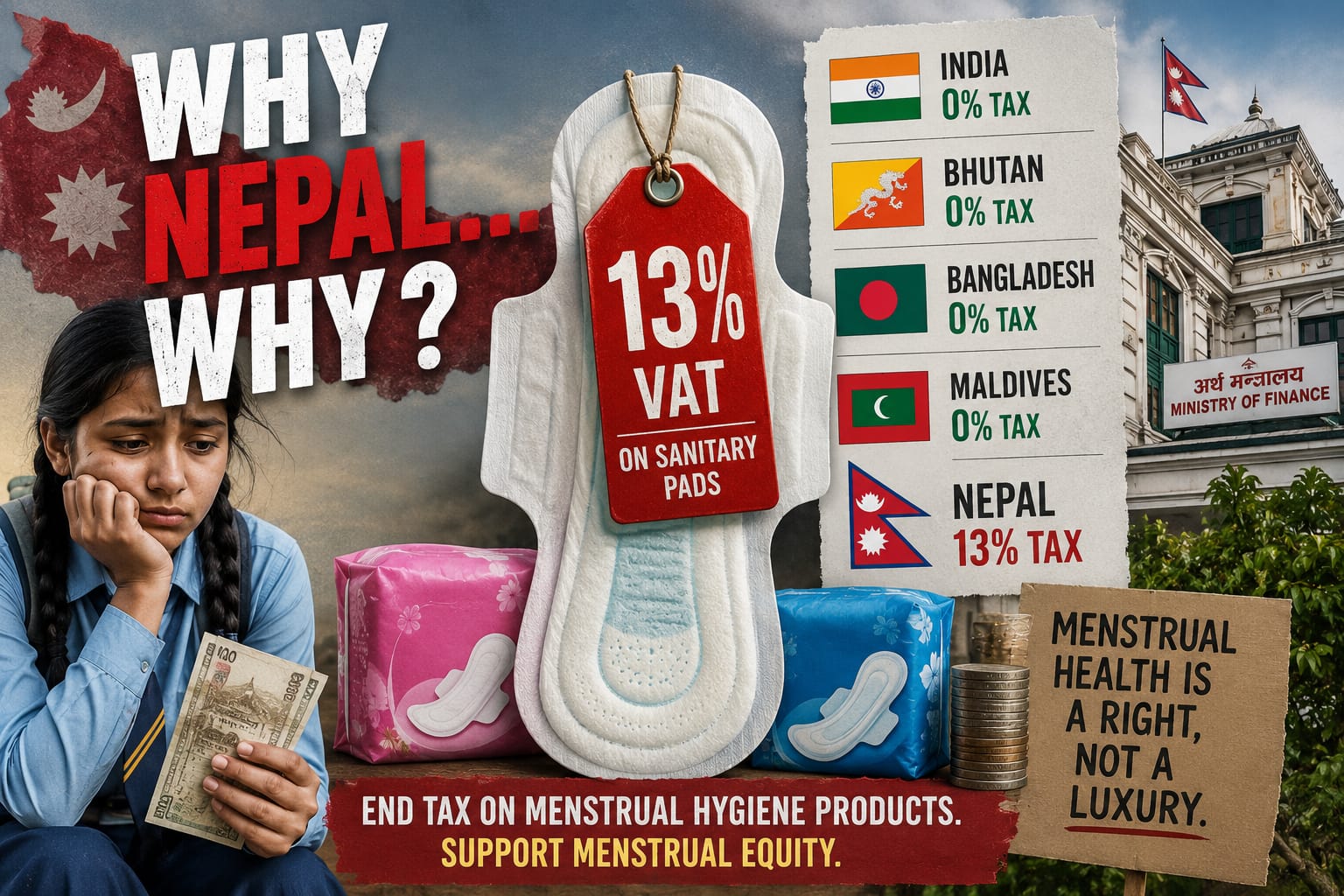
16 May Kathmandu Nepal has come under fresh criticism over its tax policy on menstrual hygiene products, after comparisons showed the country taxes sanitary pads among the highest in South Asia.
While Nepal currently imposes a 13 percent Value Added Tax (VAT) on sanitary pads and other menstrual hygiene products, several neighboring countries have eliminated or substantially reduced such taxes to improve affordability and access to menstrual health.
The issue has become a hot topic online, with activists and advocacy groups questioning why essential menstrual products are still viewed as taxable luxury goods, rather than basic healthcare necessities.
🩸 Nepal lags behind neighboring countries
Based on regional comparisons:
India has no tax on sanitary pads.
- Bangladesh charges no tax (0%)
- Bhutan has a 0% tax rate
- Menstrual products are tax free in Maldives too
By contrast, Nepal continues to charge the full 13% VAT, increasing prices for consumers at the retail level.
The policy hits these groups hardest, health advocates say:
- High School girls.
- Women of low income
- Countryside
- Marginalised groups
who already have limited access to adequate menstrual hygiene.
⚠️ New Menstrual Equity Issues
Campaigners say sanitary products should not be treated as optional items, but essential healthcare products that are needed for dignity, hygiene and public health.
Experts warn that high taxation is a contributing factor to:
- Menstrual poverty
- Girls' absence from school
- Unhygienic menstrual practices
- Health risks due to inadequate hygiene options
Many girls, especially in rural areas, reportedly still use unsafe or unhygienic materials because of cost barriers and lack of access.
📚 Education & Public Health Impact
Women’s rights groups say the price of menstrual products is having a direct impact on girls’ education.
Multiple studies throughout South Asia have demonstrated that the lack of affordable menstrual hygiene products can result in:
- School days missed
- Less confidence
-Social stigma
- less involved in day-to-day activities
Public health experts also warn that poor menstrual hygiene can increase the risks of:
- Infections
- Complications of reproductive health
- Stress mental
🗣️ Advocacy Groups Push for Reform
Organizations such as SpeakUpNepal and some youth-led activists have raised more calls to the government to:
- Abolish VAT on sanitary pads
- Treat menstrual products as basic necessities
- Educate on menstrual hygiene
- Increase affordable access across the country
Young Nepalis have also been vocal in social media campaigns calling for “tax-free periods”.
Many users online asked why Nepal has not done away with taxes on sanitary products as menstrual equity is increasingly recognized as a public policy issue around the world.
🌍 World Push To End ‘Tampon Tax’
Many countries around the world have already reduced or eliminated taxes on menstrual products as part of reforms for gender equality and public health.
Countries such as:
- India
- Canada
–Australia
- UK
- Kenia
have provided tax cuts or exemptions in recent years.
More and more international organizations are arguing for the classification of menstrual products as:
- Prime health care products
- Basic toiletries
not luxury consumer products.
🏛️ Nepal Government under pressure
The issue is now mounting pressure on Nepali policymakers ahead of upcoming fiscal talks and budget planning.
Scrapping VAT on sanitary products would probably only make a small dent in total government revenue, economists say, but could make a big difference to affordability for millions of women and girls.
Critics say the current taxation policy of Nepal reflects a deeper neglect of menstrual health and gender sensitive policy making.
📌 Summary
With neighbouring countries moving towards tax-free menstrual hygiene products, Nepal’s continued 13 percent VAT on sanitary pads is increasingly seen as a public health issue, and a gender equality issue.
Now, activists say the debate is about dignity, access and whether menstrual health is a basic right in Nepal, not just about taxation.
Tags: Nepal Sanitary Pad Tax, Menstrual Equity Nepal, Period Poverty Nepal, VAT Nepal, Women’s Health Nepal
🌐 https://hamrobichar.com/
📧 info@hamrobichar.com
Related Articles
Comments
Join the discussion
0 comments
Loading comments...