The government has told Nepal’s Supreme Court that restrictions on publishing public tender notices in newspapers do not interfere with freedom of expression, while petitioners argue the changes raise constitutional concerns.
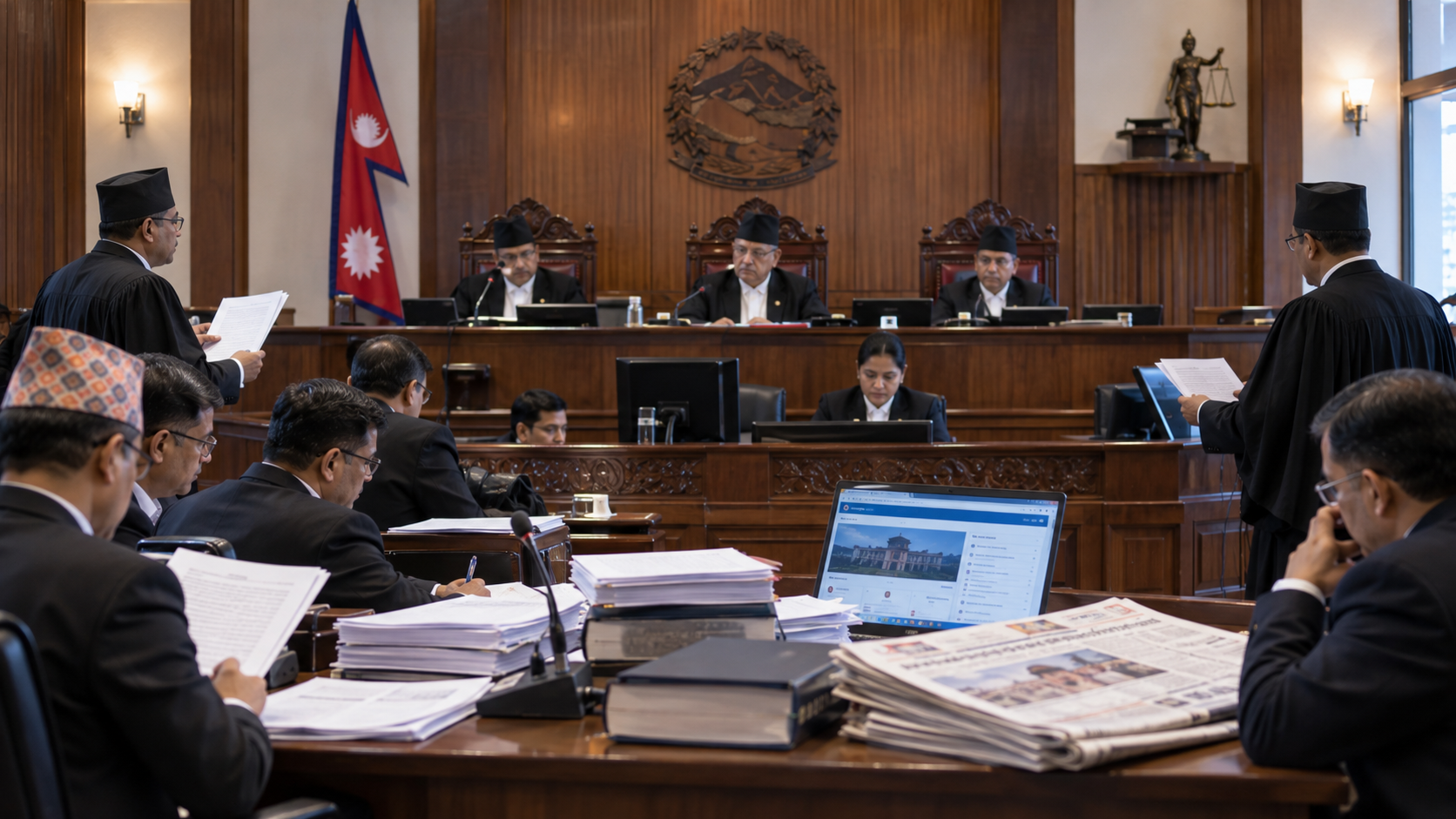
Nepal’s government has told the Supreme Court that changes to public procurement rules restricting the publication of government tender notices in newspapers do not violate freedom of expression or the constitutional right to communication.
The government made the argument in separate written responses submitted to the Supreme Court by the Office of the Prime Minister and Council of Ministers, the Ministry of Law, Justice and Parliamentary Affairs, and the Ministry of Information and Communications.
According to the written responses reported by Kantipur, the government argues that advertising and freedom of expression are separate matters.
It says the amended Public Procurement Act does not prevent newspapers, online outlets or other media organisations from independently publishing news, analysis, opinions or other editorial content.
The government has therefore asked the Supreme Court to dismiss the constitutional challenge against the amendment.
The government also argues that the changes were introduced to make the procurement system simpler and more accessible, strengthen transparency and prevent unhealthy competition.
One of the disputed changes concerns the publication of public tender notices.
The government says tender-related information no longer needs to be duplicated in newspapers when it is made available through official government online platforms. It argues that publishing the same notice through both newspapers and government websites creates duplication.
The change represents a shift from the earlier procurement framework, under which tender and pre-qualification notices were required to be published in national-level daily newspapers. The existing Public Procurement Act available through the Nepal Law Commission contains such a requirement in Section 14.
The dispute began with a writ petition filed by advocates Anantaraj Luitel and Ram Prasad Pudasaini.
They argued that removing the newspaper-publication requirement through amendments to the Public Procurement Act was inconsistent with constitutional guarantees relating to communication and press freedom.
According to Kantipur, the petition was initially filed on May 26, before Parliament approved the amendment while the case was already pending. After the amendment was endorsed by both chambers and authenticated by President Ram Chandra Paudel on July 9, the petitioners submitted an additional application seeking its annulment.
The Supreme Court's Constitutional Bench subsequently issued a show-cause order to the government, giving it seven days to respond.
Nepal's Constitution protects freedom of opinion and expression under Article 17 and establishes a separate right to communication under Article 19.
Article 19 states that prior restrictions cannot generally be imposed on the publication or dissemination of news, editorials, articles and other material through print and electronic media, subject to specified constitutional limitations. It also provides protections against closure, seizure or cancellation of registration of media organisations because of published material, subject to law.
The constitutional question before the court is therefore narrower than whether newspapers retain the general right to publish.
The government maintains that the procurement-advertising change regulates where public tender information must be published, rather than restricting what media organisations are allowed to report or express.
The petitioners, meanwhile, have challenged the amendment on constitutional grounds. The Supreme Court will determine how the relevant legal provisions apply.
The dispute comes amid a wider debate in Nepal over government advertising and the financial sustainability of private media.
The Federation of Nepali Journalists has recently opposed reductions in payments for public-welfare advertisements and announced plans for nationwide protest if its demands are not addressed.
Earlier in 2026, journalist organisations also criticised government decisions affecting the distribution of official information and advertising.
Nepal's 2026 media environment has consequently included discussions about both press freedom and the economic relationship between government advertising and independent media. Freedom Forum's 2026 press-freedom report has also called for government advertising policies that provide fair and proportionate access to resources across media outlets.
These broader concerns are separate from the constitutional case itself, which concerns the legal effect of the public procurement amendment.
The government has defended the amendment as a procurement and transparency measure and argues that it does not interfere with editorial independence or freedom of expression.
The petitioners have challenged the change as unconstitutional.
The Supreme Court's eventual interpretation will determine whether the amended system is consistent with Nepal's constitutional protections and the legal framework governing public procurement.
Until the court reaches a decision, the competing positions remain claims made by the government and petitioners rather than a final judicial determination.
Comments
0 comments
Loading comments...
