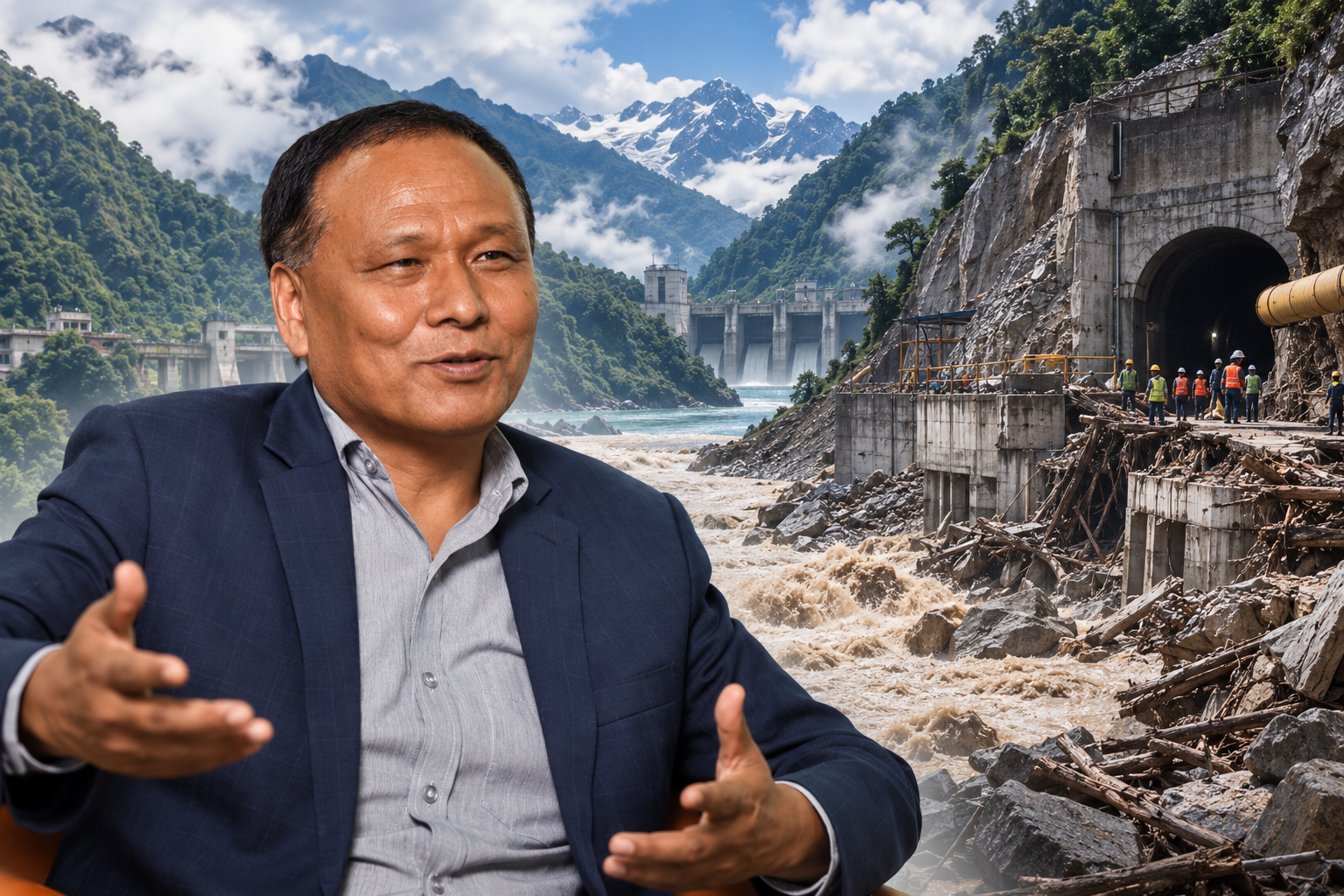
Nepal needs to fundamentally rethink the design, safety standards and emergency systems of hydropower projects following the devastating Bhotekoshi disaster, former Nepal Electricity Authority managing director Kulman Ghising has said.
Speaking to Kantipur Television, Ghising said the disaster exposed serious vulnerabilities in hydropower infrastructure, particularly tunnels, powerhouses and access routes located close to rivers and vulnerable mountain terrain. He called for new safety measures to protect both infrastructure and workers from increasingly frequent flash floods and other extreme events.
The Bhotekoshi disaster affected 13 hydropower projects and transmission-related infrastructure in Rasuwa and Nuwakot, with the overall damage to the hydropower sector estimated at between Rs 100 billion and Rs 150 billion, according to Ghising's assessment.
Ghising said Nepal's mountainous geography means hydropower projects are naturally concentrated around rivers. However, changing conditions in glaciers and glacial lakes, combined with flash floods and cloudbursts, are increasing the risk of water entering tunnels and underground powerhouses.
The recent disaster demonstrated that the threat is not limited to physical infrastructure.
"It has increased the challenge from the perspective of human casualties," Ghising said, arguing that hydropower projects must now be designed with extreme disaster scenarios in mind.
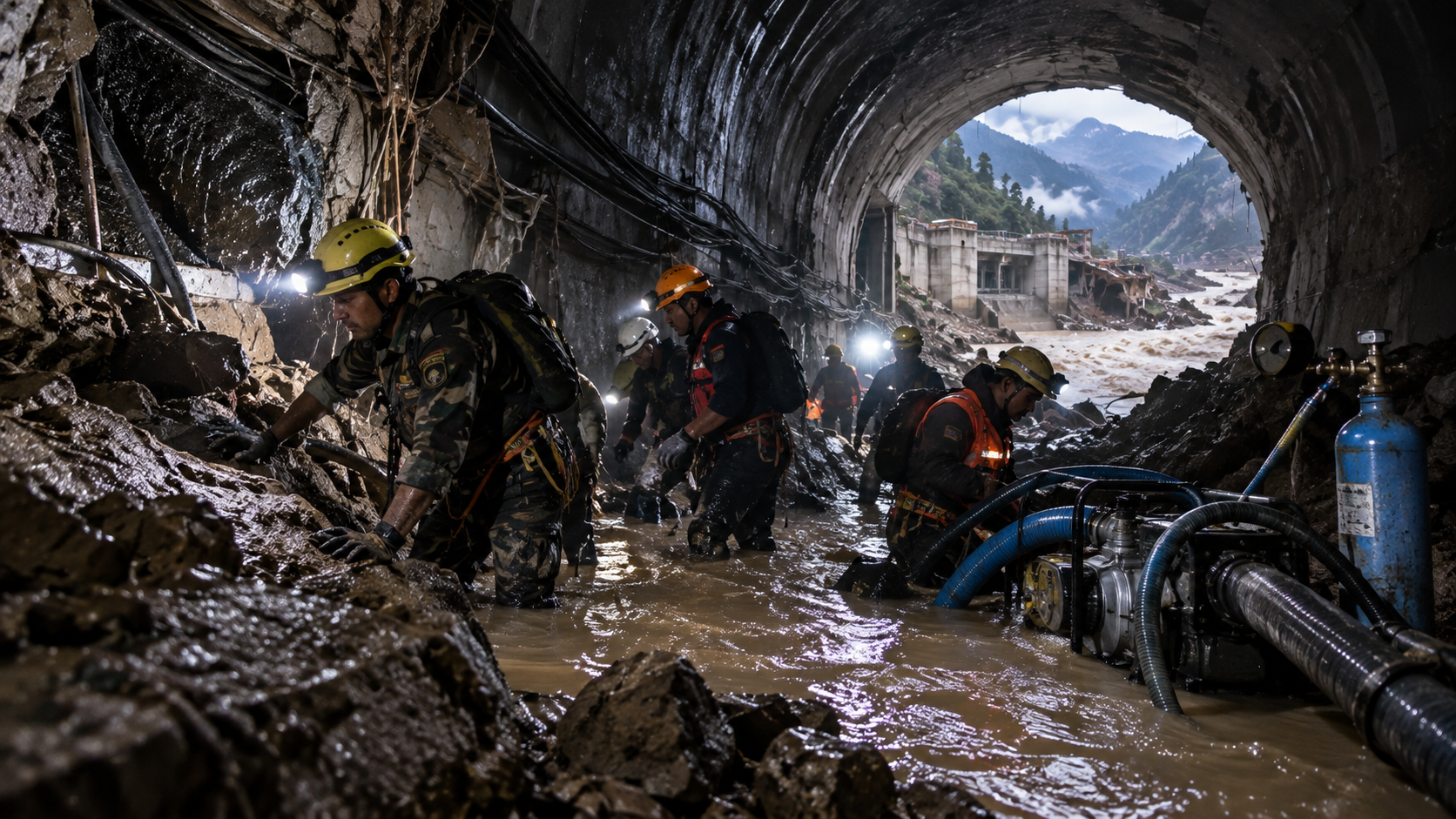
According to him, underground powerhouses can contain large caverns, access tunnels, cable tunnels and tailrace tunnels. If floodwater blocks access routes, workers inside can become trapped with limited options for escape.
The survival of two engineers inside the Trishuli-3A hydropower project demonstrates both the risks and possibilities of underground emergency shelters.
Ghising explained that floodwater buried several tunnels and effectively isolated the powerhouse. However, the two workers managed to reach a higher section of the cable tunnel where the water did not completely fill the space.
Because an air pocket remained, the workers were able to survive for around 10 days before rescuers reached them.
The episode, Ghising said, highlights the importance of designing tunnels with designated emergency escape routes and safe assembly areas.
Ghising estimated that approximately seven operating hydropower projects, large and small, have been severely damaged, affecting around 255 megawatts of generation capacity.
Projects including Rasuwagadhi, Chilime, Mailung and Trishuli-3A are among those affected.
Despite the losses, Ghising said he does not expect the disaster alone to cause widespread electricity load-shedding during the coming winter.
Nepal currently has approximately 4,200–4,500 MW of hydropower generation capacity, along with around 200 MW of solar generation. Even after losing roughly 250 MW, he said, the country would retain sufficient generation capacity, although some electricity imports may be required during peak winter periods.
The physical destruction is only part of the economic impact.
Ghising estimated that damage to operating and under-construction hydropower projects could exceed Rs 100 billion, with the combined public and private-sector loss potentially reaching Rs 100–150 billion or more.
He also pointed to the loss of electricity generation as a major economic consequence.
For example, Trishuli-3A normally produces electricity worth an estimated Rs 4–5 billion annually. If generation remains disrupted for two years, the resulting energy loss alone could reach around Rs 10 billion, he said.
Ghising also questioned whether the rescue response could have been better coordinated during the initial days of the disaster.
He said security forces—including the Nepal Army, Armed Police Force and Nepal Police—made significant efforts under extremely difficult conditions. However, the absence of an early integrated command-and-control system involving hydropower engineers, technical experts, specialised rescuers and sufficient equipment may have delayed operations.
According to him, experts should have been brought together immediately to assess individual tunnels, identify trapped locations and determine what equipment was required for each rescue operation.
He also pointed to the shortage of heavy-lift helicopter capacity as another obstacle. Large drilling and excavation equipment cannot easily be transported into remote mountain locations, forcing rescuers to move equipment in smaller pieces and assemble it on site.
Ghising proposed several changes to the way hydropower projects are designed and operated.
He suggested constructing emergency exits every 300–400 metres above or along suitable tunnel sections, allowing workers to climb to safer areas and escape during a flood or other emergency.
Access-tunnel portals should be positioned substantially higher than current levels. Ghising suggested moving some entrances from around 50 metres above river level to 150–200 metres higher, even if this makes projects longer and more expensive.
Powerhouses should maintain readily accessible oxygen cylinders and emergency supplies so workers can survive if ventilation is disrupted.
One of his strongest recommendations is to move hydropower projects toward digital and remote operation, reducing the number of people who need to remain inside powerhouses.
Ghising pointed to Norway as an example, arguing that plants could increasingly be operated remotely from cities, with workers entering facilities primarily for maintenance.
He also recommended constructing desander facilities underground where possible to reduce their exposure to floods and debris.
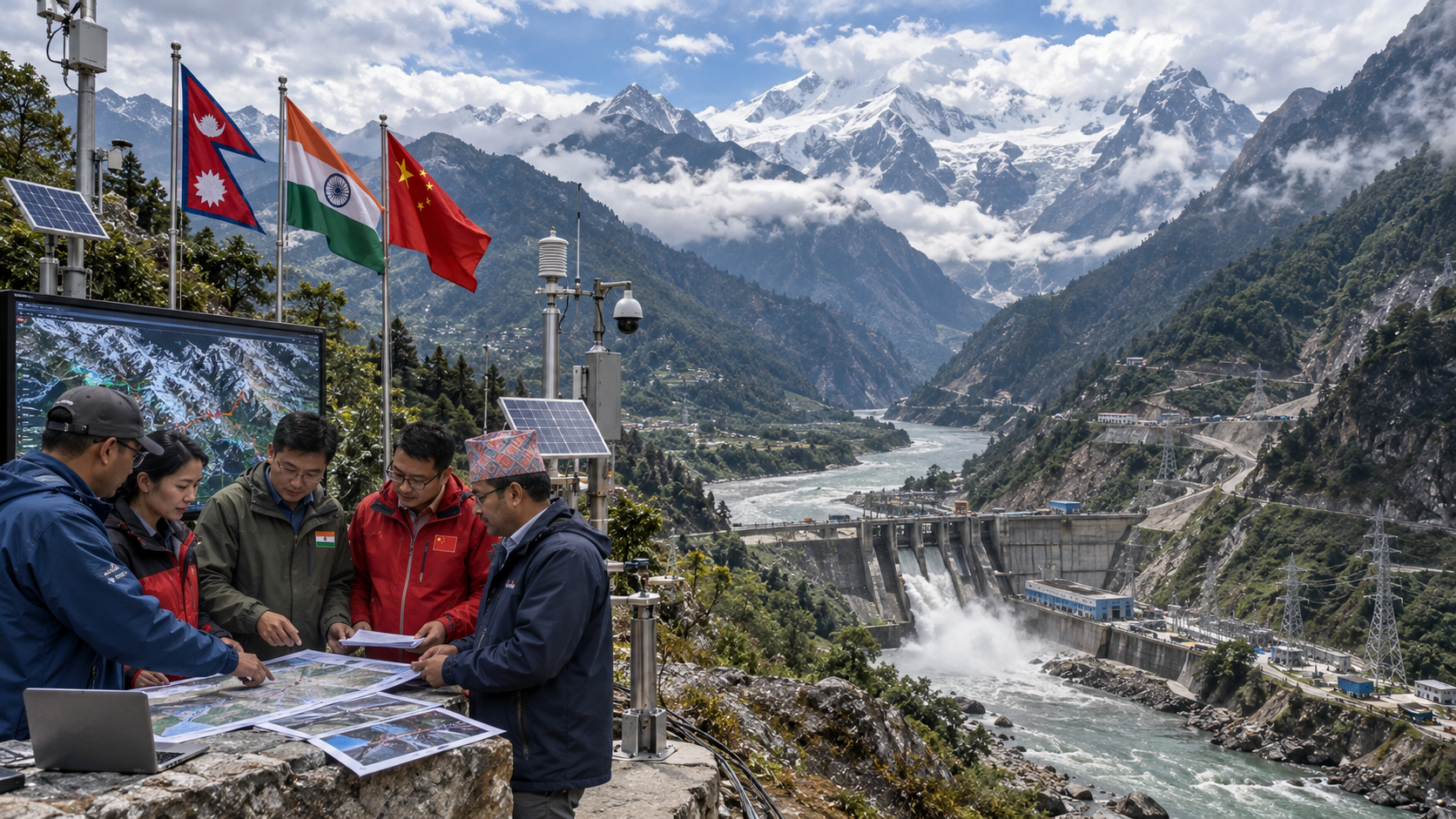
Ghising called for basin-wide monitoring of glacial lakes and upstream mountain conditions, with real-time information transmitted to authorities and hydropower operators.
He suggested that Nepal could cooperate with China on monitoring Himalayan lakes and identifying those at risk of sudden failure.
Finally, he urged hydropower projects and communities to install early-warning systems and sirens capable of alerting workers and nearby residents before dangerous floodwaters arrive.
Ghising argued that the solution cannot be limited to individual hydropower projects.
He called for broader basin-level planning across the Gandaki, Koshi and Karnali river systems, including consideration of reservoir projects where geography permits.
He pointed to China's extensive reservoir system as an example of how large-scale water storage can also contribute to flood control.
The Bhotekoshi disaster has raised difficult questions about how Nepal should balance its enormous hydropower potential with the growing risks posed by climate change and extreme mountain events.
For Ghising, the answer is not to stop hydropower development, but to build projects differently.
Emergency escape routes, higher access points, remote operation, real-time monitoring, early-warning systems and basin-wide disaster planning could become increasingly important as Nepal faces a changing Himalayan environment.
The disaster has already demonstrated the consequences of inadequate preparation. The challenge now is to ensure that lessons from Bhotekoshi become permanent improvements in the country's hydropower safety standards.
HamroBichar will continue to follow developments in Nepal's hydropower sector, disaster preparedness and the long-term lessons emerging from the Bhotekoshi catastrophe.
Tags: Kulman Ghising, Bhotekoshi Flood, Hydropower, Nepal Electricity, Trishuli-3A, Rasuwa, Climate Change, Hydropower Safety, Flash Flood, Nepal Disaster 2026
Comments
0 comments
Loading comments...