Infrastructure Minister Sunil Lamsal says Nepal will prioritise restoring connectivity while planning safer settlements, relocating high-risk communities and rebuilding damaged infrastructure after the Bhotekoshi floods.
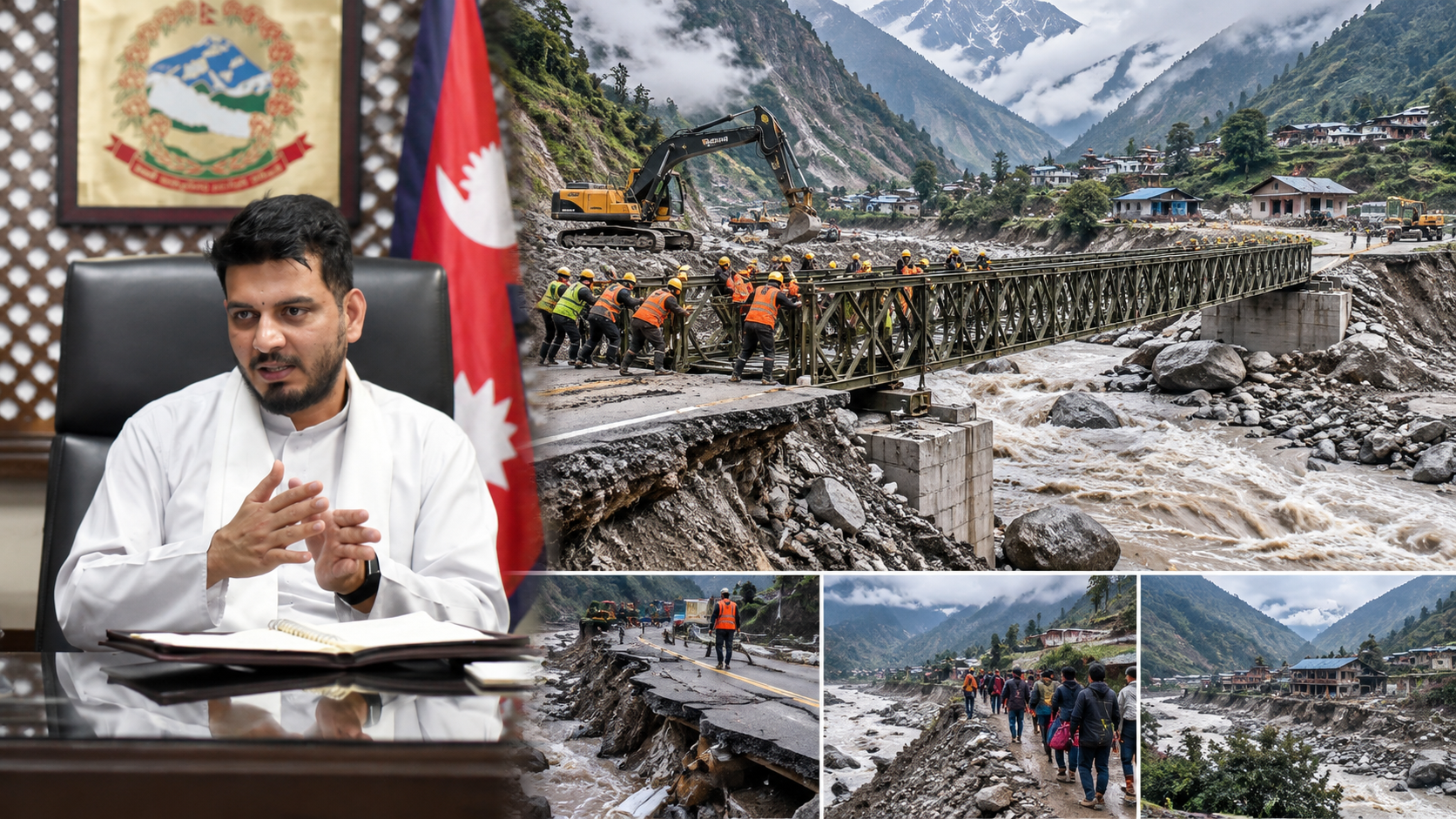
Nepal is preparing for a reconstruction effort that could extend well beyond repairing the roads, bridges and infrastructure destroyed by the August 26 Bhotekoshi floods.
Infrastructure Development Minister Sunil Lamsal says the government wants to combine immediate restoration with a longer-term programme to move vulnerable communities to safer locations, rebuild damaged transport links and strengthen systems for dealing with future disasters.
The approach comes as the scale of the damage becomes clearer. A government Rapid Damage and Needs Assessment has estimated total recovery requirements at Rs723.31 billion, with infrastructure accounting for Rs473.57 billion, or roughly three-quarters of the total.
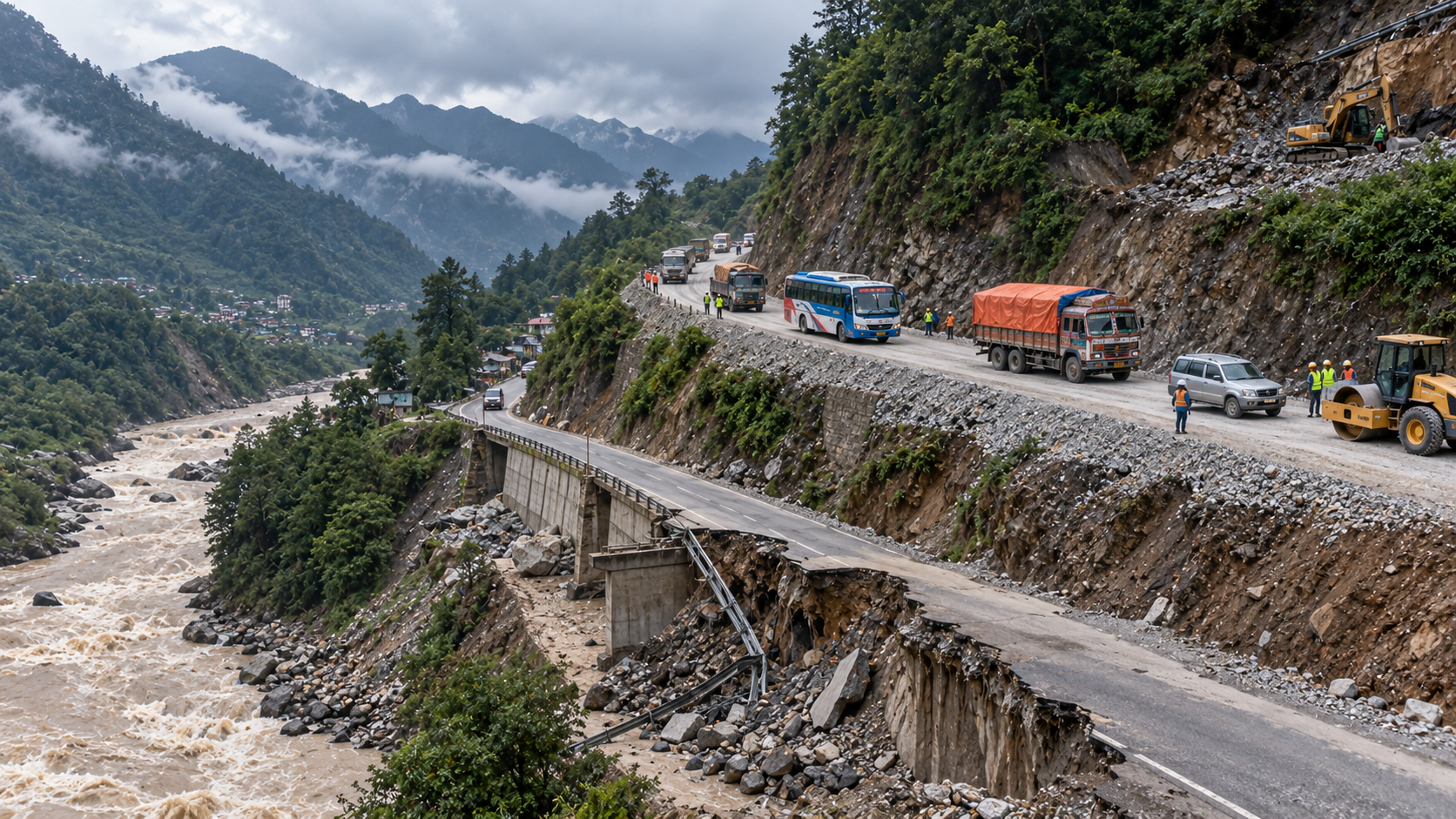
For the government, restoring road access remains the most urgent infrastructure task.
Lamsal said sections of the road network beyond Betrawati remain difficult to access, while Bailey bridges are needed to reconnect affected areas. Some equipment and bridge components have already reached the region, but difficult terrain and deep marshland have complicated installation.
The government is also seeking assistance from China to restore the road between Rasuwa and Syabrubesi. According to Lamsal, China has verbally agreed to help, although a formal written agreement has yet to be signed.
Restoring transport links is critical not only for residents but also for the delivery of food, cooking gas and other essential supplies.
The government hopes to restore major connectivity before the upcoming festive season, a target that would improve access for hundreds of thousands of people if achieved.
The damage to the Syabrubesi-Rasuwagadhi corridor has also created a strategic challenge for Nepal’s trade connection with China.
Lamsal said the government does not intend simply to reconstruct the damaged road along its existing alignment. Officials are considering safer corridors before permanently rebuilding the route.
The Rasuwagadhi crossing is expected to reopen once a viable corridor is established. Nepal has formally asked China for assistance, but the bilateral arrangement remains at the discussion stage because a written agreement has not yet been concluded.
The government’s position is therefore to restore the crossing while also reconsidering the safety of the route serving the communities along it.
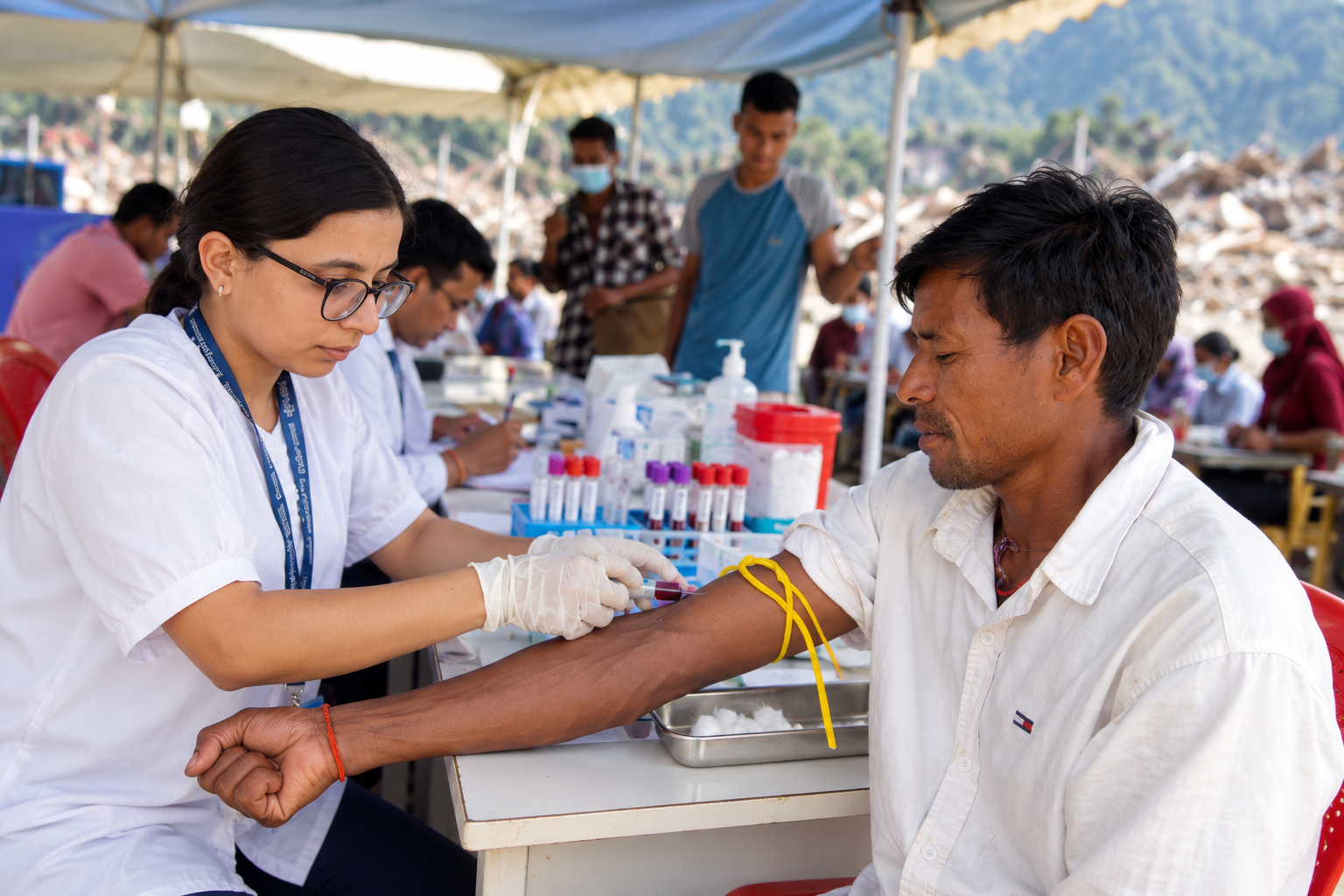
The government says thousands of flood-affected people cannot remain indefinitely in holding centres.
Lamsal said 8,692 households, representing 39,114 people, have been affected and that 39 holding centres were established to accommodate them.
The government plans to provide temporary accommodation while preparing longer-term settlements.
For families choosing financial assistance instead of temporary housing, the government has approved monthly accommodation support of Rs15,000 for families of up to four members, with additional assistance for larger families.
It is also considering prefabricated temporary homes that can be assembled quickly. Officials have identified more than 20 potential sites, mostly near affected communities.
The stated objective is to provide better temporary housing rather than simply extending the use of emergency shelters.
The more ambitious part of the plan involves permanent resettlement.
The government is considering land pooling and township-style development to create safer settlements for communities living in areas exposed to floods, landslides and other hazards.
Lamsal said the Bhotekoshi corridor is the immediate focus, but the government also wants to identify other settlements across Nepal that may be exposed to glacial lake outburst floods and similar hazards.
That means the reconstruction programme could eventually become a national risk-reduction initiative rather than a project limited to one disaster zone.
The minister indicated that the broader relocation programme could take five to seven years or even a decade, depending on the scale of the work and available resources.
The floods have also demonstrated why simply replacing damaged infrastructure may not be enough.
At Krishnabhir, for example, flood debris altered the river’s course and increased pressure on an already unstable hillside. Lamsal said temporary stabilisation would be carried out there, but authorities do not consider the location permanently secure.
An alternative route has been opened, while officials are studying longer-term options including a possible tunnel.
Similar riverbank and slope problems have been reported along sections of the road network downstream.
This raises a broader reconstruction question: should Nepal rebuild infrastructure exactly where it stood before the disaster, or should roads and settlements be redesigned around newly understood hazards?
The government says it is leaning toward the second approach.
Unlike after the 2015 earthquake, the government does not plan to establish another special reconstruction authority.
Lamsal said reconstruction will be handled through the National Disaster Risk Reduction and Management Authority (NDRRMA).
The minister argued that Nepal lost valuable institutional memory and technical expertise when the post-earthquake National Reconstruction Authority was dissolved.
Using an existing disaster-management institution, the government hopes to retain experience and avoid creating another temporary structure.
The government is also working on legal changes intended to make reconstruction payments and related administrative processes more automatic, reducing the need for affected people to repeatedly pressure authorities.
The floods have also exposed shortcomings in disaster monitoring and early warning.
Nepal already has an agreement with India to exchange disaster-related early-warning information, while discussions with China are continuing.
Lamsal said the government wants a mechanism capable of monitoring dangerous events at their source in real time, particularly avalanches, landslides and glacial lake outburst events.
Weather forecasting alone is not enough. The more difficult challenge is identifying when a dangerous geological or glacial event has actually occurred and transmitting that information quickly enough for communities downstream to respond.
For a country with settlements and infrastructure spread across steep Himalayan terrain, that distinction could be crucial.
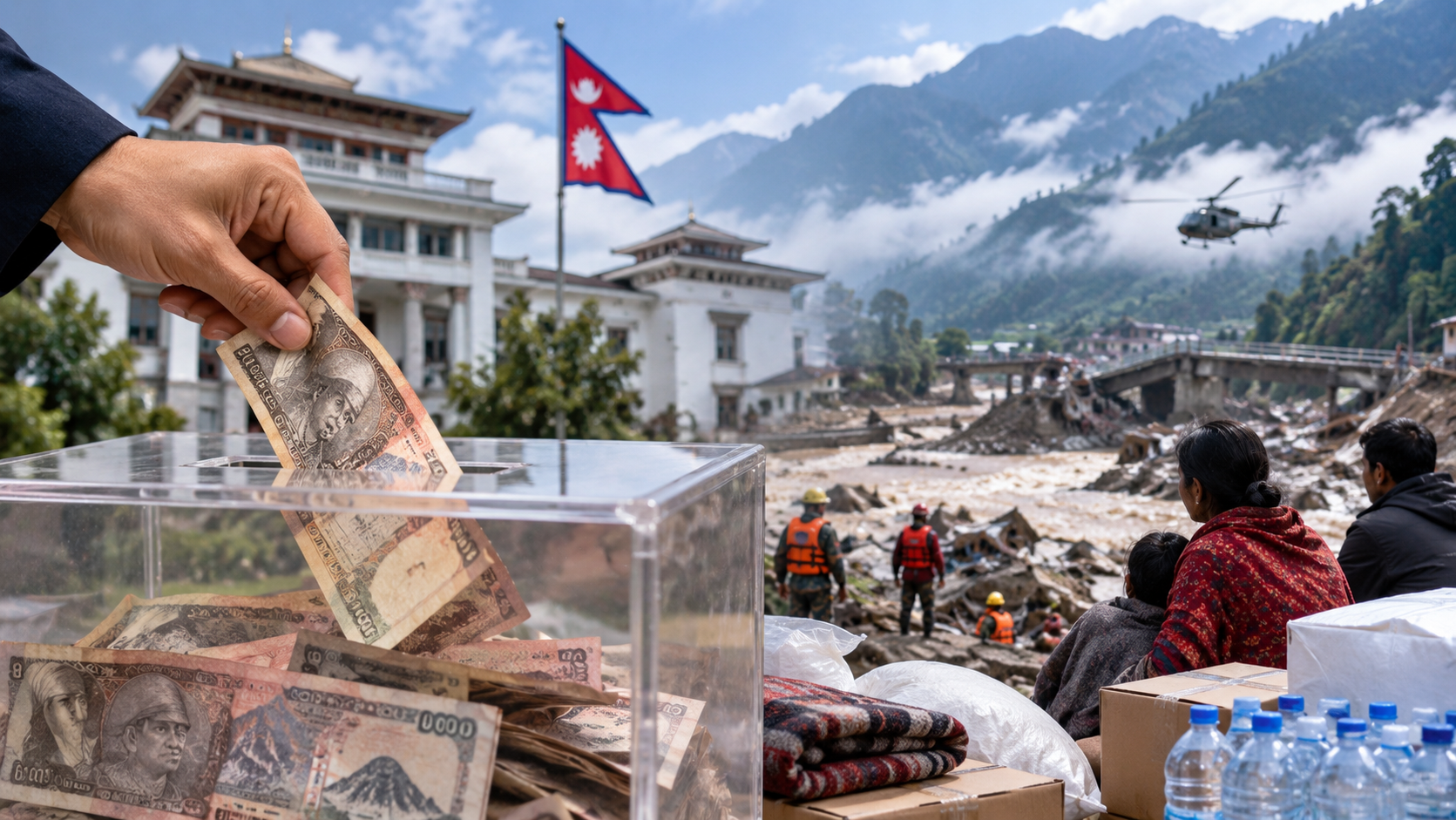
The government has not yet established the full financing model for reconstruction.
Officials are preparing a more comprehensive Post-Disaster Needs Assessment and expect international organisations to participate in the process.
The latest rapid assessment already estimates the recovery requirement at Rs723.31 billion. Infrastructure alone accounts for Rs473.57 billion, while energy and transport are among the hardest-hit sectors.
Lamsal said Nepal intends to seek both technical and financial assistance from international partners.
That will become increasingly important as the government moves from emergency relief to permanent infrastructure and settlement projects.
The Bhotekoshi disaster has created an opportunity—and a difficult test—for Nepal's infrastructure policy.
Rebuilding roads, bridges and hydropower facilities is essential, but simply restoring what existed before may leave communities exposed to the same hazards.
The government's proposed approach of combining infrastructure reconstruction with safer settlement planning, improved early warning and risk-sensitive road design could offer a more durable response.
The challenge will be implementation.
Land acquisition, community participation, financing, environmental assessment and coordination among federal, provincial and local authorities could all slow the process. The government will also need to ensure that relocation decisions are made transparently and that affected communities participate meaningfully in decisions about where and how they are resettled.
The Bhotekoshi floods destroyed infrastructure on a massive scale. Nepal's response now has the opportunity to rebuild more than what was lost—and to create infrastructure and settlements better prepared for the next disaster.
Comments
0 comments
Loading comments...