6 May Kathmandu The latest political upheaval in Nepal has not only changed the government, but revealed a growing divide between the public and the country’s deeply rooted media landscape.
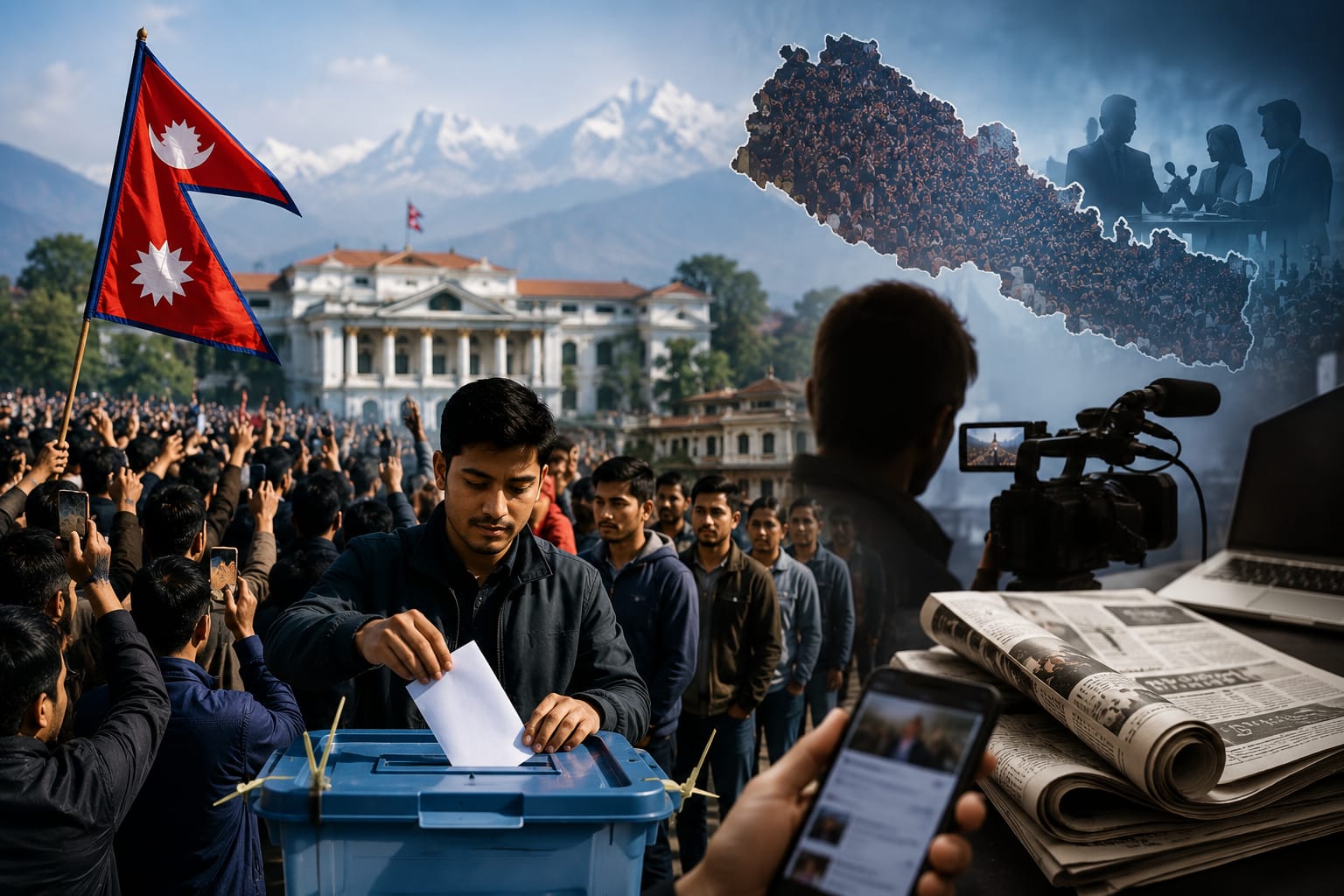
The 2026 general election saw the electorate decisively reject many of the traditional political forces and call for accountability. Many observers are now asking whether the media in Nepal really understood the public mood pre-election.
🗳️ Vote for Change
The 2026 election was defined by the frustration of younger voters, particularly in the wake of the massive youth-led protests that rocked the country in 2025.
Citizens were angry about:
- Corruption.
- Instability in the political arena
– No job opportunities
- Same political leadership repeated.
“Many voters, especially among younger generations, voted for disruption over continuity, indicating a strong desire for reform and accountability.
📺 Media Criticised:
The question now is whether the media outlets mainstream sufficiently reflected those concerns of the public.
Much of Nepal’s mainstream media is criticized for:
- Heavily geared towards political elites already in power
- Youth's frustration underestimated
- didn't understand changing voter behavior on-line
At the same time, digital creators, social media platforms and independent voices online rose in prominence during the election season.
🌐 The Rise of Digital Influence
The election also brought out the speed at which Nepal’s information ecosystem is evolving.
And more and more political discussions became:
- Tik Tok
Facebook
- YouTube
- Autonomous digital platforms
The change also meant younger voters could organize, debate and push political messages outside traditional media structures.
Analysts say legacy media no longer has the same total control of the national political narrative that it once did.
⚠️ Journalism Challenge 2
Experts say it’s an important moment of reflection for Nepali journalism.
The core task is not just to report on political events, but to understand:
- Public opinion
- Youth’s expectations
- Internet usage
- Frustrations of grassroots
If media organisations don’t adapt they risk alienating themselves from large sections of society.
🧠 A New Era of Politics and Media
Nepal’s political transition appears to be closely linked to a broader generational transition.
Younger voters are increasingly:
- Consumption of news online
Distrust of traditional institutions
- Demand for speedier accountability
- Want more independent journalism?
So the result of the election has become not just a political message—but a message to the media itself.
📌 Abstract
The question is “Is the media listening? speaks to a larger national conversation about trust, representation, and change."
With Nepal’s new political era created by younger and more digitally connected citizens, the country’s media institutions may also need to evolve in order to stay relevant, credible and connected to public reality.
Tags: Nepal Media, Nepal Election 2026, Youth Politics Nepal, Nepali Voters
🌐 https://hamrobichar.com/
📧 info@hamrobichar.com