Nepal has registered a bill to establish a National Defence University, proposing advanced study and research in security, defence and strategic affairs while raising questions over military and academic oversight.
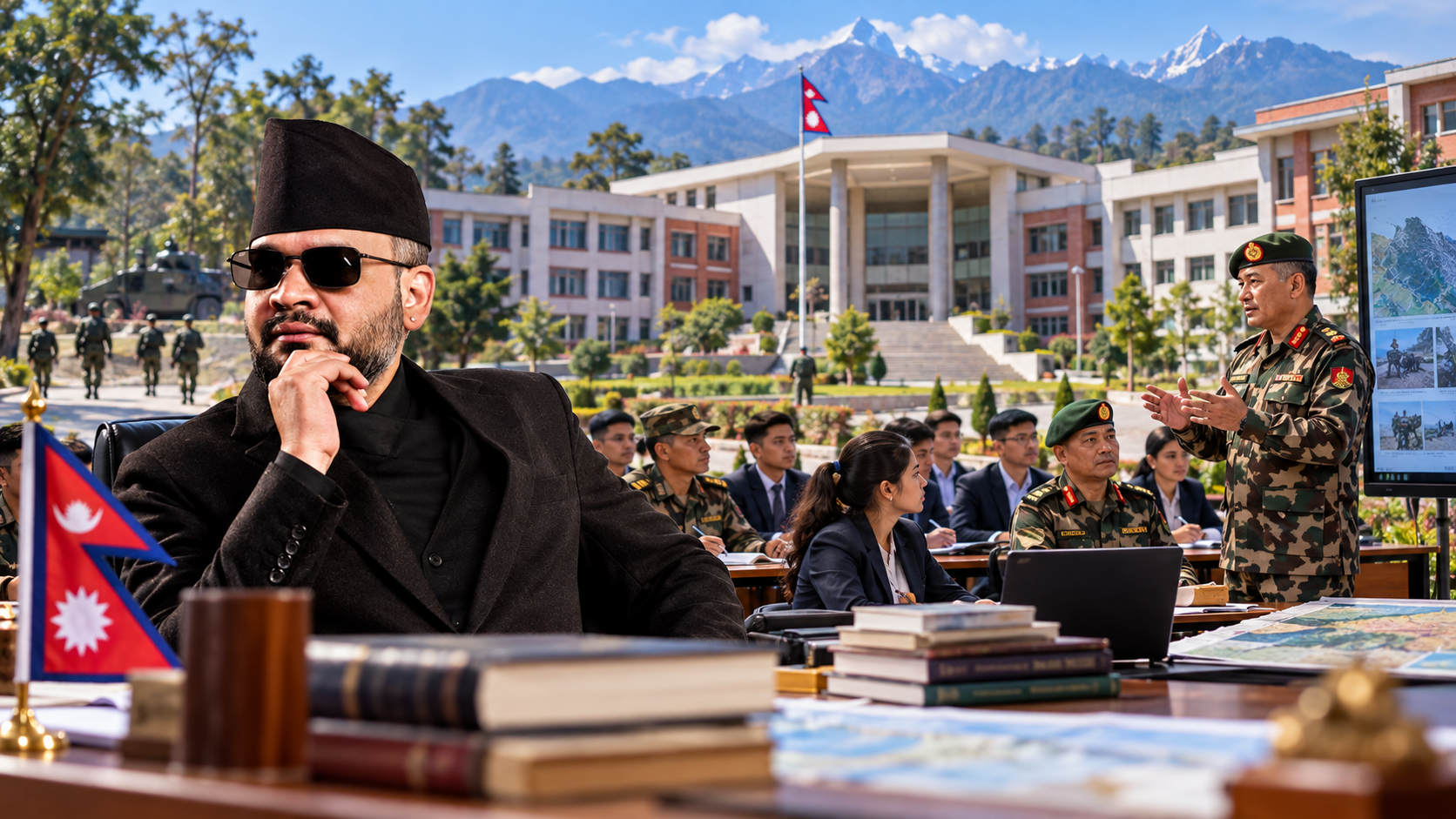
Nepal’s proposal to establish a National Defence University has entered Parliament, opening a debate over how the specialised institution should balance military requirements with academic independence.
The National Defence University Bill was registered in the House of Representatives on September 21. The proposal seeks to create a specialised centre for higher education, teaching and research in national security, defence, international relations and strategic affairs.
The idea is not new. The government formed the National Defence University Infrastructure Development Committee in 2019, while a draft bill was subsequently developed with the involvement of the Nepali Army and consultations with education and other government agencies.
According to the bill, the institution would provide advanced education and training for both military and civilian officials. It is also intended to support research and provide knowledge that can contribute to national security and strategic policymaking.
Prime Minister and Defence Minister Balendra Shah, who is named in the bill's explanatory material, has said the university would provide a domestic academic centre for addressing changing security challenges and geopolitical issues.
A separate report on the bill says the proposed university would be an autonomous and self-governing legal institution, with its central office planned for Perungedanda in Banepa Municipality, Kavrepalanchok.
The central debate is not over whether Nepal can have an institution dedicated to defence studies, but over its institutional character and oversight.
The current proposal gives the Defence Ministry and the Nepali Army significant roles in the university's governance. The bill proposes that the prime minister serve as chancellor, while the defence minister would have a co-leadership role in the university's structure. A recommendation committee involving senior military officials is also proposed for selecting key academic administrators.
Educationist Bidya Nath Koirala told OnlineKhabar that the institution's purpose needs to be clearly defined, including whether it should primarily function as an academic university or a military-oriented institution.
Former education minister Girirajmani Pokharel has raised a broader policy concern, arguing that individual ministries should not establish separate universities outside the country's overall higher-education framework.
Former Tribhuvan University vice-chancellor Kedar Bhakta Mathema has also questioned whether creating a new university is necessary if existing colleges, academies or institutes could provide the proposed programmes.
Supporters of the proposal argue that Nepal needs a domestic institution capable of training military professionals as well as civilians interested in security and strategic studies.
Security expert and former lawmaker Deepak Prakash Bhatta, who has been involved in the initiative, said such an institution could provide professional education and research opportunities without requiring senior officers to travel abroad for defence-related education.
Former defence minister Bhimsen Das Pradhan has likewise argued that Nepal needs its own institution to develop expertise in national security and strategic affairs.
The proposal is also linked to Nepal's existing military education system. The Nepali Army already operates specialised training institutions and sends officers abroad for further defence-related education. Army Chief General Ashok Raj Sigdel, during a recent visit to China, also visited China's National Defence University.
Registration of the bill does not by itself establish the university.
The legislation must pass through parliamentary consideration before it can become law. Under the process described in the bill, it would need approval from the House of Representatives and National Assembly before being presented for presidential authentication and publication in the Nepal Gazette.
The parliamentary debate is therefore likely to focus not only on the need for specialised defence education but also on governance, academic autonomy, the role of civilian institutions and the relationship between military expertise and higher education.
For Nepal, the proposed university could become a new platform for defence and strategic studies, but its eventual character will depend on the provisions Parliament adopts and how the institution is structured and operated.
Comments
0 comments
Loading comments...