Nepal’s seven-decade journey at the United Nations has evolved from non-alignment and small-state concerns to peacekeeping, development, climate action and climate justice.
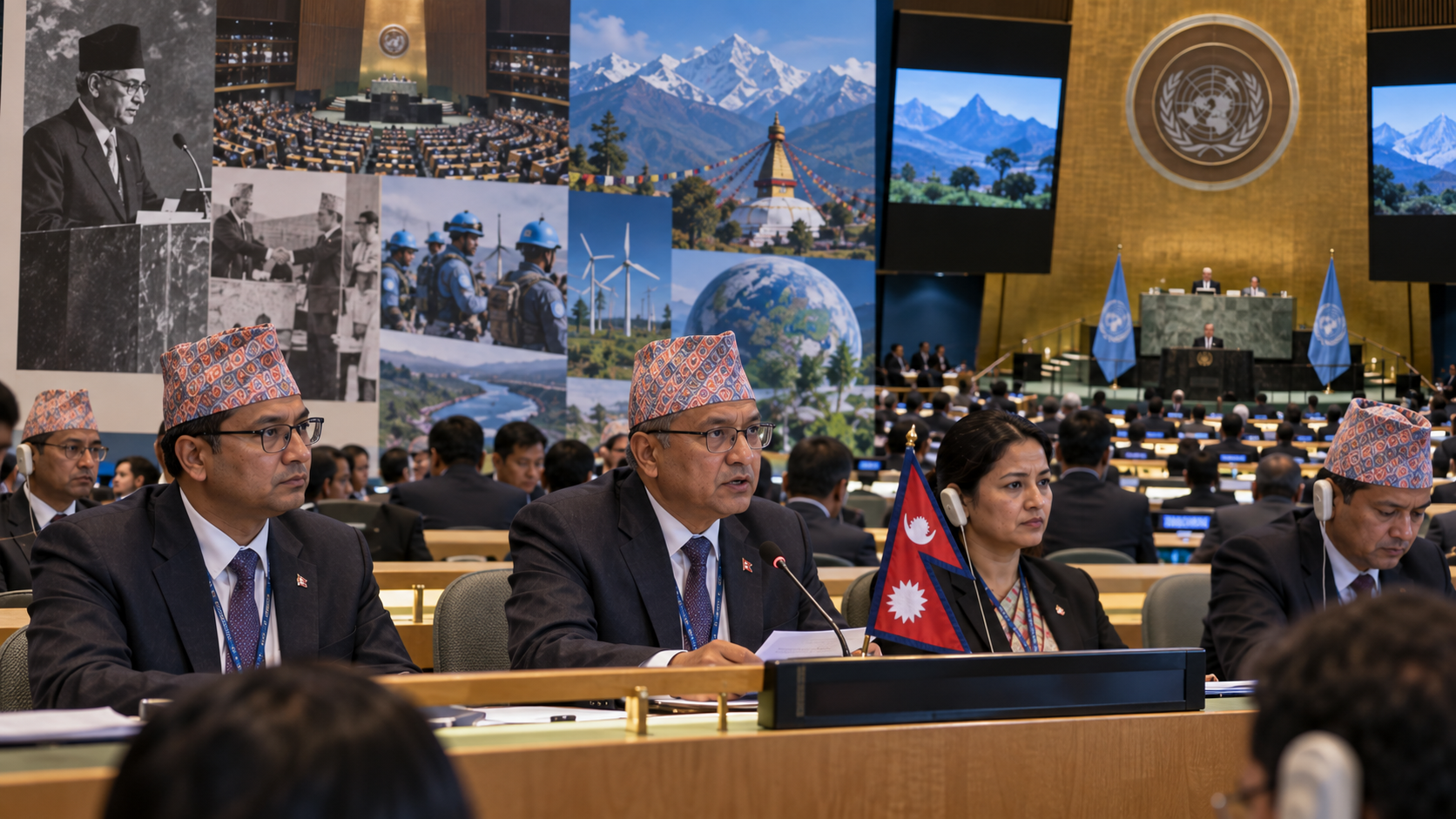
Nepal’s engagement with the United Nations spans seven decades, during which its priorities at the world’s largest multilateral forum have changed alongside the country’s political system and shifts in the international order.
From non-alignment and the protection of small states during the Cold War to peacekeeping, development, climate change and climate justice, Nepal’s messages at the UN General Assembly have reflected both domestic transitions and global challenges.
As Prime Minister Balendra Shah prepares to address the 81st session of the UN General Assembly in New York on September 24, his appearance comes nearly 70 years after Nepal first took the floor at the Assembly.
Nepal became a member of the United Nations on December 14, 1955, through General Assembly Resolution 995 (X). The UN lists Nepal among the members admitted on that date.
Nepal participated in the 11th General Assembly the following year. Then Foreign Minister Chuda Prasad Sharma delivered the country's first General Assembly address on November 29, 1956. UN records identify Sharma as Nepal’s speaker during the opening of the general debate.
His address came at a time when Nepal was emerging from the Rana-era political order and developing a new foreign-policy identity.
Sharma's 1956 address placed considerable emphasis on non-alignment.
Nepal stated that it would not commit itself in advance to any major power bloc and would consider international questions according to their individual merits. The speech also addressed racial discrimination, imperialism and the establishment of foreign military bases.
The position reflected the geopolitical circumstances of the period. Nepal was a small state located between India and China while the Cold War was increasingly shaping international relations.
Nepal's emphasis on the interests and security of smaller states continued in later decades.
King Mahendra's 1967 address to a special high-level UN session highlighted the importance of the organisation to countries with limited military and economic power. The UN was presented as a forum through which smaller states could participate in international affairs and seek protection under common rules.
Bishweshwar Prasad Koirala had earlier addressed the 15th General Assembly in 1960, while Tulsi Giri spoke at the 18th session in 1963.
Nepal's UN messages changed again following the restoration of multiparty democracy.
Prime Minister Girija Prasad Koirala addressed the 48th General Assembly in 1993, focusing on constitutional guarantees, human rights, development and Nepal's relations with its neighbours.
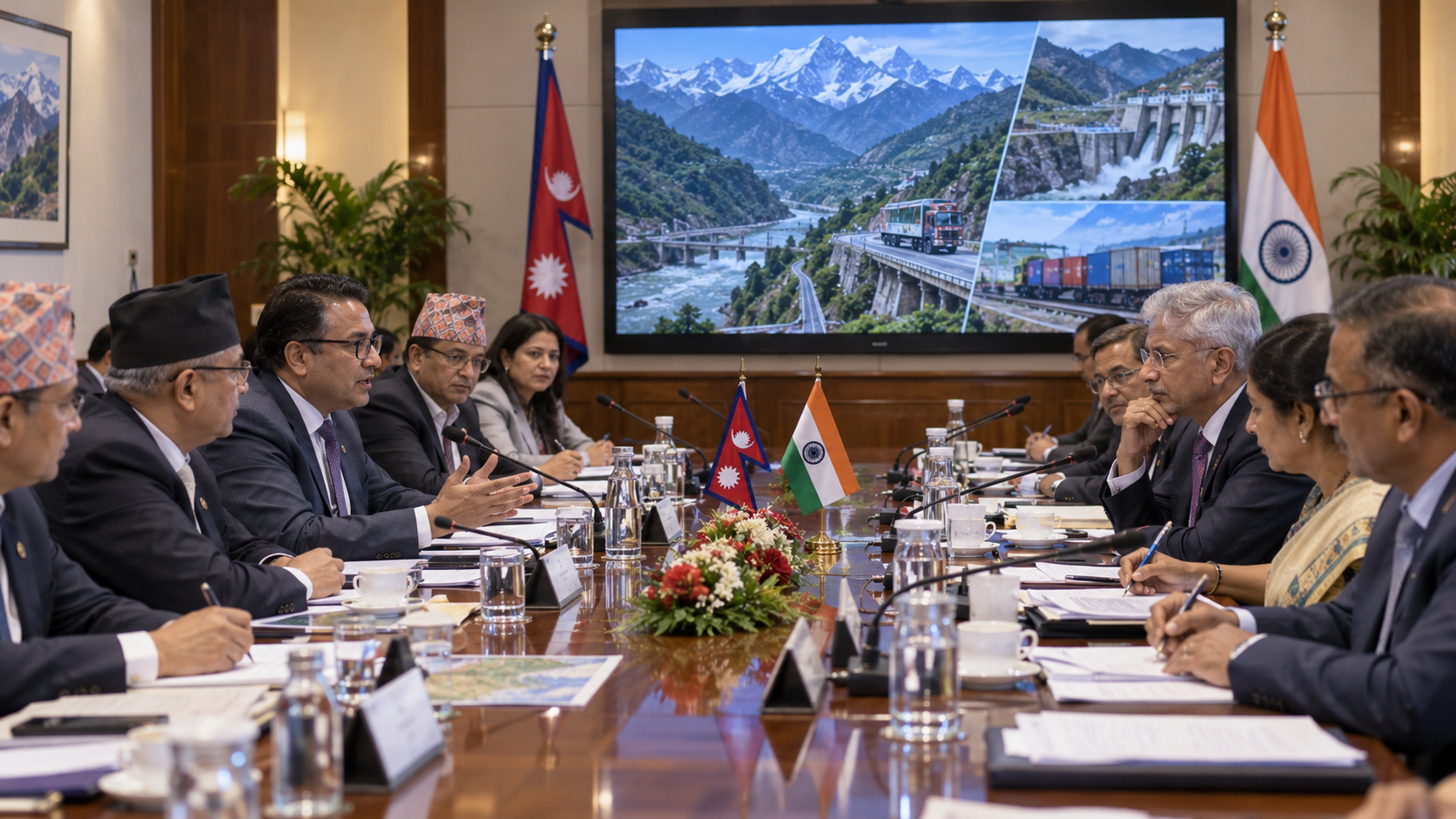
SAARC and the changing international order after the end of the Cold War also featured prominently. Nepal continued to raise the challenges facing least developed and landlocked countries, including their structural economic and geographic disadvantages.
Climate change gradually became one of Nepal's most persistent issues at the UN.
Pushpa Kamal Dahal's 2008 General Assembly address connected Nepal's peace process and democratic transition with the country's vulnerability to climate change. He called for greater access to climate finance and international action on loss and damage, while highlighting Nepal's relatively small contribution to global greenhouse gas emissions.
Subsequent governments continued raising concerns about melting glaciers, glacial lake outburst floods, flash floods and the vulnerability of mountainous countries.
Madhav Kumar Nepal raised the risks of glacial lake outburst floods and increasingly destructive flash floods in 2009. Later speakers, including Baburam Bhattarai, Khil Raj Regmi and Sushil Koirala, continued to discuss climate change and the interests of least developed countries.
Nepal's climate diplomacy increasingly adopted the language of climate justice.
Sher Bahadur Deuba, speaking at the 72nd General Assembly in 2017, highlighted the contrast between Nepal's limited contribution to global emissions and the severity of climate impacts it faces.
In 2023, Dahal again called for greater climate finance and stronger international action, including easier access to climate finance and implementation of the loss-and-damage mechanism. Nepal was also chairing the group of least developed countries at the time.
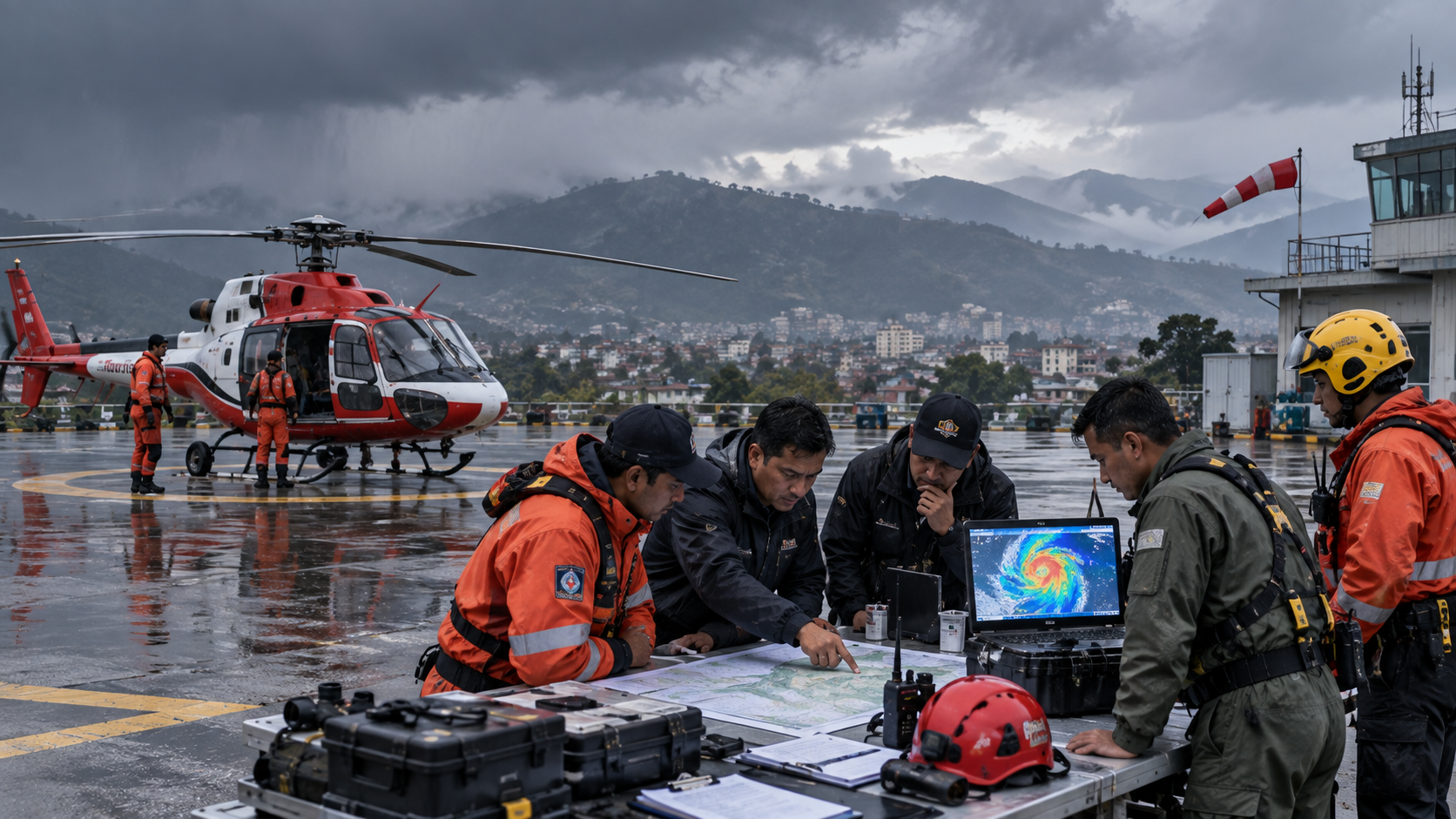
The issue has become particularly significant following the Bhotekoshi disaster of August 2026, which caused extensive loss of life and infrastructure damage and renewed attention to Nepal's exposure to climate-related hazards.
KP Sharma Oli's UN addresses placed greater emphasis on multilateralism and the rules-based international order.
Oli addressed the 73rd, 75th and 79th General Assembly sessions. During his 2020 address amid the Covid-19 pandemic, he argued that challenges such as the pandemic, climate change, inequality and insecurity required stronger international cooperation.
He also highlighted Nepal's climate vulnerability and called for implementation of the Paris Agreement and greater access to climate finance.
These themes added a broader multilateral dimension to Nepal's longstanding emphasis on small-state interests, international law and peaceful cooperation.
Prime Minister Balendra Shah is leading Nepal's delegation to the 81st General Assembly and is scheduled to address the Assembly on September 24.
His visit is his first foreign trip since becoming prime minister. It also comes less than a month after the Bhotekoshi floods, which have intensified Nepal's calls for international attention to climate vulnerability and reconstruction needs.
Climate change and climate justice are expected to feature prominently in Nepal's message, although the precise contents of Shah's address should be assessed from his actual speech rather than assumed in advance.
The 81st General Assembly session runs from September 22 to 28, with climate action among the issues on its agenda.
Nepal's seven decades at the UN show continuity as well as change.
The country has repeatedly highlighted the importance of international rules, peaceful relations, the interests of small and landlocked states and cooperation among nations. At the same time, the issues surrounding those principles have expanded—from Cold War non-alignment and state sovereignty to peacekeeping, democratic transition, sustainable development and climate justice.
Nepal's latest engagement comes at a moment when climate-related disasters, reconstruction requirements and access to international climate finance have become immediate national concerns.
From Sharma's first address in 1956 to Shah's scheduled appearance in 2026, the UN has remained an important platform through which Nepal presents its foreign-policy priorities and seeks international cooperation.
Comments
0 comments
Loading comments...