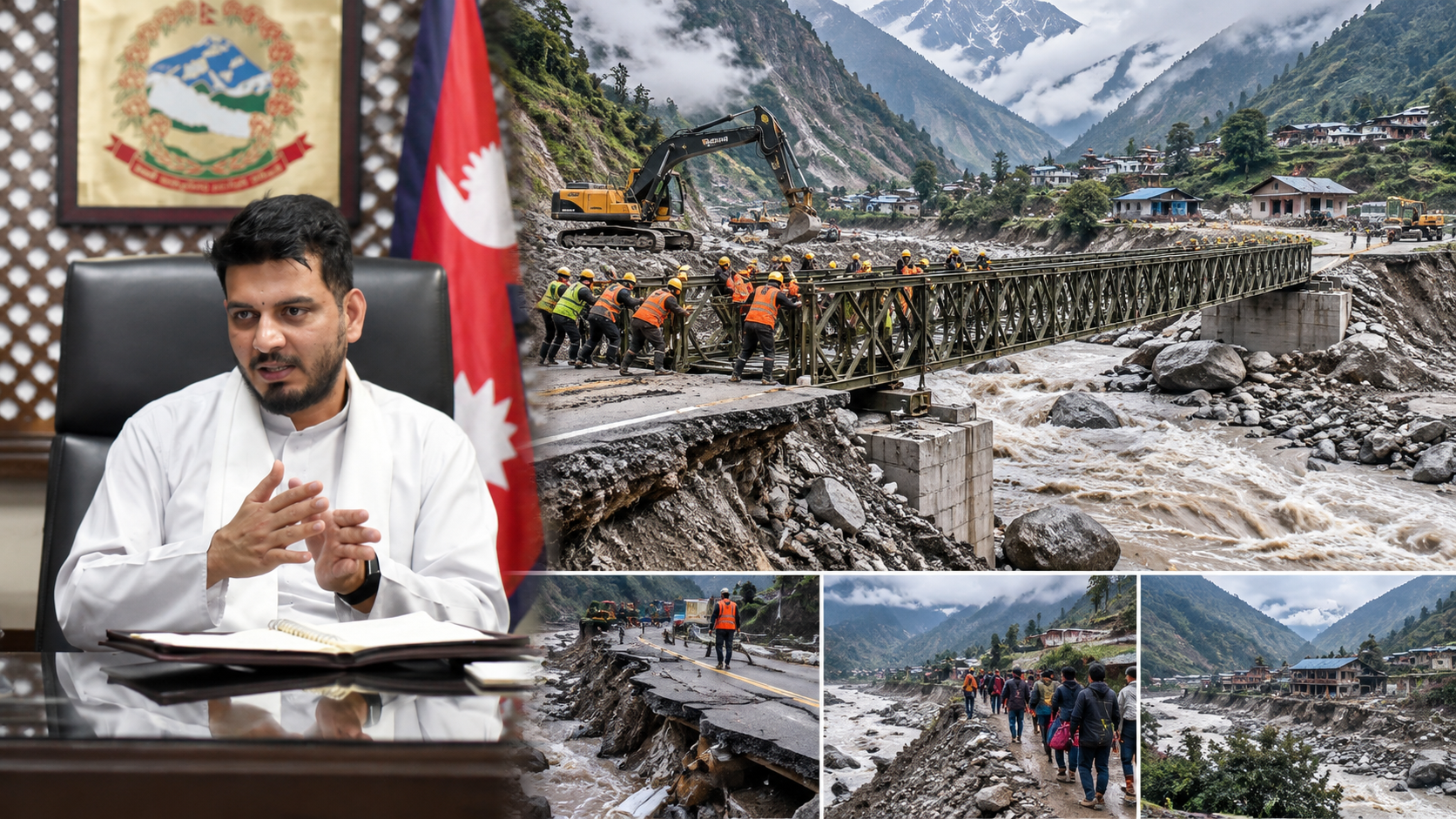
Two-way traffic has resumed at Krishnabhir on the Prithvi Highway after 18 days, with a new 270-metre track providing a temporary link above the flood-damaged section.
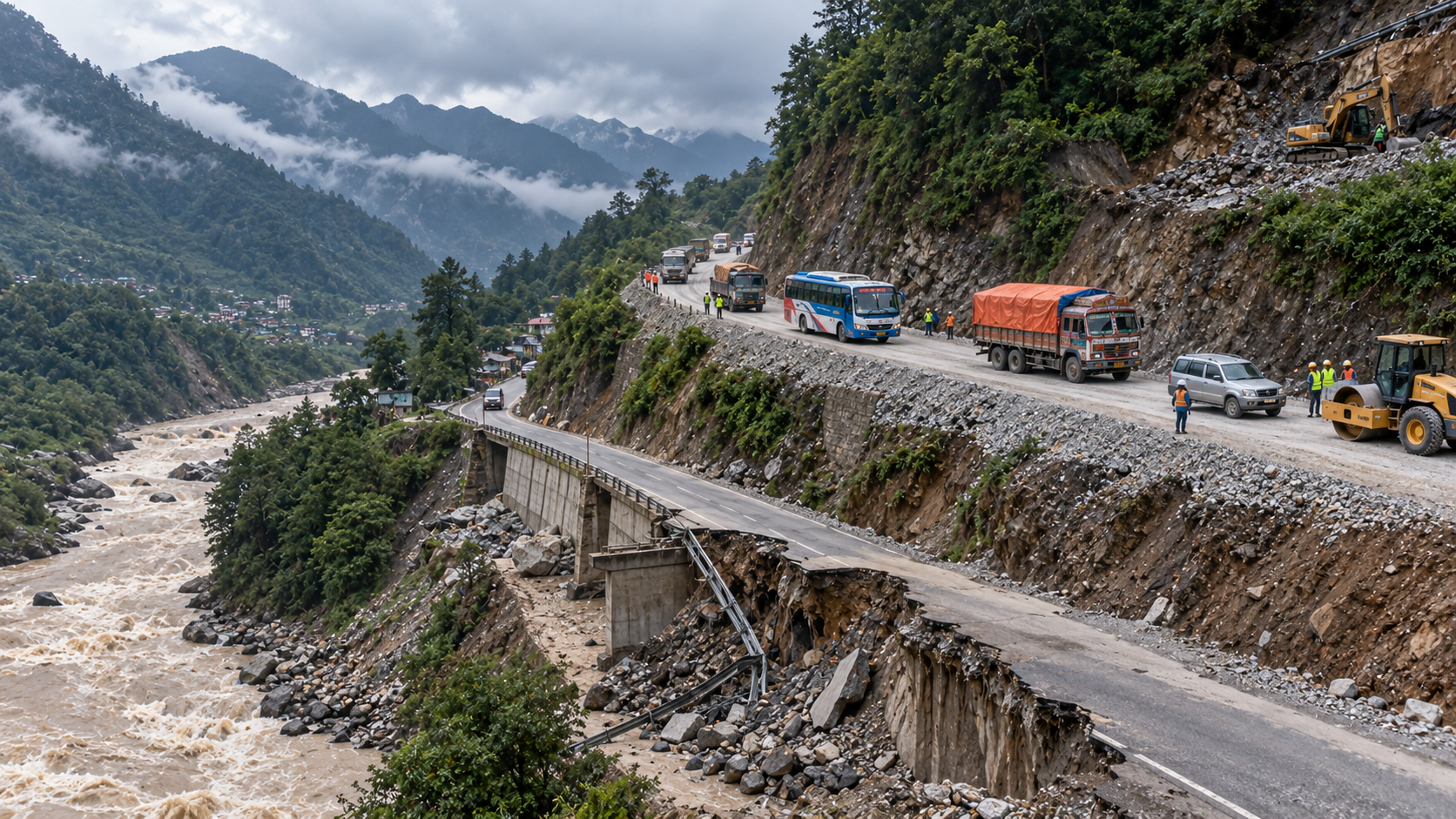
Authorities opened a newly constructed 270-metre track above the damaged section on Thursday morning. The gravelled route provides an immediate alternative to the section of highway that was destroyed by the Trishuli River.
The reopening is expected to improve the movement of passengers, freight, fuel and other essential supplies between Kathmandu and areas west of the capital.
The original road at Krishnabhir became impassable after flood-related erosion destabilised the area and caused a section of the highway to collapse.
Instead of attempting to immediately rebuild the damaged alignment, engineers cut a new route into the hillside above it. Work included excavation, gravel placement, drainage and measures to strengthen the temporary road.
Gas tankers and heavy trucks had already been allowed to use the new track on a trial basis before regular two-way traffic resumed. Around 50 workers, including technical personnel, worked long hours to complete the emergency route.
Road lighting is also being installed around Krishnabhir, while drainage and additional strengthening work continue.
Although traffic can now pass through Krishnabhir in both directions, motorists should not expect completely uninterrupted travel between Nagdhunga and Mugling.
Several other locations along the corridor remain narrowed to one lane because of landslides, erosion and flood damage. Sections around Shital Bazar, Jawang Khola, Galchhi, Mahesh Khola, Baireni and Malekhu continue to require repairs.
Authorities are therefore continuing restoration work at multiple points along the highway.
During the Krishnabhir closure, vehicles travelling between Kathmandu and western Nepal were diverted through routes including Hetauda and Gorkha. The reopening reduces the need for those diversions, although remaining damaged sections can still affect travel times.
The newly opened gravel track is not being treated as a permanent replacement for the damaged highway.
The Department of Roads plans to monitor the route for around two weeks to assess its stability and load-bearing performance before deciding when it can be blacktopped.
Engineers are also continuing drainage and slope-strengthening work because the area remains vulnerable to landslides and water-related erosion.
Authorities are simultaneously developing a more reliable alternative around Krishnabhir.
The preferred route would connect Benighat with Fisling in Chitwan, crossing the Trishuli River and eventually providing another link to the Prithvi Highway.
The route is roughly 18 kilometres long, with about 1.5 kilometres still requiring track-opening work. The Department of Roads has targeted completion of the track-opening and upgrading work within four months.
Engineers are also examining larger permanent solutions, including a tunnel beneath the unstable Krishnabhir section and a bridge-based bypass. Experts have been commissioned to assess the options, with a decision expected after their recommendations are received.
The latest damage is not the first major disruption at Krishnabhir.
The area experienced a major landslide in 1999, followed by another large landslide in 2000 that blocked the highway for 11 days. Authorities subsequently carried out slope-stabilisation work, including bioengineering and retaining structures.
The slope began showing renewed movement and sinking last October, which officials attributed to water infiltration. The Department of Roads had already been using measures such as micropiles, horizontal anchors and concrete works to reduce erosion and water penetration.
The latest flood damage has therefore renewed the need for a longer-term engineering solution rather than relying solely on emergency repairs.
The wider flood damage has affected infrastructure beyond the highway itself.
Authorities have begun repairing 12 suspension bridges along the Trishuli corridor, while another 33 bridges have reportedly suffered damage severe enough to require reconstruction.
The government aims to reopen the bridges under repair by October 6, while reconstruction of those beyond repair will require new projects and contracts.
The restoration of Krishnabhir is consequently only one part of a broader effort to rebuild transport links damaged by the recent floods and landslides.
The reopening of Krishnabhir restores direct two-way movement along one of Nepal’s most important highway corridors, but the temporary nature of the new track and continued damage elsewhere mean the route remains vulnerable.
For now, the new alignment provides a critical connection while engineers assess the slope and authorities pursue alternative routes and longer-term infrastructure solutions.
The experience also highlights the need to combine emergency road restoration with stronger drainage, slope stabilisation and resilient transport planning in flood- and landslide-prone sections of Nepal’s highway network.
Comments
0 comments
Loading comments...