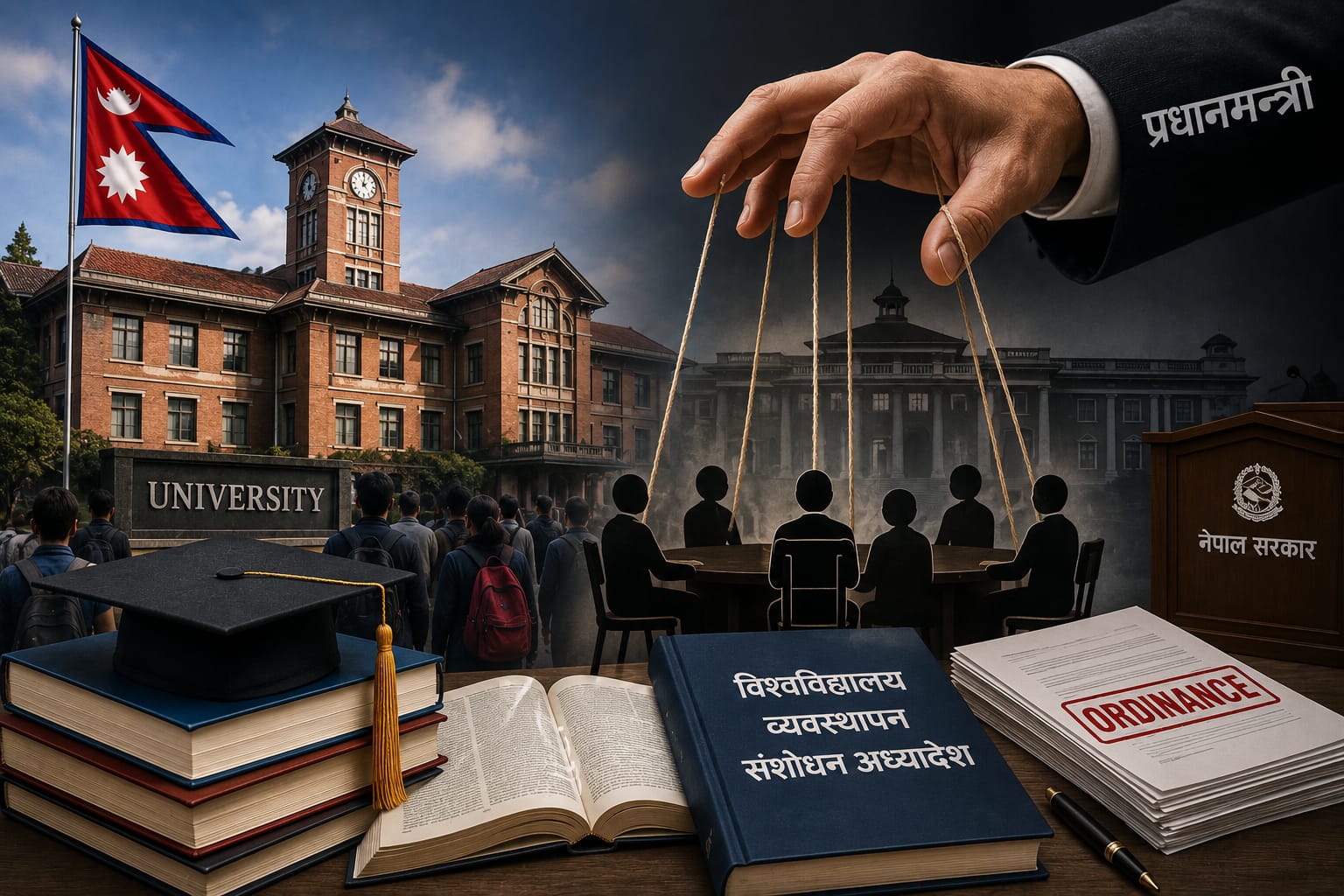
10 May Kathmandu Education experts, professors and civil society leaders in Nepal have strongly condemned the government’s latest measures on university reform, saying they have increased political control on the universities rather than reducing it.
The criticism comes after the government led by Prime Minister Balendra Shah issued a series of ordinances that introduced major changes in the governance structure of public universities across Nepal.
🎓 Debate on Political Control in Universities
For some time academicians and education reform advocates had been demanding:
- Reduced political interference in universities
- Enhanced academic freedom
- Leadership appointments based on merit
- Autonomous governance systems
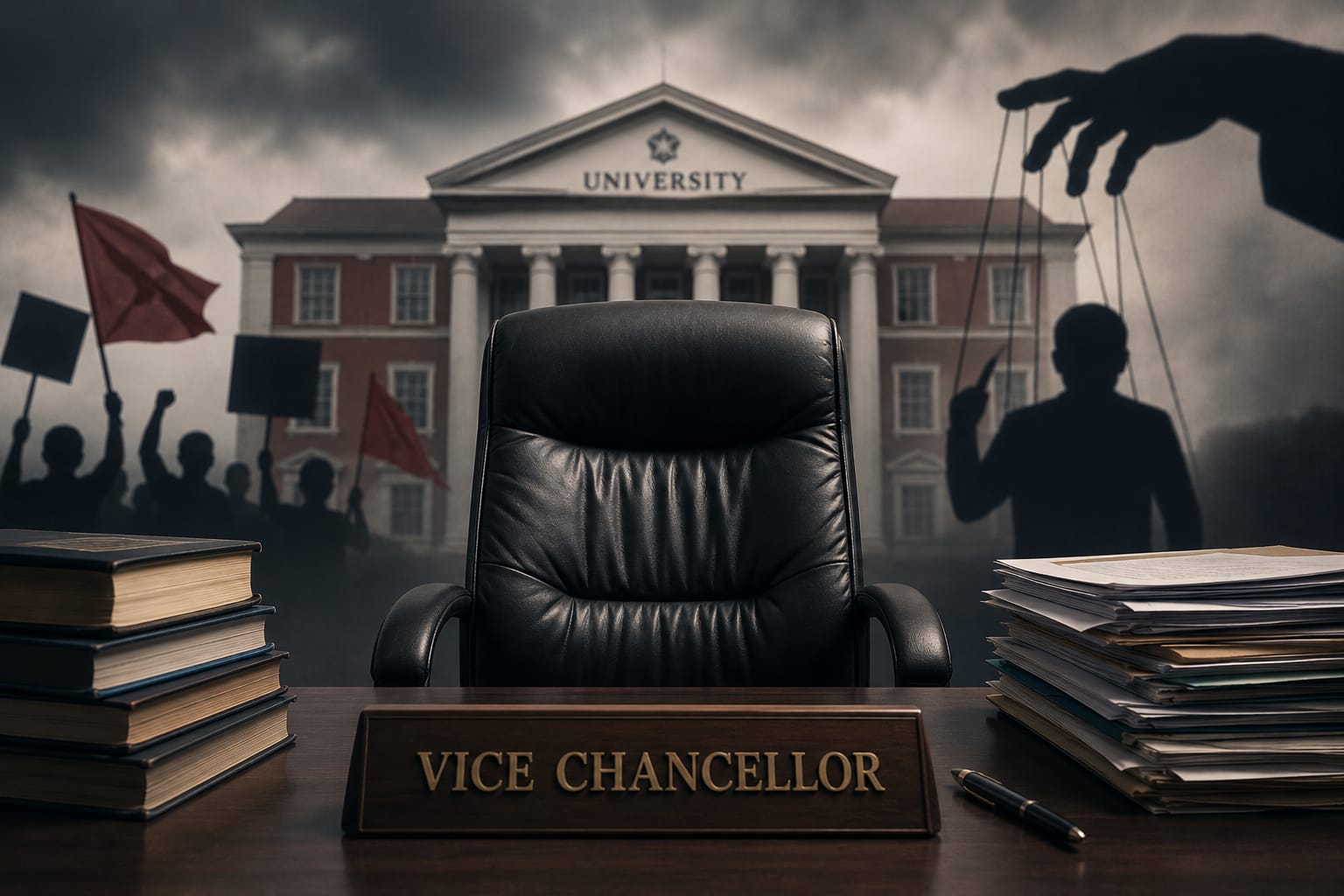
But critics now say the new reforms have further concentrated power in the hands of the prime minister, who is also the chancellor of public universities.
According to education specialists, the ordinances do not reduce political influence but rather allow the prime minister to exert direct influence over important university bodies and appointments.
⚖️ How the New Ordinances Changed
Recently the government has amended laws governing:
- Tribhuvan University
- Other state universities
- Academies of health sciences
by ordinances promulgated when sessions of the Parliament were prorogued.
Under the new rules:
- Several vice-chancellors, rectors and registrars of different universities were sacked
- Teacher associations, employee unions and student unions removed from university senates for institutional representation
- Several senate members including professors, students and employees are now directly appointed by the chancellor
Critics say these changes undermine internal democratic participation and reduce checks and balances within universities.
🏛️ Experts reject centralization of power
The reforms have been openly criticised by several educationists.
Members of earlier education reform commissions say Nepal should move towards:
- Autonomous university boards
- Governance by academics
- Fewer political appointments
rather than consolidating power under political leadership.
Some professors say that even in earlier political systems universities had elected representation of teachers and students and the new provisions cut this democratic structure even further.
📚Government Justifies Reforms
Education Minister Sasmit Pokharel has justified the government decisions saying the reforms are aimed at:
End partisan influence
- Expel political parties from campus
- Merit-based appointments back
- Enhance academic governance
The minister said the current changes were only the first phase of reform and in future phases the prime minister and the education minister could eventually be removed from the posts of chancellor and co-chancellor.
The government said an immediate removal could have resulted in an administrative instability as several of the university leadership positions are already vacant.
🌍 Higher Education in Nepal in a Prolonged Crisis
Nepal's university system has been faulted for decades for:
- Political appointees
Frequent strikes.
- Poor research systems
- Government instability
Lowering academic standards
Education reform has become a major public issue as more and more students are discontented with domestic institutions.
Analysts say if Nepal wants to modernize its higher education system, it must improve its governance and restore academic credibility.
⚠️ Worries about Academic Freedom
Critics warn that tighter political control could:
- Reduce the independent academic debate
- Cut institutional independence
- Stifle dissent in the universities
- Give government more direct control over campus decisions
Student representatives and groups of professors have also raised concerns about the erosion of democratic participation in universities.
📌 Summary
The latest university reforms in Nepal have triggered a big national debate on academic autonomy, political influence and the future of higher education governance.
The government says the changes are needed to de-politicise campuses and introduce merit-based systems, but many education experts believe the reforms have strengthened centralised political control over universities.
Tags: Nepal Universities, University Reform Nepal, Tribhuvan University, Balendra Shah, Higher Education Nepal
🌐 https://hamrobichar.com/
📧 info@hamrobichar.com