CPN-UML chair KP Sharma Oli has rejected calls for immediate leadership restructuring, arguing that leadership transfer should follow established procedures, preparation and institutional decisions.
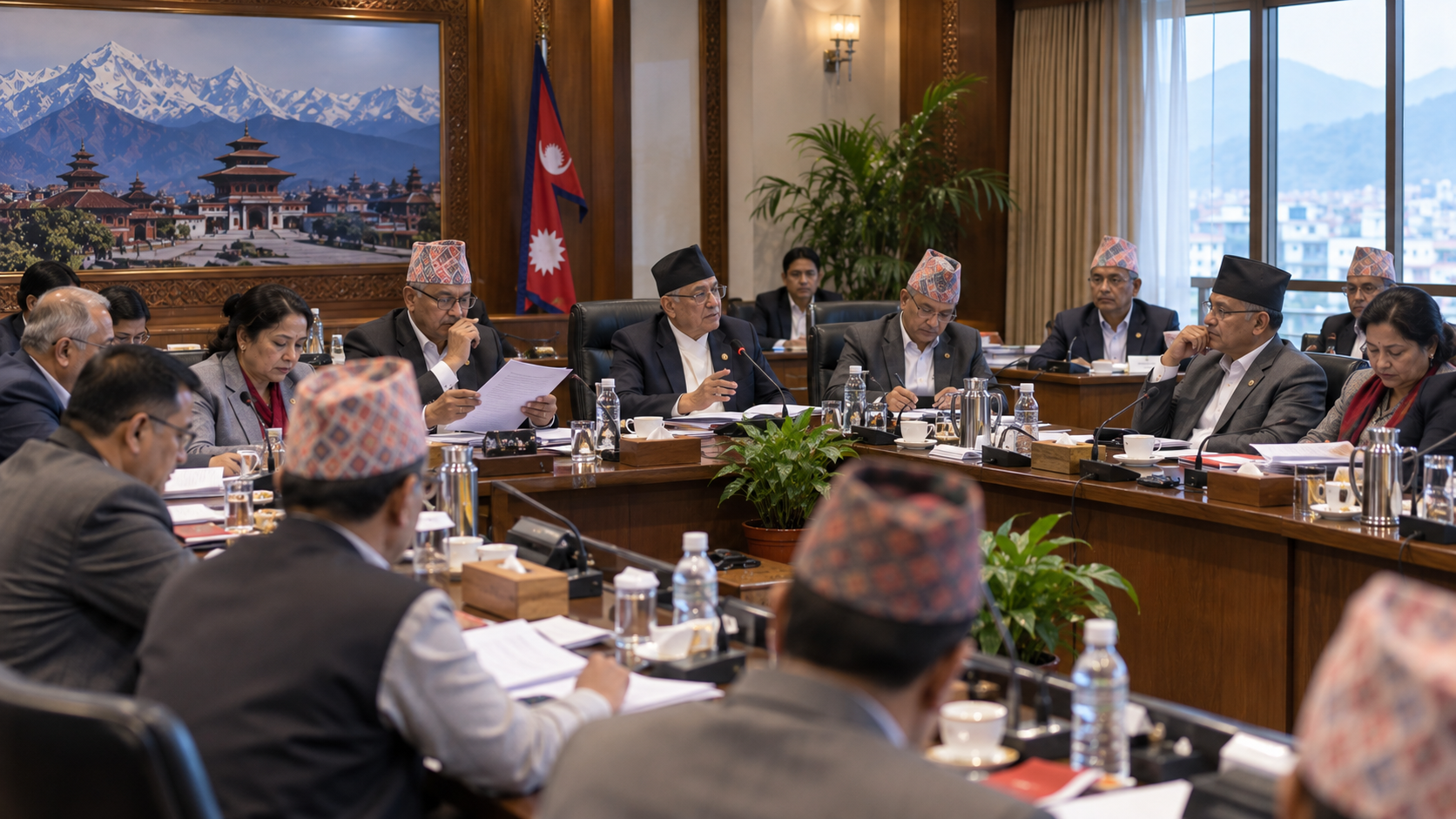
Oli presented his political report at the UML Central Committee meeting that began on September 21. In the report, he addressed the growing internal debate over party policy, organisational reform and leadership transition.
The debate has intensified following the party’s performance in the March 2026 election and disagreements over how the UML should respond to its political setbacks.
In his report, Oli acknowledged that leadership transfer is eventually necessary but argued that it should take place through an established procedure and with adequate preparation.
He said leadership should not be treated as an individual’s permanent property and argued that generational transition should be developed through an institutional system rather than through an immediate contest for positions.
Oli also argued that leadership development requires experience, responsibility and preparation. His position is that organisational transformation should preserve the party’s existing political identity and institutional continuity.
The current dispute developed during the UML’s election-review and party-reorganisation process.
A task force led by Vice-Chair Ram Bahadur Thapa collected suggestions from party organisations across the country. General Secretary Shankar Pokhrel prepared a report that included proposals for broader organisational and leadership restructuring.
Thapa subsequently prepared a separate report taking a different position on the timing and rationale for leadership change. The two approaches were later combined into a consolidated document, but the leadership question was removed from the main recommendation and retained for further discussion.
The leadership question has not disappeared from the UML’s internal agenda.
The consolidated task-force report excludes an explicit recommendation for immediate leadership change, while suggestions received from provincial committees and other party bodies are being included in an annex for discussion.
The issue is expected to be debated by the Central Committee. The party secretariat has also decided to propose a meeting of the National General Convention Representative Council.
The debate has involved several senior leaders who previously supported Oli's leadership.
Vice-Chair Bishnu Paudel and General Secretary Shankar Pokhrel have argued for changes to the party’s policies, organisation and leadership. Other senior figures, including Prithvi Subba Gurung, Gokarna Bista and Yogesh Bhattarai, have also been associated with calls for organisational reform.
Pokhrel's approach has focused on developing a structured system for leadership development and generational transition rather than treating the issue solely as a question of replacing the current chair.
Oli, meanwhile, has maintained that the party needs renewal but that such changes should follow institutional procedures.
Another important factor is the UML's statute.
Oli was re-elected party chair at the 11th General Convention in December 2025. He received 1,663 votes against Ishwar Pokhrel's 564. The party had also removed the two-term and 70-year age restrictions for senior executive positions at its statute convention in September 2025.
The party statute provides a mechanism for a special general convention. Under Article 72, such a convention can be demanded through written support from two-thirds of district committees or a majority of members of the National General Convention Representative Council, with specified reasons and an agenda.
This means that an immediate leadership change would require more than an internal demand from individual leaders; it would have to proceed through the party’s formal organisational mechanisms.
The dispute has therefore expanded beyond whether Oli should remain chair.
It now involves questions about how the UML should respond to its electoral setback, how its policies and organisation should change, and how younger leaders should be developed and incorporated into senior responsibilities.
Oli's report argues for transformation, leadership development and generational transition while rejecting what he describes as an immediate and procedurally unsupported leadership replacement effort. Other leaders have argued that deeper changes in policy and leadership are necessary for the party to respond to its recent political difficulties.
The UML Central Committee meeting scheduled for September 21–23 is expected to provide a formal forum for discussion of the competing views.
The leadership-restructuring proposal is therefore not currently part of the task force's final recommendation for immediate implementation, but the subject remains under discussion inside the party.
The next decisions will depend on deliberations within the Central Committee and, potentially, the National General Convention Representative Council under the procedures set out in the UML's statute.
Comments
0 comments
Loading comments...