
Landless Communities Question Government’s Commitment to Solving Nepal’s Long-Running Land Crisis
By Ranjeet YadavPublished: May 17, 2026Updated: October 1, 2026Reading time: 4 min
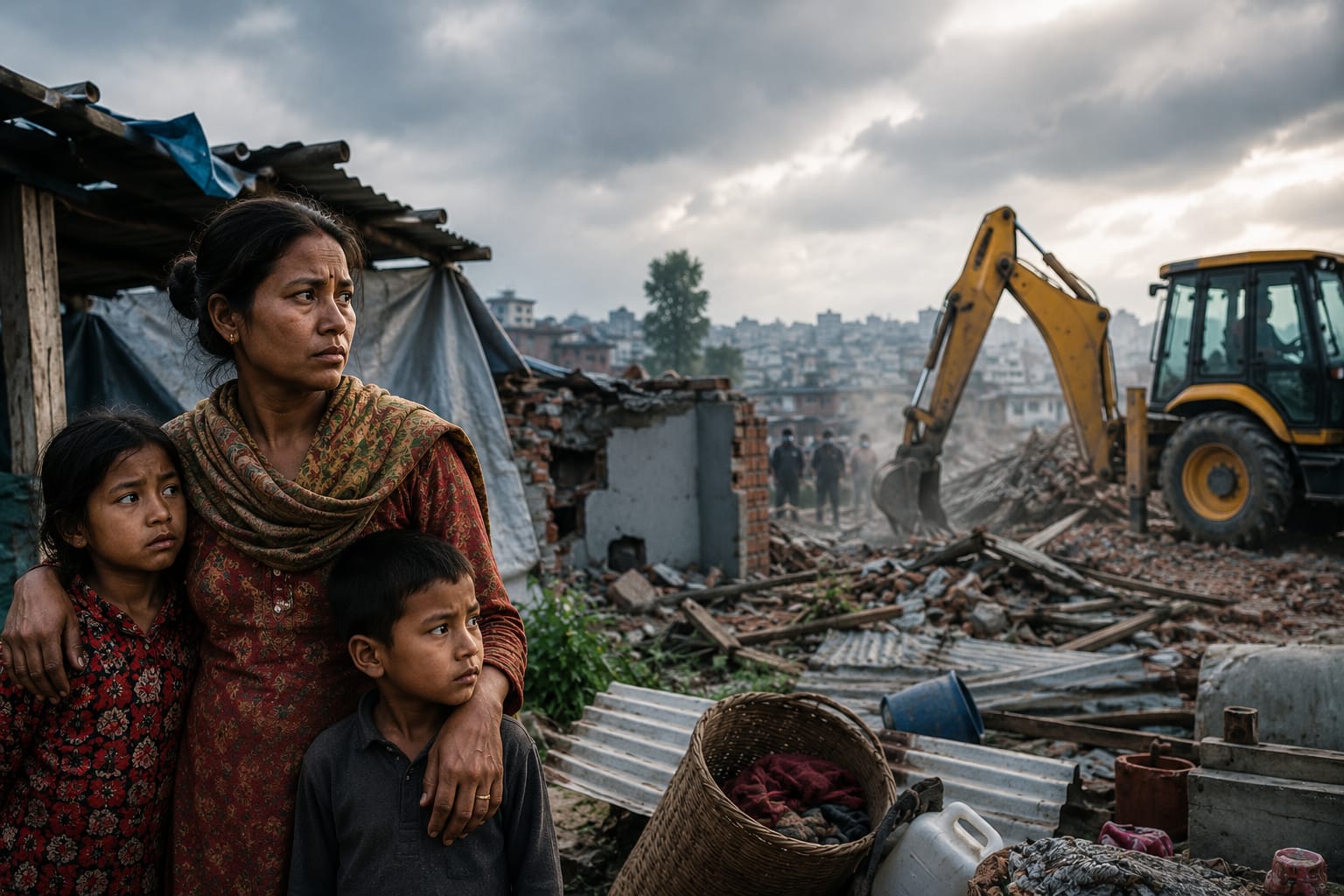
17 May Kathmandu With eviction drives continuing despite promises of reform, landless communities and informal settlers across Nepal are increasingly asking whether the government is really serious about addressing the country’s decades-old land problems.
The increasing frustration comes as the government has announced new land-related policies and reform pledges, and at the same time is carrying out demolition and relocation campaigns in squatter settlements throughout the country.
But activists and land rights groups say the gap between promises in policy and action on the ground have widened the gap of mistrust among vulnerable communities who’ve lived for years without legal land ownership.
🏠 No Promises, Action Now! Landless People's Movement
Landless activists say successive governments have promised time and again:
- Reform of the land
- Rehab
- Housing security
- Ownership rights to land
but did not provide workable long-term solutions.
Landless and informal settler communities from various districts of Nepal joined hands in recent protests in Kathmandu. Protesters said the state favored evictions over rehabilitation.
Many protesters questioned why families who have been living in informal settlements for years are being evicted without clear alternatives for permanent housing or protection of their livelihood.
⚠️ Growing anger at eviction drives
The controversy escalated when, from late April 2026, the government initiated large-scale eviction and demolition drives in parts of the Kathmandu Valley.
Security forces and bulldozers were sent to several riverbank settlements, displacing hundreds of families living in areas such as:
- Thapathali,
- Balkhu -
- Gairigaun
- Kalimati Bazar
- Shankhamul
reports, activist groups say.
The government says the relocation efforts are about urban management and environmental protection, but rights groups say that forced displacement without adequate rehabilitation violates constitutional and humanitarian principles.
📜 Government Pledges Land Reform Again
Despite criticism, the government has continued to promise wider land reforms.
Recent policy documents talk about:
- A national land bank.
- Digital validation of landless families
- Plans of rehabilitation
- Land for landless families and marginal farmers.
- Reforms in agricultural land utilisation
Officials say a land bank model designed to support: could eventually bring unused cultivable land into productive use.
- Young farmers
- females
- Landless populations.
- Households with small farms
Critics, however, say Nepal has talked about similar concepts of land bank since the adoption of the 2015 Constitution, though its implementation is very limited.
Nepal's land crisis runs deep
Landlessness has been one of the longest unaddressed social and economic issues in Nepal.
The problem is closely related to, experts say:
- Land systems in the feudal past
- Poverty
- Economic disparity
- Poor implementation of land reform
- Political unrest
Several studies and advocacy groups report that over one million Nepalis still lack secure access to land or housing.
The impact is believed to be disproportionately high among Dalits, indigenous communities and economically marginalized groups.
🏛️ Political Promises Made for Decades
Analysts say that over the past few decades, multiple land commissions, committees and reform programs have been set up, but many have failed to come up with lasting solutions.
Critics say that:
- Frequent changes of government
- Political intervention
- Poor institutional coordination
- Not implemented
have long deferred meaningful reform.
Some land rights activists also accuse the political parties of only using landless communities during elections and then not following through.
📚 Housing Rights Guaranteed in the Constitution
The Constitution of Nepal guarantees:
- The right to housing
- Protection from illegal eviction
- Assistance to landless communities
especially landless Dalits and other marginalized communities.
Human rights groups say the state should guarantee:
- Rehab
- Housing alternative
- Community involvement
before launching eviction drives.
International rights groups and U.N. experts have raised concerns in the past about forced evictions in Nepal without adequate resettlement plans.
🌍 Bigger Debate About City Development
The issue has also ignited wider national debate about:
- Urban growth
Managing river banks
- Nature protection
- Right to housing
- Poverty and migration
Some settlements are in environmentally sensitive or legally protected areas, government officials say.
But activists argue poor families should not have to pay the full price for the mistakes of urban planning and housing.
📌 Summary
With the promise of land reform back in the air and eviction campaigns going on across Nepal, many of the country’s landless communities say trust in the government is eroding fast.
For thousands of vulnerable families, it is no longer just a question of land ownership – but of dignity, survival, housing security, and whether decades of political promises will finally translate into real action.
Tags: Landless Nepal, Nepal Land Reform, Squatter Settlements Nepal, Nepal Housing Crisis, Land Rights Nepal
🌐 https://hamrobichar.com/
📧 info@hamrobichar.com
Related Articles

Comments
Join the discussion
0 comments
Loading comments...