Nepal has cancelled the visas of 88 Chinese nationals working at a meat-processing project in Sindhuli, citing work outside the purpose of their business visas.
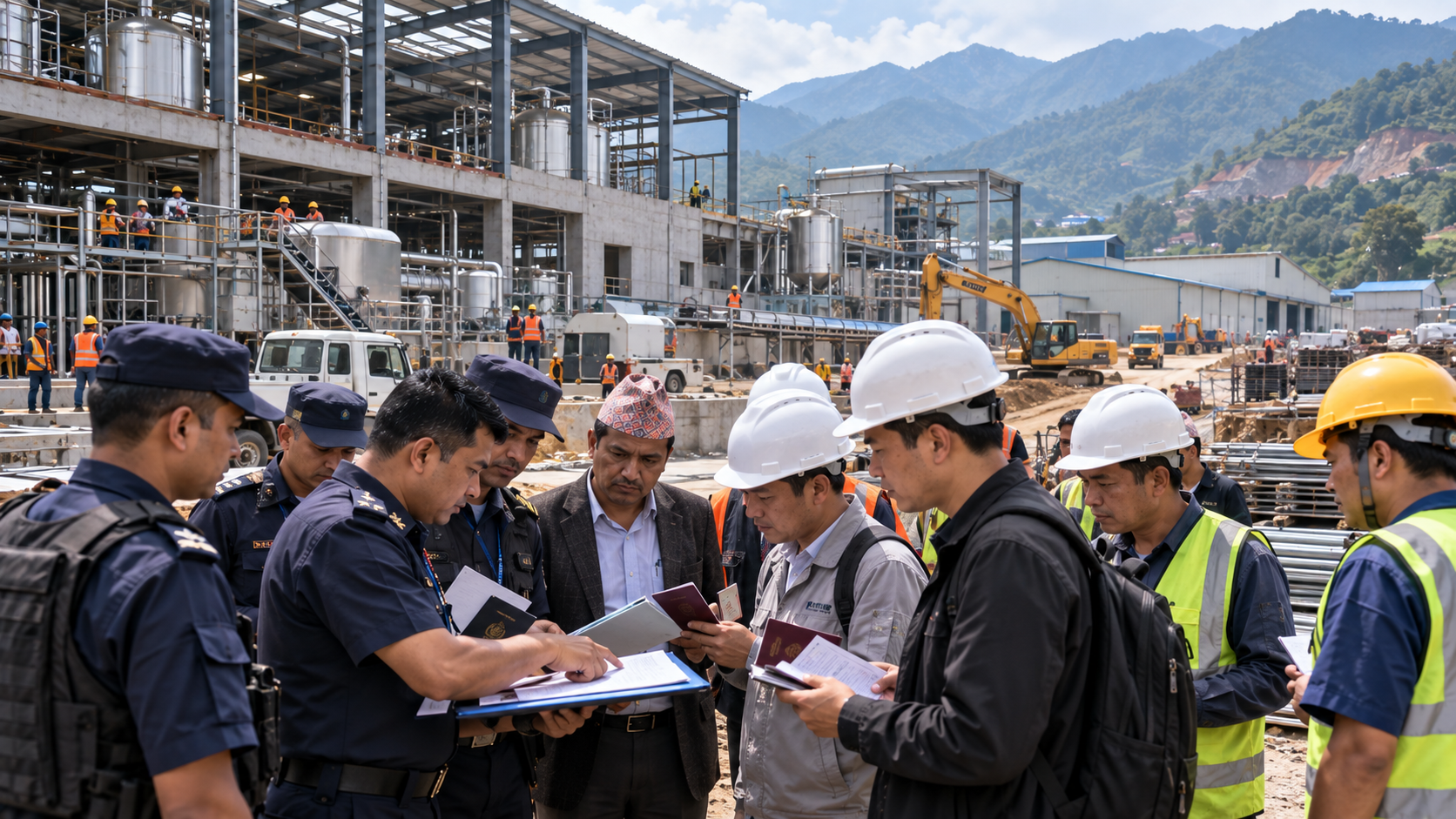
The workers were associated with Jian Foods Pvt Ltd, which is developing the Nepal Heat Processed Buffalo Meat Export to China Project with financial backing from Chengdu Tian Food Limited.
The Immigration Department made the decision on Wednesday and has begun the process of imposing fines and deporting the workers, according to department officials.
According to the Immigration Department, the affected Chinese nationals entered Nepal on business visas but were subsequently found working at the meat-processing project.
Department officials told OnlineKhabar that many of them had established IT companies in Nepal and obtained business visas through those companies before working at the factory.
Officials suspect that some of the companies may have existed mainly to facilitate entry into Nepal rather than to conduct genuine business activities. This is the department’s assessment and has not been independently established as a finding against every individual involved.
Nepal’s immigration rules distinguish between business and working visas. The Department of Immigration states that foreign nationals who work in Nepal must obtain a working visa, which requires relevant government recommendations and a labour permit. Business visas, meanwhile, are intended for investors and businesspersons conducting or investing in businesses in Nepal.
Nepal’s Labour Act also states that employers cannot employ foreign nationals without obtaining the required labour permission, subject to provisions governing skilled foreign workers.
Jian Foods has disputed the circumstances surrounding the visa cancellation.
The company says it had already been seeking approval for work visas for Chinese technical personnel involved in constructing and preparing the factory. It submitted a request to the Department of Agriculture on July 17 for approval related to labour permits and work visas.
According to the company, the factory's production equipment is technologically complex and requires experienced foreign specialists during construction and installation.
The company said it expects to require a team of about 500 foreign specialists and argued that their presence is necessary to operate the imported production equipment.
The company had planned to bring the facility into full operation from January, while construction of the slaughterhouse was continuing on roughly 50 bighas of land.
The Sindhuli project is part of a broader plan to establish a commercial buffalo-meat processing and export industry in Nepal.
The project is connected to an agreement associated with former Prime Minister KP Sharma Oli’s visit to China concerning the export of buffalo meat from Nepal to China.
Oli subsequently announced that the Department of Industry had approved foreign direct investment of Rs20 billion for the proposed facility in Marin Rural Municipality-4.
The project’s stated production target is 200,000 tonnes of meat annually, along with about 55,000 tonnes of by-products such as hides, internal organs and heads.
Project proponents have also projected substantial economic benefits, including employment for around 10,000 Nepalis, development of a more standardised buffalo-farming supply chain and significant foreign-exchange earnings from exports to China.
Those figures are project projections rather than realised economic outcomes, as the factory is still under construction.
The dispute illustrates the importance of aligning foreign investment with Nepal’s immigration and labour requirements.
Foreign investors and business representatives may qualify for business visas under Nepal’s immigration framework, but foreign nationals performing employment-related duties require the appropriate work authorisation. The Department of Immigration explicitly lists labour permission and a work agreement among the requirements for working visas.
For the Sindhuli project, the immediate question is therefore not whether foreign technical expertise can be used, but whether the workers involved had obtained the permissions required for the specific activities they were performing.
The company’s request for work visas indicates that the issue had already become part of the project’s administrative process, while the Immigration Department’s action shows that authorities considered the existing visa arrangements insufficient.
The cancellation of the 88 visas and the planned deportation process could affect the project’s construction schedule if the company depends heavily on the affected technical personnel.
Jian Foods has warned that losing skilled foreign manpower could make it difficult to complete the factory on schedule. The company has also said that it needs foreign specialists to operate and install complex production equipment.
The longer-term impact will depend on whether the project can secure appropriate labour approvals for foreign specialists and maintain compliance with Nepal’s immigration and labour rules.
For Nepal, the case also highlights a broader challenge: large foreign-backed industrial projects require coordination between investment approval, immigration, labour authorisation and technical manpower requirements before construction reaches the operational stage.
Comments
0 comments
Loading comments...