
Debate Grows in Nepal Over What Lawmakers Can and Cannot Say in Parliament
By Ranjeet YadavPublished: May 16, 2026Updated: October 16, 2026Reading time: 4 min
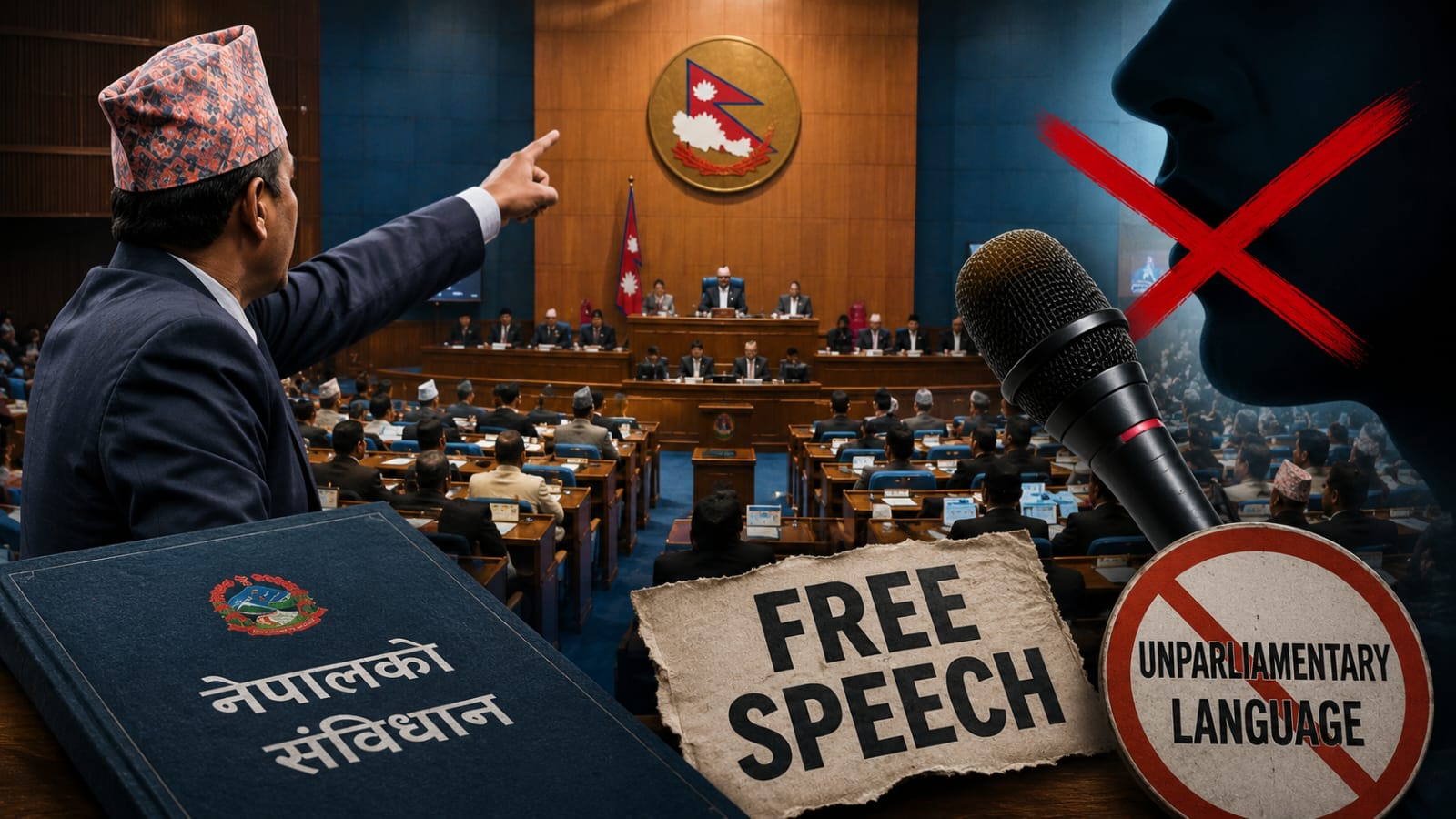
16 May Kathmandu A debate has erupted in Nepal’s Parliament over what kinds of language are acceptable in parliamentary debates, with concerns rising that political criticism is increasingly being labelled “unparliamentary”.
The row deepened this week when Speaker Dol Prasad Aryal ordered the removal of several statements made by lawmakers of different parties from official parliamentary records following protests against their language and political impact.
The controversy has sparked wider national debate around:
- Freedom of speech in the Parliament
- PC
- Democratic debates.
- Parliamentary procedure
- Criticism of state institutions: limits
🏛️ Parliament Heated Discussion
The latest controversy broke out during discussion on the government’s policies and programmes in the House of Representatives.
CPN-UML leader Ram Bahadur Thapa questioned the political rise of the Rastriya Swatantra Party (RSP) and spoke about the role of the Nepali Army during recent unrest.
RSP lawmakers immediately objected, saying some of Thapa’s remarks were “unparliamentary” and needed to be expunged from official records.
Later, Speaker Aryal ordered the removal of several phrases, including:
- “Anarchist rabble”
- “The national flag wearers who burned the country”
– “Nepali Army was a silent spectator”
The issue flared up further with UML lawmakers alleging that the Speaker was targeting their party selectively while ignoring harsh words used by RSP lawmakers.
Later, the Speaker also expunged from records other remarks from RSP lawmakers, such as words like:
- “Minions”
- “Toadies”
– “Genocide”
⚖️ Unparliamentary and What counts as It
Nepal’s parliamentary rules do not permit:
- Dirty language
- Personal attacks
- Attacks based on identity
- Insulting or degrading comments
But experts say there is still no clear fixed list of banned parliamentary words in Nepal.
Interpretation is largely dependent on:
- Context
Political sensitivity
- Speaker’s option
- Reason for comments
Former federal parliament secretary Rajendra Phuyal said, “Parliamentary language cannot be defined in an absolute sense. Meaning changes according to time and political context. So it is difficult to define it in absolute terms.”
📜 Free Speech & Parliament
Nepal’s Constitution protects legislators from any action for anything said in Parliament, supporting freedom of political expression in debate.
But political scientists say that defining “unparliamentary” language too broadly could undermine the fundamental democratic role of Parliament.
“This is exactly what Parliament is for,” said political analyst Saugat Gautam:
- Question authority.
- Criticize the government
- inspect institutions
and too many restrictions could mean less meaningful debate.
Experts say democracies need balancing:
- No room for real abuse
- Strong political criticism should continue to be protected
⚠️ Increasing Political Sensitivity
The issue comes at a time when Nepal’s political environment has grown more polarised in the wake of:
- Prime Minister B. Shah
- Politics led by RSP
- Anti-establishment movements.
- Activism on social media
The tone of political debate, both in and outside Parliament, has become sharper and more confrontational in recent months.
The criticism involves, analysts say:
- State-owned institutions
- Security services
- Symbols of the country
- Political movements
now evokes a much swifter political response than previously.
🪖 References to Sensitive Institutions
The controversy also had to do in part with references to the Nepali Army, a highly sensitive institution in Nepal’s politics.
The army recently cautioned against the spread of what it called misleading and fabricated narratives targeting the institution and its leadership.
That broader climate, observers say, has made voters more wary of political rhetoric involving:
- Homeland security
- State-owned institutions
- Turmoil
- Movements of protest
🧑⚖️ Speaker in Trouble
Speaker Dol Prasad Aryal is now facing mounting pressure from different political parties on the enforcement of parliamentary rules.
Critics accused the Speaker of:
- Inconsistent rulings
- Partisan politics
- Debate over over-policing
but the dignity of parliament and respect for institutions must be preserved, say backers.
The controversy has also rekindled wider questions about:
- Leadership of Parliament is non-partisan
- Democratic tolerance
- Political expression freedom
📌 Summary
The latest parliamentary spat underscores the growing challenge for Nepal of balancing political freedom and parliamentary discipline in an increasingly polarized political climate.
As lawmakers debate the rules on what should — and should not — be allowed inside Parliament, experts warn that democracy requires not only that decorum be maintained, but that the space for strong criticism and uncomfortable political debate be preserved.
Tags: Nepal Parliament, Parliamentary Debate Nepal, RSP Nepal, Dol Prasad Aryal, Nepal Politics
🌐 https://hamrobichar.com/
📧 info@hamrobichar.com
Related Articles
Comments
Join the discussion
0 comments
Loading comments...