A three-day international literary translation workshop has begun at Kathmandu University, bringing emerging translators together with acclaimed mentors from Nepal and abroad.
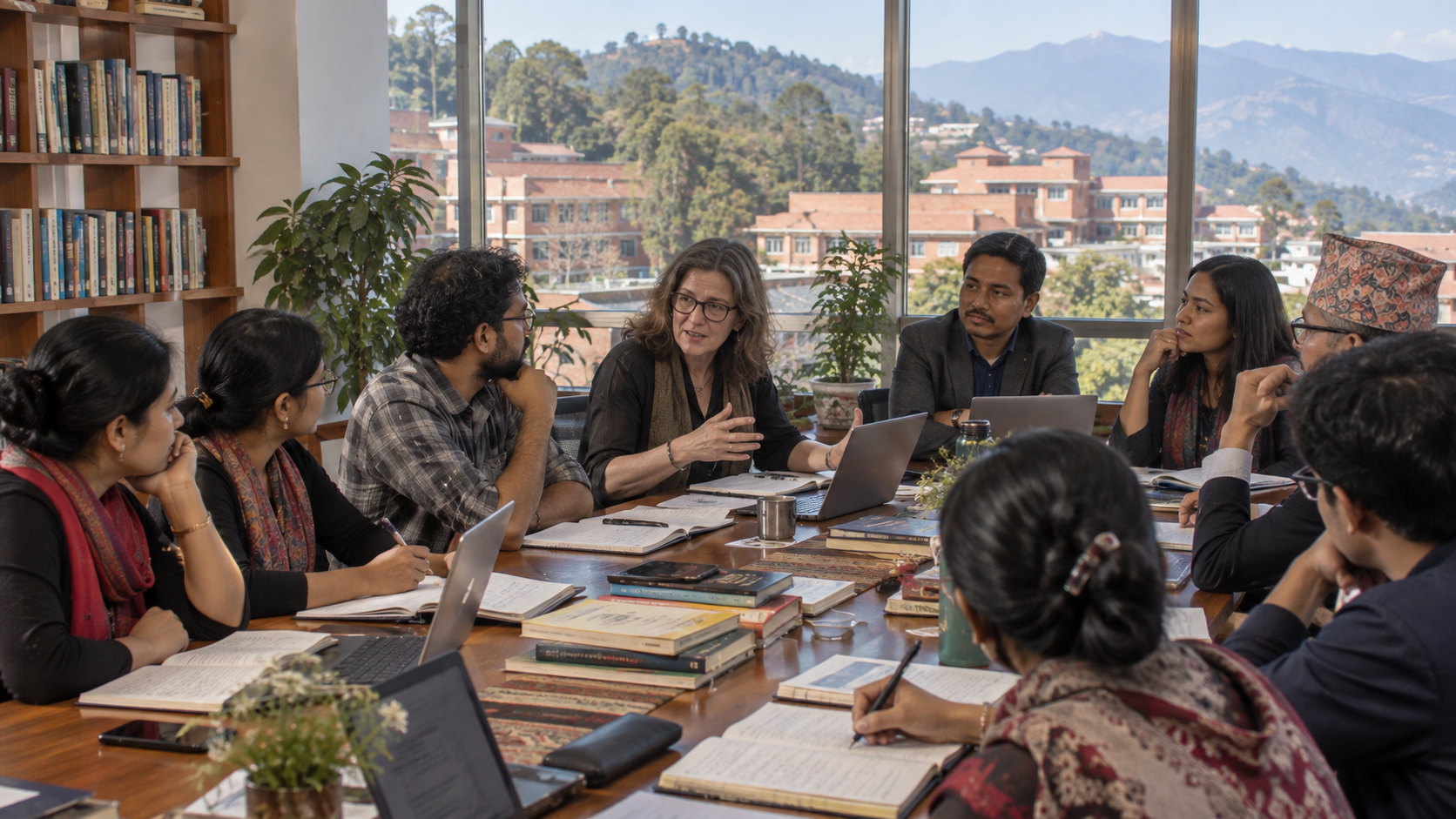
A three-day international literary translation workshop has begun at Kathmandu University’s Dhulikhel campus, bringing emerging translators together with internationally recognised literary translators to strengthen the practice of translating South Asian literature into English.
The Literary Translation Workshop, which began on September 11, is jointly organised by Kathmandu University’s Department of Languages and Mass Communication and the South Asian Literature in Translation (SALT) project at the University of Chicago. The programme focuses on literary prose from Nepali, Maithili, Tibetan and Nepal Bhasa and includes 25 participants.
The workshop features a group of translators with extensive international experience, including Daisy Rockwell, Deepa Bhasthi, Jason Grunebaum and Daniel Hahn.
Rockwell won the 2022 International Booker Prize for her English translation of Geetanjali Shree’s Tomb of Sand. Bhasthi received the 2025 International Booker Prize for her translation of Banu Mushtaq’s Heart Lamp. Their participation gives Nepali and South Asian translators an opportunity to receive direct feedback from practitioners working at the highest levels of literary translation.
Jason Grunebaum, co-director of SALT, has translated works including Uday Prakash’s The Girl with the Golden Parasol and The Walls of Delhi. British writer and translator Daniel Hahn, who received an OBE for services to literature, is also serving as a mentor.
Translation plays an important role in introducing literature written in regional languages to readers outside their original linguistic communities.
SALT, the University of Chicago initiative involved in the workshop, aims to support English translations of literature from South Asian languages and strengthen connections among translators, publishers and readers in English-language markets. Its programme covers languages including Nepali and Maithili as well as numerous other South Asian languages.
For Nepali literature, increased translation can create opportunities for writers and publishers to reach readers beyond Nepal. The challenge, however, extends beyond translating individual books; it also involves editing, publishing, rights management, promotion and developing professional networks.
The Kathmandu University programme includes several activities designed to expose participants to different stages of literary publishing.
Alongside the intensive translation sessions, the programme includes a publishers’ roundtable, an editing workshop and a public reading session involving participants and the visiting mentors.
The public programme is scheduled for September 13 at Yala Maya Kendra in Patan, where participants and the award-winning translators are expected to take part in the reading session. James Tookey, co-director of Peirene Press, and Faber editor Snigdha Koirala are also scheduled to participate.
Kathmandu University assistant professor and organising team member Dinesh Kafle said the workshop offers emerging translators an opportunity to have their work reviewed by mentors with significant international experience.
The workshop was announced earlier as a collaboration between Kathmandu University and the University of Chicago. Organisers initially planned to select 24 participants from applicants working on translations from Nepali and other South Asian languages into English.
The programme is part of a broader effort by SALT to make literature from South Asia more visible in English-language publishing markets. The University of Chicago’s current programme description identifies Kathmandu University as a partner in a wider project intended to train translators and strengthen connections between South Asian literature and publishers in the Anglophone world.
The workshop comes at a time when translated South Asian literature is receiving increasing international attention. Recent International Booker recognition for translations from Hindi and Kannada has demonstrated how works originating in South Asian languages can reach a global readership through translation.
For Nepal, developing a stronger community of professional literary translators could help more Nepali-language works move beyond the domestic publishing market.
The Kathmandu workshop therefore represents more than a short training programme. By bringing translators, editors and publishing professionals together, it provides an opportunity to strengthen the links needed to take Nepali and other South Asian literature to wider audiences.
The immediate focus is on improving translation skills, but the longer-term objective is broader: creating stronger pathways through which literature written in Nepal’s diverse languages can find readers in Nepal and internationally.

Comments
0 comments
Loading comments...
