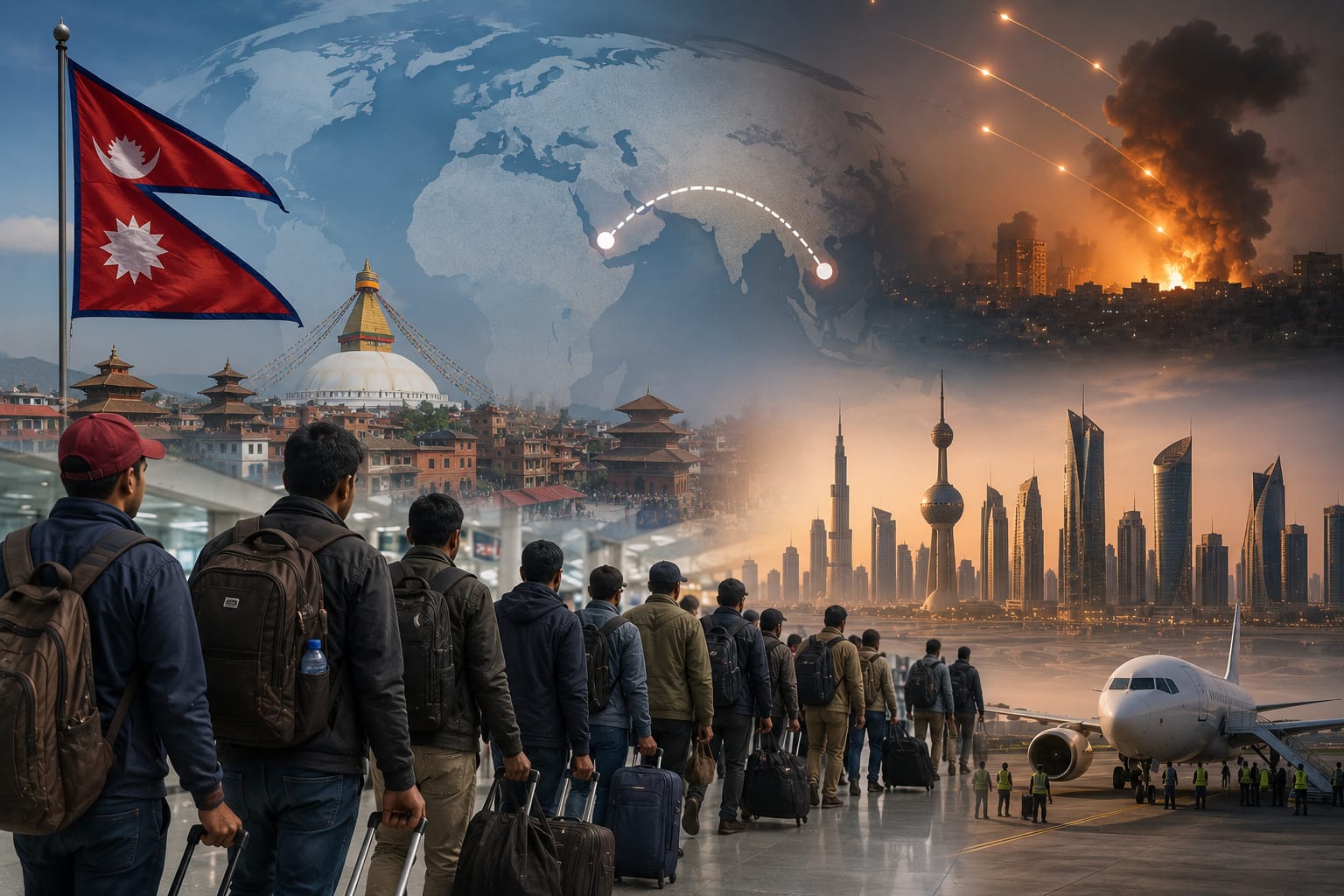
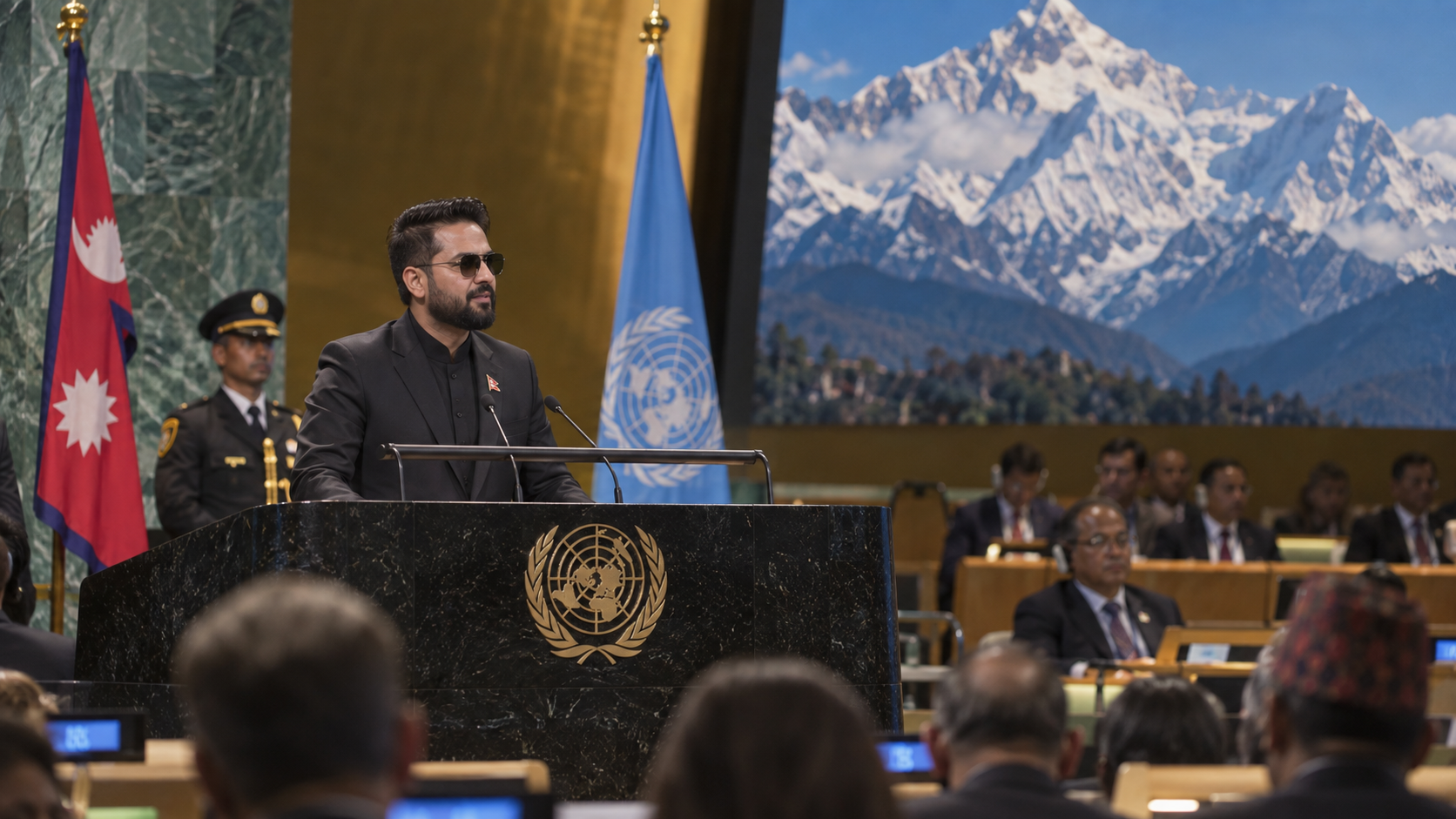
7 May Kathmandu Nepal’s government-appointed committee has proposed a long-term national strategy to ensure better safety of Nepali citizens in the wake of international crises like the ongoing conflict in West Asia.
The proposal follows months of growing concern about the safety of millions of Nepali migrant workers living in Gulf and Middle Eastern countries hit by regional tensions, drone attacks and geopolitical instability.
🌍 Why Nepal Is Worried
Nepali migrant workers continue to send a large share of remittance income from West Asia.
According to the government’s tally:
- There are now between 1.8 and 1.9 million Nepali workers in the Gulf countries
- Actual figures may be higher than 2.5 million if undocumented workers are included
Recent conflicts involving Iran, Israel and US military operations have shown how vulnerable migrant workers can be in times of sudden regional instability.
Reports in recent months have described:
'Drone and missile strikes on work sites
- Airport disruption
- Emergency transfer of migrant workers
- Fear and uncertainty among Nepalis abroad
🏛️ New Strategy’s Proposals
The task force, headed by the Foreign Minister, has recommended setting up a permanent emergency response mechanism to be automatically activated in times of international crises.
The proposed approach includes:
- Improved evacuation planning
- Improved inter-ministerial coordination
- Real time monitoring systems
- Improved communications with Nepalese embassies abroad
- Expatriate citizens’ digital registration and monitoring systems
- Infrastructure for crisis management in large-scale rescue missions
Nepal has responded to such emergencies in the past with occasional and ad hoc measures, usually without long-term preparedness, officials say.
✈️ Prioritize Evacuation Preparedness
A major lesson from the West Asia conflict was the difficulty of evacuating large numbers of Nepali citizens in times of crisis.
Officials from the foreign ministry stressed that to rescue millions of workers from several countries it would need:
- National level coordination
- International diplomatic collaboration
- Infrastructure for evacuation.
- Enhanced migrant worker databases
Nepal has already begun:
- Operating situation monitoring centre
- Expand online registration systems for migrants;
- Correspondence with diplomatic missions abroad
📊 Economic risks also mentioned
The government is not purely humanitarian.
West Asia conflict also impacted:
- Tourists
– Oil prices
- Remittances flows
- International travel routes
Experts have also raised concerns over Nepal’s economy being heavily dependent on remittances from Gulf countries amid geopolitical instability in the region.
🧠 Towards a Better Prepared Nepal
Policy analysts say the proposal is a reflection of a wider shift in Nepal’s foreign policy and governance approach.
Now the government seems to be turning its attention to: Instead of reacting after crises occur,
- Prophylactic planning
- Preparedness of institutions
- Long term strategic response systems
The strategy also dovetails with the government’s wider governance reform agenda launched earlier this year.
📌 Abstract
Nepal’s long-term crisis management strategy is a significant effort to prepare the country for increasingly unpredictable global conflicts.
With millions of Nepalis working abroad, especially in politically sensitive areas, the government is under pressure to mobilise faster coordination, stronger diplomacy and better emergency preparedness to ensure their safety.
Tags: Nepal Foreign Policy, Nepali Workers Gulf, West Asia Crisis, Nepal Evacuation Plan
🌐 https://hamrobichar.com/
📧 info@hamrobichar.com