
Nepal Flash Flood: Rasuwa Disaster Leaves 22 Dead and Hundreds Missing as Rescue Efforts Intensify
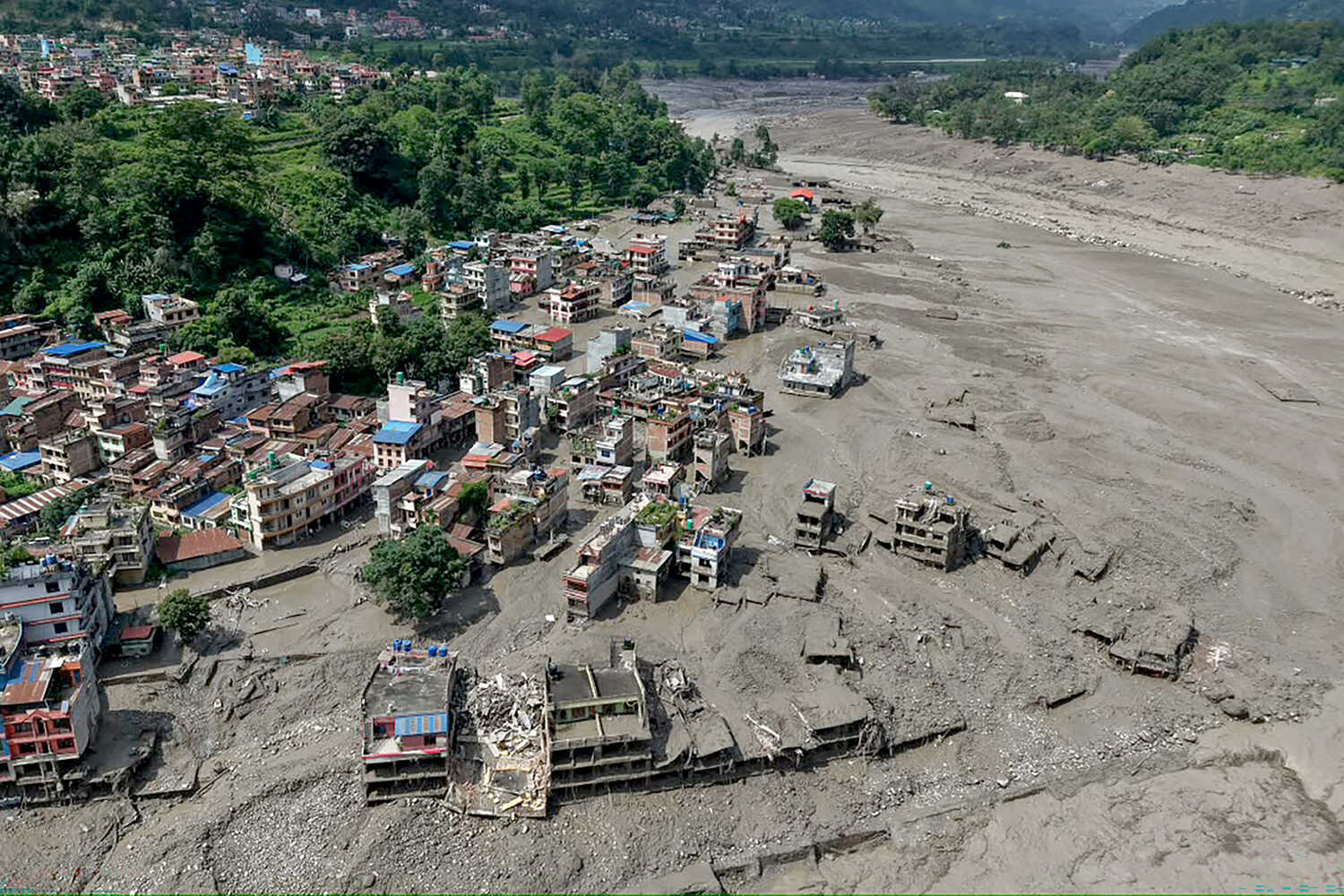
Nepal is facing one of its most serious flood disasters of the year after a sudden and powerful flash flood swept through Rasuwa district and neighbouring areas on Wednesday, destroying settlements, roads, bridges and hydropower infrastructure.
The flood surged through the Bhotekoshi River in northern Nepal, particularly affecting areas around Timure and Syabrubesi, close to the Nepal-China border. The scale of destruction is still being assessed, while rescue teams are working to locate people who remain missing.
As of the latest reports available Wednesday evening, 22 people had been confirmed dead and 88 people had been rescued. Nearly 400 people were reported out of contact, although authorities cautioned that the figures were still being verified because communication with several affected areas had been disrupted.
Entire settlements affected
The flood swept through riverside settlements with enormous force, carrying away buildings, vehicles and other structures.
Areas including Timure, Syabrubesi, Mailung, Betrawati and other settlements along the Bhotekoshi and Trishuli river corridors have suffered significant damage. Bridges, roads and market areas have also been affected, making access to some communities extremely difficult.
The destruction has also hit important infrastructure in the region, including hydropower projects.
According to reports, around 60 people associated with the 20-megawatt Langtang Khola Hydropower Project remain out of contact. Security personnel and customs officials working in the border area are also among those reported missing.
Hundreds remain unaccounted for
The number of people reported missing has become one of the biggest concerns.
Preliminary information compiled by the Nepal Tourism Board indicated that 384 people, including 291 foreign nationals and 93 Nepali nationals, were reported out of contact. The list is being verified as authorities try to establish the whereabouts of travellers and residents.
Many people were travelling through the region, including tourists and pilgrims heading towards destinations in the Himalayan region.
Because telephone networks and road connections have been damaged, authorities are still struggling to establish the complete picture.
Security personnel among the missing
The disaster has also affected security forces deployed in the border region.
Nepal Police and Armed Police Force personnel stationed in several locations in Rasuwa have been reported missing. Radio Nepal reported that 26 police personnel were out of contact, while 13 Armed Police Force personnel were reported missing from Timure and Mailung.
Search teams have been deployed to locate them.
Nepal launches large-scale rescue operation
The Nepali Army, Nepal Police and Armed Police Force have been mobilised for search-and-rescue operations.
The Nepali Army said it had rescued 25 people from affected areas in Rasuwa and Nuwakot. Fourteen helicopters—six operated by the Army and eight from the private sector—have been deployed for rescue, relief and search operations.
A team of 20 specialist doctors, including two surgeons, has also been deployed to provide emergency medical treatment after flooding disrupted road access to Trishuli Hospital.
But the rescue operation is far from easy.
Mountainous terrain, damaged roads, debris, poor communication and difficult weather conditions are making it extremely challenging for rescue teams to reach some of the worst-hit locations.
What triggered the sudden flood?
The exact cause is still under investigation.
The flood appears to have originated on the Tibetan side of the border before entering Nepal's Bhotekoshi River. Preliminary assessments have raised the possibility that a rockslide or ice-related event blocked an upstream river channel, followed by a sudden release of water.
Other possibilities, including glacier-related events, are also being examined. Experts say a definitive explanation will require further assessment of the affected Himalayan area.
Importantly, Nepal's Flood Forecasting Division said the disaster did not appear to have been caused simply by heavy rainfall in Rasuwa itself, with significant rainfall reported on the Tibetan side.
Downstream communities remain at risk
The danger has also moved downstream.
Authorities have warned people living along the Trishuli River and other vulnerable river corridors to remain alert and move to safer locations where necessary.
The flood had travelled downstream toward areas of Nuwakot and Dhading, raising concerns about further flooding and damage to settlements and transport routes.
Residents have been urged to avoid riverbanks and follow instructions from local authorities.
Hydropower sector suffers major damage
The flood has also delivered a major blow to Nepal's hydropower infrastructure.
Several hydropower projects and related facilities in the Bhotekoshi corridor have been damaged, with roads and transmission-related infrastructure also affected. The damage could have wider implications for electricity generation and the local economy.
For communities in Rasuwa, however, the immediate concern is not economic loss but the people who are still missing.
Nepal waits for answers
As darkness fell over the affected areas, families continued waiting for news about relatives and friends who had been travelling or working in the region.
The number of confirmed deaths and missing people may change as rescue teams reach areas that remain inaccessible. Authorities are also working to verify preliminary lists of missing tourists and residents.
The disaster is another reminder of the risks faced by communities living in Nepal's rapidly changing Himalayan environment, where floods, landslides, avalanches and other sudden hazards can turn deadly within minutes.
For now, the priority remains search, rescue and relief.
Rescue workers are continuing their efforts in difficult conditions, while authorities are asking people in vulnerable areas to remain alert.
HamroBichar will continue to follow the situation and provide updates as verified information becomes available.
Category: National | Disaster
Tags: Nepal Flood, Rasuwa Flood, Bhotekoshi River, Nepal Disaster, Flash Flood, Rasuwa, Nepal-China Border, Nepal Flood 2026
Related Articles

Comments
Join the discussion
0 comments
Loading comments...