
Nepal Flood Disaster Crosses 1,000 Deaths as Rescue Teams Race to Reach Missing Hydropower Workers
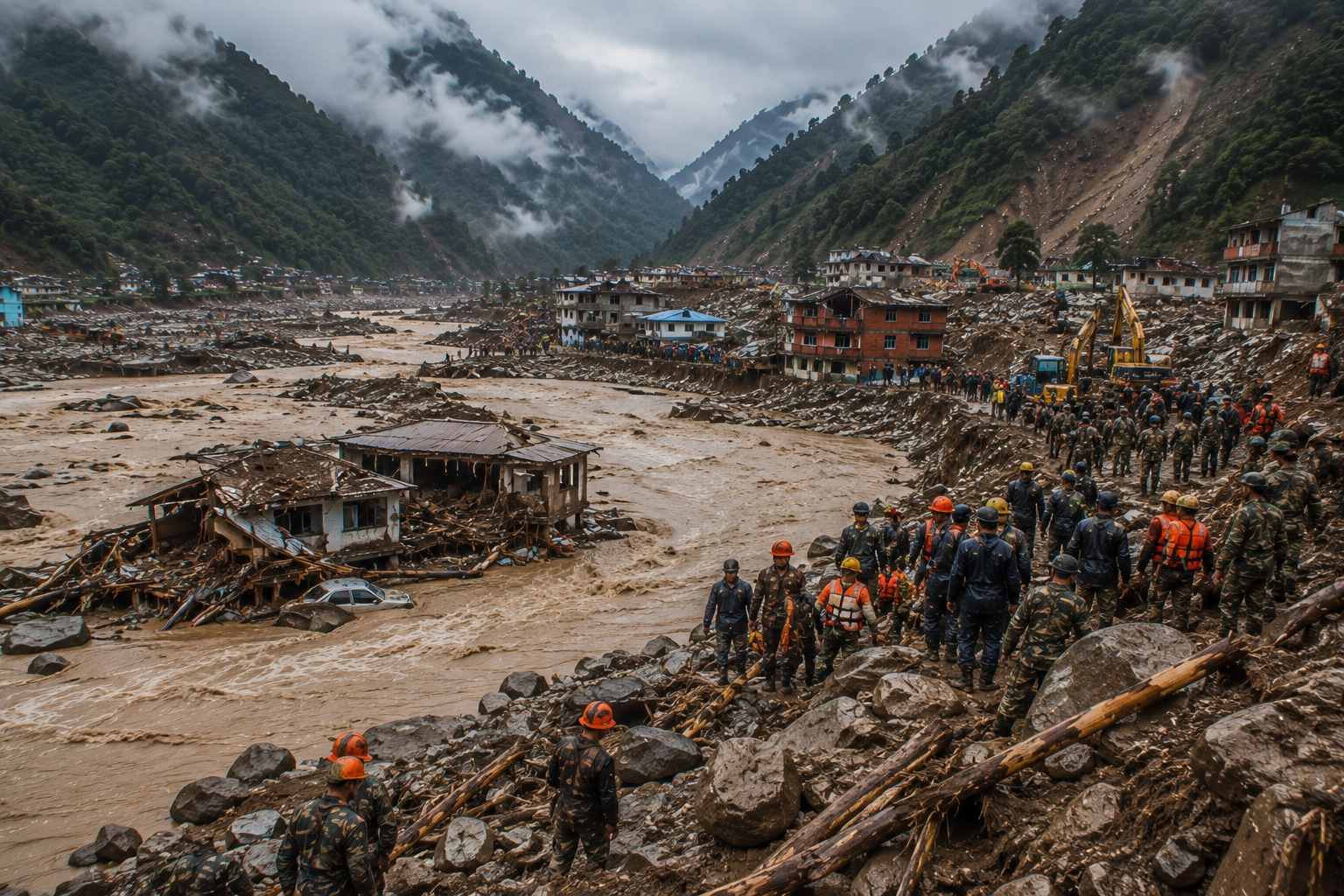
Nepal is facing an unprecedented humanitarian crisis after the devastating flash floods and landslides that struck the Nepal-China border region last week. The confirmed death toll in Nepal has now crossed 1,000, while thousands of people remain unaccounted for as rescue teams continue searching through devastated towns, river valleys and hydropower projects.
The disaster began on August 26, when a glacier-related collapse in the Himalayan region sent an enormous surge of water, ice, rock and mud through northern Nepal. The resulting flood travelled through the Bhotekoshi and Trishuli river systems, devastating parts of Rasuwa, Nuwakot and neighbouring districts.
More than 4,000 people remain unaccounted for
The latest figures remain fluid as authorities continue verifying missing-person reports.
CNN reported that more than 4,400 people remain unaccounted for across Nepal and China. Nepal’s Prime Minister Balendra Shah said on Monday that 3,925 people remained unaccounted for in Nepal, although the figure continues to fluctuate as information arrives from remote areas.
The missing include local residents, security personnel, tourists and hundreds of workers associated with hydropower projects.
Radio Nepal reported that 939 bodies had been recovered in Nepal by August 31, while more than 11,000 people had been rescued.
Hundreds of hydropower workers feared trapped
One of the most urgent rescue operations is taking place inside hydropower tunnels.
Around 900 hydropower workers are reported missing from 12 projects in Rasuwa and Nuwakot, with about 500 believed to have been inside tunnels when the disaster struck.
Rescuers are using excavators, drones, controlled blasts and specialised equipment to clear entrances buried under mud, rocks and debris.
The situation is particularly difficult because many tunnels themselves may have survived the flood while their entrances were buried, leaving rescuers facing enormous quantities of debris before they can reach the underground sections.
A major breakthrough—and a painful setback
At the Rasuwagadhi Hydropower Project, a Nepal Army-led team entered the tunnel and searched all the way to its deepest accessible point.
A drone was also used inside the tunnel, but the team reported no signs of human presence and ended the search there. More than 93 workers associated with the project had previously been reported out of contact.
The development has deepened the anxiety of families still waiting for news of missing workers.
Rescue operation becomes international
Nepal's rescue effort has increasingly involved international expertise.
Teams and assistance from China, India and South Korea, alongside Nepali security forces and technical experts, are contributing equipment and specialist knowledge to the operation.
China has also announced plans to send DNA identification experts, testing equipment, drones and water-purification equipment to Nepal to support recovery and identification efforts.
Mass burials as families search for loved ones
The enormous number of recovered bodies has created another painful challenge.
Hundreds of unidentified victims have been taken to temporary burial sites after authorities struggled to identify them and prevent health risks from the rapid decomposition of bodies.
For families searching for missing relatives, this has created an agonising wait. Many are travelling from one recovery centre to another, hoping to find information about loved ones.
The emotional toll is becoming as significant as the physical destruction left by the flood.
Roads and entire communities destroyed
The disaster has severely damaged the Pasang Lhamu Highway, cutting important connections between Rasuwa and surrounding districts.
Homes, bridges, markets, electricity infrastructure and hydropower facilities have been swept away or buried beneath mud and debris. In some locations, only fragments of buildings remain standing.
The destruction has also affected Nepal's electricity sector. Multiple hydropower projects along the Bhotekoshi-Trishuli corridor have suffered serious damage, creating concerns about both reconstruction costs and future power generation.
Warning systems also destroyed
One of the most worrying aspects of the disaster is that some of the very infrastructure used to monitor floods and weather was itself destroyed.
Nepal's flood-monitoring stations in the upper Bhotekoshi region were swept away. Authorities have since begun installing seismometers and CCTV cameras in Rasuwa to restore real-time monitoring capabilities.
Officials say this is particularly important because the region could face additional flooding and landslide risks.
Nepal's biggest challenge now: finding the missing
More than a week after the disaster, the rescue operation is entering a critical stage.
For those still trapped underground, the availability of breathable air, water and safe spaces could determine whether survival is possible. Experts have warned that time is becoming increasingly important.
But rescue teams are continuing to dig.
Behind every missing-person number is a family waiting for an answer—a worker who left home for a job, a traveller who never returned, or a security officer whose whereabouts remain unknown.
Nepal is now confronting not only the enormous task of rebuilding roads, bridges and hydropower projects, but also the much harder task of helping thousands of families find closure.
The search continues.
HamroBichar will continue to update this story as authorities verify new information.
Tags: Nepal Flood, Rasuwa Flood, Bhotekoshi, Hydropower Workers, Nepal-China Border, Nepal Disaster 2026, Flood Rescue, HamroBichar
Related Articles

Comments
Join the discussion
0 comments
Loading comments...