
Nepal PM Calls Bhotekoshi Flood One of the Region’s Largest Disasters
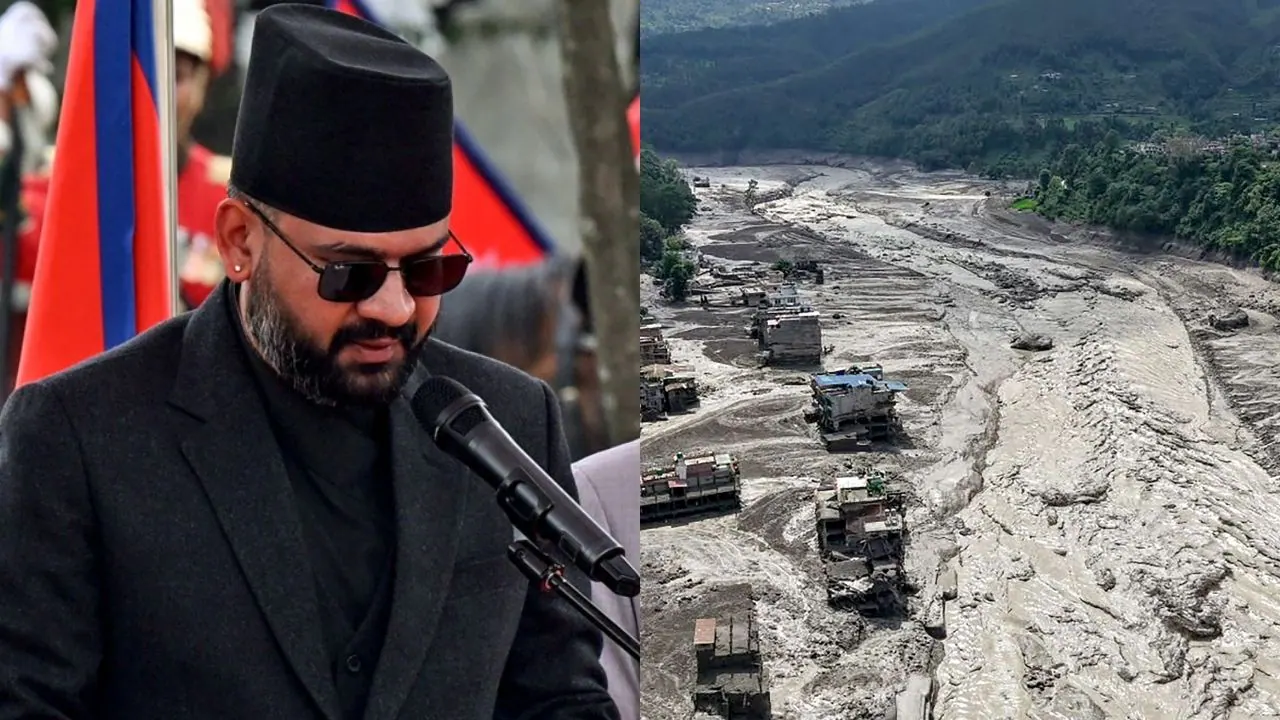
Prime Minister Balendra Shah has described the devastating Bhotekoshi flood in Rasuwa as one of the largest disasters to hit the Himalayan region, as search and rescue operations entered their seventh day with thousands of people still unaccounted for.
The disaster, which struck the Bhotekoshi River in Rasuwa on August 26, has left a massive trail of destruction across Rasuwa, Nuwakot and Dhading. Homes, bridges, roads, hydropower projects and communication infrastructure have been damaged or swept away.
In a public update, Prime Minister Shah said the government remains focused on search and rescue, medical treatment, relief distribution and rehabilitation of affected communities.
939 Bodies Recovered, Nearly 4,000 Still Unaccounted For
According to the government's latest update, 939 bodies have been recovered so far, while 3,925 people remain unaccounted for. Officials have stressed that the number of missing people continues to fluctuate as authorities verify information from affected areas.
More than 11,379 people have been rescued from the disaster-affected areas. Of 279 injured people taken to hospitals, 168 had been discharged by the time of the government's latest update.
The government is also following procedures for unidentified bodies, preserving DNA and other evidence that could help families identify missing relatives.
Hydropower Projects Become Major Rescue Zones
Several hydropower projects were severely affected by the flood, with workers feared trapped inside tunnels.
The Nepali Army has rescued 279 people from various hydropower projects and continues operations inside tunnels and damaged project sites. At Upper Trishuli-1 alone, 254 people have been rescued, while search operations continue with Nepali, Korean and Chinese teams involved.
Search operations are also continuing at Langtang Khola, Chilime, Upper Trishuli-3A and Upper Trishuli-3B, among other projects.
At Rasuwagadhi Hydropower Project, a joint Chinese-Nepali team searched deep inside the tunnel but found no survivors before withdrawing.
Relief Reaches Thousands
The government says relief materials are being collected and distributed through four collection centres and 27 distribution centres across Rasuwa and Nuwakot.
So far, relief has reached 3,696 affected people, with provincial and local governments helping manage shelters and distribution. International assistance has also arrived from countries including India, China, the United States, UAE, Qatar, Japan, Switzerland and Australia.
Financial contributions are also increasing. As of September 1, around Rs 5.87 billion had been deposited into the Prime Minister's Relief Fund through nine commercial banks, along with $3.19 million deposited through designated bank accounts.
Bridges and Roads Destroyed
The flood severely damaged transportation links between Rasuwa, Nuwakot and Dhading.
While a road along the right bank of the Trishuli River has now been reopened, many bridges remain destroyed. The government is prioritising temporary Bailey bridges to reconnect isolated communities.
India has provided a 230-foot single-lane modular steel bridge and pledged seven additional Bailey bridges, while China is expected to provide another 30 Bailey bridges.
Electricity and Communications Slowly Return
The disaster also disrupted electricity and telecommunications across the affected districts.
In Rasuwa, electricity has been restored to around 30 percent of households, while Nuwakot has regained power in approximately 85 percent of the district. Dhading has restored electricity to about 98 percent of its area.
Communication networks are also gradually returning. Nepal Telecom reports that 110 of its 120 affected BTS stations are operational, while 75 of Ncell's 78 towers have resumed service.
Government Links Disaster to Himalayan Climate Risks
Prime Minister Shah said the Bhotekoshi flood was not an ordinary flood, describing it as a disaster triggered by an avalanche of snow and rock in the Himalayan region.
He said the incident demonstrates that risks in the Himalayan region are increasing alongside climate change and called for Nepal to raise the issue internationally.
The World Health Organization has similarly reported that preliminary assessments indicate the Rasuwa flooding followed a sudden surge of water from Tibet, possibly linked to an upstream ice avalanche and temporary damming of the Lhende River. Further assessment is underway.
The Challenge Now Is Rehabilitation
For the government, the immediate rescue effort is gradually being accompanied by a much larger challenge: rebuilding the lives and communities destroyed by the disaster.
Thousands of people have lost homes, property and family members. The government has begun collecting data on affected households and physical damage to prepare for rehabilitation.
Prime Minister Shah said the government intends to mobilise the financial resources needed to help affected people return to normal life.
But as rescue teams continue digging through damaged hydropower tunnels and searching riverbanks, many families are still waiting for answers about missing relatives.
The Bhotekoshi disaster has already become a defining humanitarian crisis for Nepal—and its long-term impact on the country's Himalayan communities, infrastructure and economy is only beginning to emerge.
HamroBichar will continue to follow the rescue, relief and rehabilitation efforts as verified information becomes available.
Tags: Nepal Flood, Bhotekoshi Flood, Rasuwa Flood, Balendra Shah, Nepal Disaster, Hydropower Rescue, Climate Change Nepal
Related Articles

Comments
Join the discussion
0 comments
Loading comments...