
Rasuwa Flash Flood Leaves Trail of Destruction as Nepal Intensifies Search and Rescue
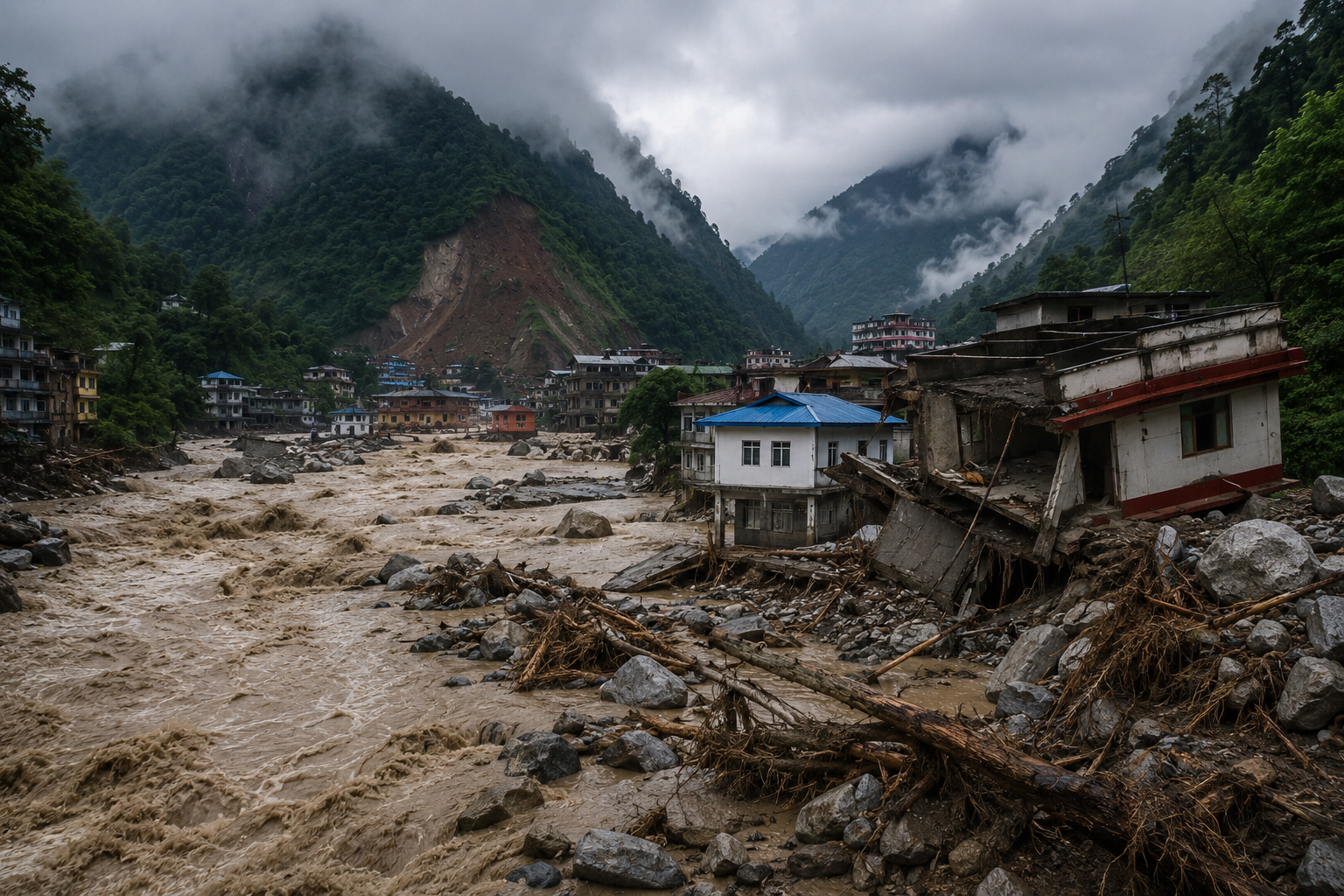
A sudden and devastating flash flood swept through Nepal’s Rasuwa district on Wednesday, killing at least 22 people and leaving dozens of others missing as rescue teams struggled to reach communities cut off by the disaster.
The flood struck along the Bhotekoshi River, particularly affecting the Timure and Syabrubesi areas near the Nepal-China border. Homes, roads, bridges, markets and hydropower infrastructure were damaged or swept away by the powerful surge.
The disaster has also disrupted communication and road links in several affected areas, making it difficult for authorities to establish the full scale of the damage.
What happened in Rasuwa?
The Bhotekoshi River suddenly rose to a dangerous level early Wednesday, sending a huge volume of water and debris downstream.
The worst-affected areas include Timure and Syabrubesi, important settlements along the northern route toward the Nepal-China border.
The flood also affected areas farther downstream, with authorities warning communities along the Trishuli River in Rasuwa, Nuwakot, Dhading and surrounding districts to remain alert and move away from riverbanks where necessary.
Videos and photographs from the affected region show floodwaters carrying away buildings, vehicles and other infrastructure.
Deaths and missing people
As of Wednesday evening, 22 people had been confirmed dead, according to updated reports from the Kathmandu Post. Dozens remain unaccounted for.
The missing include people working at hydropower projects, customs officials and security personnel. Thirty-two Nepal Police and Armed Police Force personnel stationed in the Timure area were reported missing, while around 60 people associated with the 20-megawatt Langtang Khola Hydropower Project were also out of contact.
The Nepal Tourism Board has separately reported 384 travellers as missing in a preliminary list, including 291 foreign nationals and 93 Nepali nationals. The list is being verified as authorities and tourism agencies work to establish the whereabouts of people travelling through the region.
Because communications and access remain disrupted, officials have cautioned that the figures could change as search operations continue.
What caused the flash flood?
The exact cause of the disaster has not yet been conclusively established.
An initial scientific assessment suggests that an ice avalanche may have blocked the Lhende River, causing water to accumulate before the blockage suddenly gave way and sent a powerful surge downstream into the Bhotekoshi River.
Kathmandu University professor and climate researcher Rijan Bhakta Kayastha said the assessment was based on preliminary discussions with scientists in Nepal and China. Authorities are also examining whether a glacial lake outburst or another high-altitude event contributed to the flooding.
The distinction is important because the final cause will require further investigation of conditions in the mountainous source area.
Rescue operations underway
The Nepali Army, Nepal Police and Armed Police Force have been mobilised for search-and-rescue operations.
The Nepali Army said it had already rescued 25 people from affected areas in Rasuwa and Nuwakot. Fourteen helicopters—six operated by the Nepali Army and eight from the private sector—have been deployed for search, rescue and relief operations.
The Army has also deployed a medical team of 20 doctors, including two surgeons, to Trishuli to treat people affected by the disaster after road access to the local hospital was disrupted.
However, difficult weather conditions, damaged roads, debris and blocked access routes are making rescue operations extremely challenging.
Hydropower and infrastructure hit hard
The flood has caused substantial damage to Nepal’s infrastructure in the Bhotekoshi corridor.
Hydropower projects, roads, bridges, markets and other facilities have been affected. One hydropower project was swept away, while other projects, including infrastructure associated with the Chilime area, have also suffered damage.
The damage is significant for a region where hydropower development and cross-border trade infrastructure are important parts of the local economy.
The flood has also raised concerns about electricity generation. Initial reports indicate that several hydropower facilities have been affected, although a complete assessment of the economic and infrastructure losses is still underway.
Authorities warn downstream communities
The danger has not ended with the initial flood.
Officials have warned people living along the Trishuli and other downstream rivers to remain highly alert because rising water levels and additional surges could pose further risks.
People have been advised to stay away from riverbanks and avoid unnecessary travel through affected areas.
The continuing risk is particularly serious because debris and possible blockages upstream could result in sudden changes in river levels.
A disaster unfolding in a difficult Himalayan landscape
Rasuwa’s mountainous geography makes emergency response particularly difficult.
Steep terrain, narrow valleys and limited road access mean that even under normal circumstances, reaching remote settlements can take considerable time. When floods destroy bridges and roads and disrupt communications, rescue operations become even more complicated.
The latest disaster has once again highlighted the vulnerability of communities and infrastructure built along Himalayan river systems.
Scientists and disaster experts have increasingly warned that Nepal’s mountains face growing risks from extreme rainfall, glacier-related hazards, landslides and sudden floods.
Nepal faces another major Himalayan disaster
The Rasuwa disaster comes after several serious flood and landslide events across Nepal in recent years.
For communities living along rivers, the latest incident is a reminder that flood risks in the Himalayas are not limited to the traditional monsoon pattern. Sudden high-altitude events can generate destructive floods with little warning.
For now, however, the priority remains clear: finding those who are missing, rescuing people trapped in affected areas and providing medical assistance and shelter to those who have lost access to their homes.
The full human and economic cost of Wednesday’s disaster is still emerging.
As rescue teams continue working in Rasuwa and neighbouring districts, authorities are expected to provide updated information on casualties, missing people and infrastructure damage.
HamroBichar will continue to follow the situation and update this report as verified information becomes available.
Tags: Nepal Flood, Rasuwa Flood, Bhotekoshi River, Flash Flood Nepal, Rasuwa Disaster, Nepal-China Border, Flood 2026
Related Articles

Comments
Join the discussion
0 comments
Loading comments...