
Rasuwa Flash Flood: Nepal Faces Major Disaster as Hundreds Remain Missing
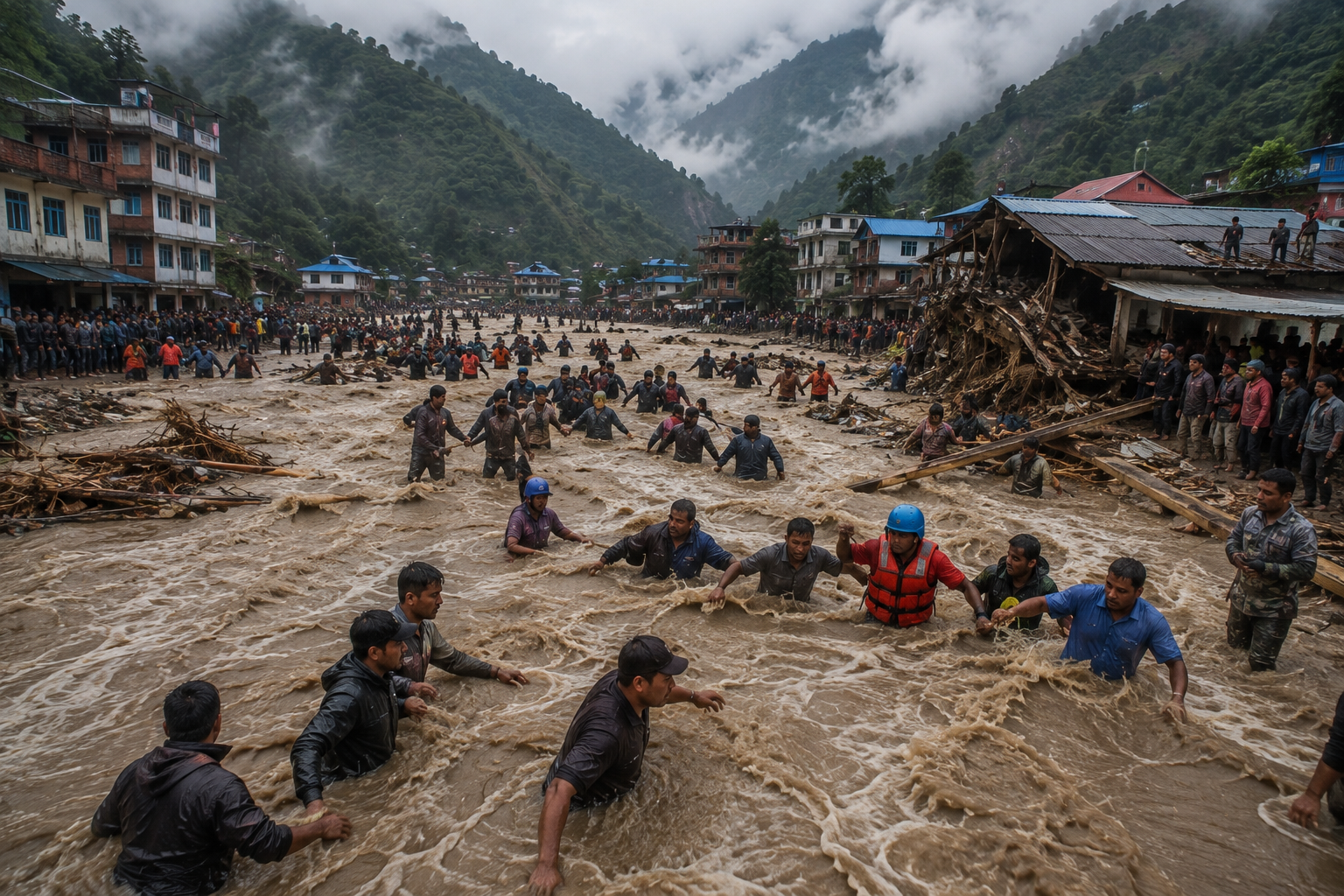
Nepal is facing a major disaster after a sudden flash flood swept through the northern Rasuwa district on Wednesday, destroying homes, roads, bridges and hydropower infrastructure and leaving hundreds of people unaccounted for.
The flood surged through the Bhote Koshi River in the Timure and Syabrubesi areas near the Nepal-China border. The sudden rise in the river caught communities and people travelling through the area off guard, sending a powerful flow of water, mud, rocks and debris downstream.
The situation has developed rapidly throughout the day, with casualty figures changing as rescue teams gain access to affected areas. By Wednesday evening, reports said at least 22 people had died, while hundreds remained missing.
Hundreds of people reported missing
One of the biggest concerns is the large number of people who remain unaccounted for.
The Nepal Tourism Board has reported 384 travellers missing, including 291 foreign nationals and 93 Nepali citizens. Among the foreign nationals are people from India, the United States, the United Kingdom, Malaysia and other countries.
The missing-person figure is still being verified, particularly because telephone and road connections in the affected areas have been disrupted.
Some of those missing were travelling towards the Nepal-China border, while others were workers and residents in the affected communities.
Entire settlements and infrastructure damaged
The flood has caused widespread destruction along the Bhote Koshi corridor.
Buildings, vehicles, roads and bridges have been swept away or badly damaged. Markets in Timure and Syabrubesi were among the areas affected, while several hydropower projects also suffered major damage.
The destruction has also disrupted an important route connecting Nepal with China.
Officials are particularly concerned about the impact on hydropower infrastructure, with reports indicating that projects representing hundreds of megawatts of generating capacity have been affected.
What triggered the flood?
The exact cause is still being investigated.
Preliminary assessments point towards a sudden high-altitude event on the Tibetan side of the border. Reports have suggested that an ice-and-rock avalanche may have blocked the Lhende Khola, allowing water to accumulate before the blockage gave way and produced a powerful downstream surge.
There have also been reports of a possible earthquake preceding the event, although investigators have not yet established a definitive chain of events.
Authorities and scientists will need further field assessments to determine exactly what triggered the disaster.
Rescue teams face difficult conditions
Nepal has mobilised the Nepali Army, Nepal Police and Armed Police Force for search and rescue operations.
Helicopters have been deployed to reach areas where roads have been destroyed or blocked by debris. The Army has also mobilised medical teams to assist people affected by the disaster.
But the terrain is making the operation extremely difficult.
The affected region is mountainous, roads have been damaged and large amounts of mud and debris have blocked access routes. Poor visibility and continuing weather-related risks are also complicating helicopter operations.
Rescuers are therefore working under difficult conditions while trying to establish how many people remain trapped or missing.
Downstream areas placed on alert
The danger is not limited to Rasuwa.
Authorities have warned communities living along the Trishuli River and downstream areas to remain alert as floodwaters and debris move through the river system.
People living close to riverbanks have been advised to move to safer locations and avoid unnecessary travel.
The warning is particularly important because blockages in mountainous rivers can sometimes cause sudden changes in water levels, creating additional flood waves.
International concern
The disaster has also drawn concern from neighbouring countries because of the large number of foreign travellers reported missing.
India has activated its response mechanisms after Indian nationals were reported among those unaccounted for. Indian Prime Minister Narendra Modi has also conveyed condolences and offered humanitarian assistance to Nepal.
China has also been dealing with the impact of the flooding near the border, with authorities on the Chinese side deploying rescue personnel and responding to damage around the Gyirong border area.
A painful reminder of Nepal's vulnerability
For Nepal, the disaster is another reminder of how quickly conditions can turn dangerous in the Himalayas.
Communities living in mountain valleys face multiple hazards, including flash floods, landslides, avalanches and glacier-related events. The geography that makes these areas important for tourism, trade and hydropower can also make emergency response extremely difficult.
The latest disaster has once again raised questions about early-warning systems, disaster preparedness and the resilience of infrastructure built along Himalayan rivers.
But for families waiting for information, the immediate priority is much more basic: finding their loved ones.
Search and rescue operations are continuing, and authorities are expected to release further details as teams reach more affected areas and verify the number of casualties and missing people.
HamroBichar will continue to follow the situation and update this report as verified information becomes available.
Category: National / Disaster
Author: HamroBichar Desk
Tags: Rasuwa Flood, Nepal Flash Flood, Bhote Koshi, Nepal Disaster, Rasuwa, Nepal-China Border, Flash Flood 2026
Related Articles

Comments
Join the discussion
0 comments
Loading comments...